
Uganda’s Monitor Lizards: Facts and Where to Find Them
Monitor lizards are among the most fascinating reptiles in Uganda, combining intelligence, adaptability, and prehistoric appearance. Belonging to the genus Varanus, these large lizards are widely distributed across Africa and are especially common in Uganda’s wetlands, savannahs, and forest edges.
Often seen basking near water or slowly moving through vegetation, monitor lizards are a regular feature of safari experiences. Despite their intimidating look, they play a crucial ecological role and are an essential part of Uganda’s biodiversity.
This guide explores the main species found in Uganda, their behavior, habitat, and the best places to see them.
Main Monitor Lizard Species in Uganda
Uganda is home to several monitor lizard species, but the most commonly encountered are the Nile monitor and the savannah monitor.
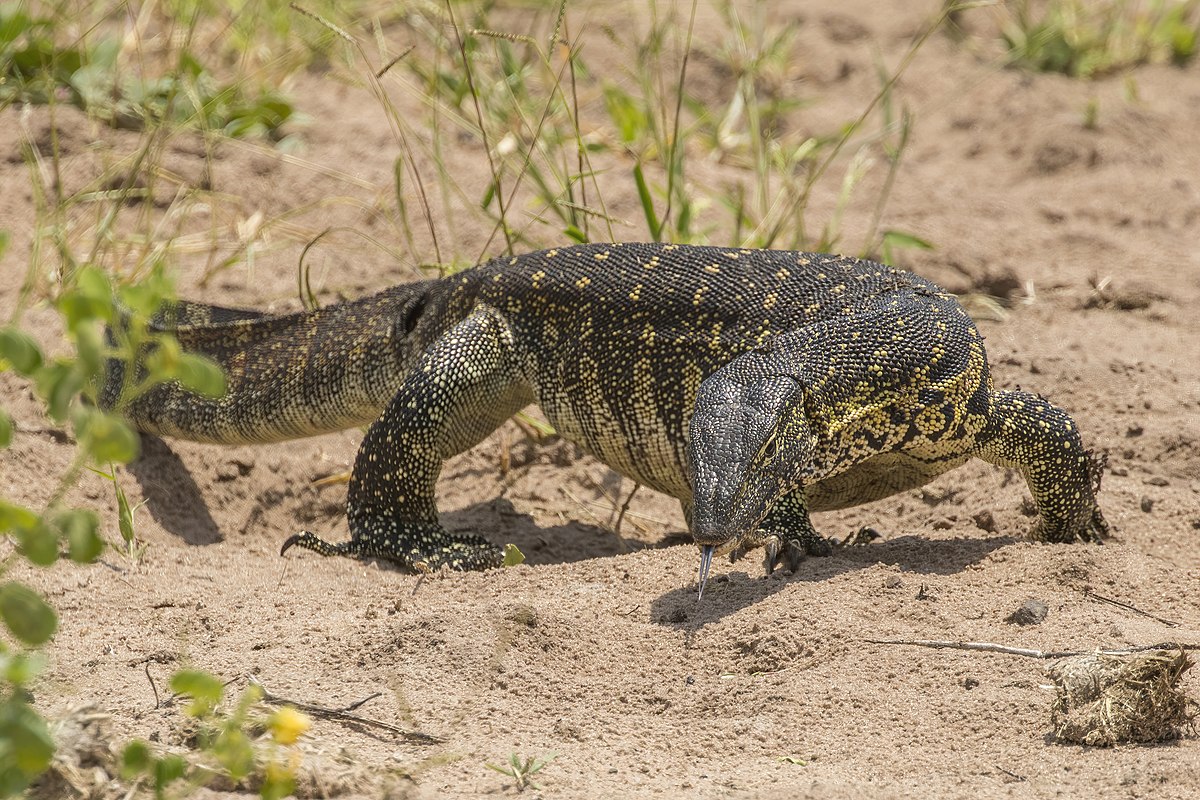
The Nile monitor, scientifically known as Varanus niloticus, is the largest and most widespread species in Uganda. It is closely associated with water and can often be seen along riverbanks, lakeshores, and wetlands.
The savannah monitor, Varanus exanthematicus, is more terrestrial and prefers drier habitats such as grasslands and open savannah.
Both species are highly adaptable and capable of surviving in a variety of environments, making them some of the most successful reptiles in Africa.
Physical Characteristics and Identification
Monitor lizards are easily identified by their elongated bodies, powerful limbs, and long, muscular tails.
The Varanus niloticus typically has a dark body covered with yellow or cream spots and bands, giving it a striking patterned appearance. It can grow over 2 meters in length, making it one of Africa’s largest lizards.
The Varanus exanthematicus is shorter and stockier, with a more uniform brown or grey coloration suited to dry environments.
Both species have forked tongues, similar to snakes, which they use to detect chemical signals in their surroundings.
Habitat: Where Monitor Lizards Live
Monitor lizards are highly versatile and can be found in a range of habitats across Uganda.
The Varanus niloticus is most commonly associated with water and is frequently seen in:
Murchison Falls National Park, along the Nile River
Queen Elizabeth National Park, particularly near the Kazinga Channel
Lake Mburo National Park, around lakes and wetlands
Mabamba Swamp, where wetlands support abundant prey
The Varanus exanthematicus is more likely to be found in open savannah and dry grassland areas.
These habitats provide food, shelter, and suitable conditions for thermoregulation.
Behaviour and Intelligence
Monitor lizards are among the most intelligent reptiles. They are capable of problem-solving, learning from experience, and adapting their behavior based on environmental conditions.
They are primarily diurnal, meaning they are active during the day. Much of their time is spent basking in the sun to regulate body temperature, as reptiles rely on external heat sources.
The Varanus niloticus is an excellent swimmer and often escapes predators by diving into water. It can remain submerged for extended periods, using its strong tail for propulsion.
On land, monitor lizards move with a slow but deliberate gait, constantly flicking their tongues to gather information about their surroundings.
Feeding Habits
Monitor lizards are opportunistic carnivores with a highly varied diet.
They feed on:
Fish
Frogs
Bird eggs
Small mammals
Insects
Carrion
The Varanus niloticus is particularly known for raiding nests of birds and reptiles, including crocodiles.
Their strong jaws and sharp teeth allow them to handle a wide range of prey, while their intelligence helps them exploit different food sources.
Reproduction and Life Cycle
Monitor lizards lay eggs rather than giving birth to live young.
Females often lay eggs in termite mounds, which provide a stable temperature and protection from predators. The heat generated by the termites helps incubate the eggs naturally.
After several months, the young hatch and begin life independently, with no parental care.
This strategy increases survival chances by providing a secure environment for development.
Ecological Importance
Monitor lizards play a vital role in maintaining ecological balance.
As predators, they help control populations of smaller animals, including rodents and insects. As scavengers, they contribute to cleaning up carrion, reducing the spread of disease.
Their presence is often an indicator of a healthy ecosystem with balanced food chains.
Best Time to See Monitor Lizards
Monitor lizards can be seen year-round in Uganda.
They are most active during:
Mid-morning, when they bask in the sun
Late afternoon, when they hunt or move
Boat safaris along rivers and channels offer excellent viewing opportunities, especially for the Varanus niloticus.
Dry seasons often provide better visibility, but sightings are generally reliable throughout the year.
Safety and Human Interaction
While monitor lizards are not typically dangerous to humans, they can become defensive if threatened.
They may:
Hiss loudly
Whip their tails
Attempt to bite
It is important to observe them from a safe distance and avoid disturbing them, especially in the wild.
Final Thoughts
Monitor lizards of the genus Varanus are among Uganda’s most impressive reptiles, combining size, intelligence, and adaptability.
From the powerful Varanus niloticus along the Nile in Murchison Falls National Park to the more terrestrial Varanus exanthematicus in savannah landscapes, these reptiles offer a unique perspective on Africa’s wildlife.
For safari travelers, encountering a monitor lizard adds depth to the experience, highlighting the diversity of life beyond mammals and birds. They are a reminder that Africa’s ecosystems are shaped not only by iconic species but also by the often-overlooked reptiles that play essential roles in the wild.