
Topi and Uganda Kob: The Antelopes of Queen Elizabeth Park
The open savannahs of Queen Elizabeth National Park are defined not only by predators and dramatic landscapes, but by the presence of two iconic antelope species: the topi and the Uganda kob. These herbivores form the backbone of the park’s ecosystem, supporting predator populations and shaping the rhythm of life across the grasslands.
Scientifically known as Damaliscus lunatus, the topi is one of Africa’s fastest and most alert antelopes, while the Uganda kob, Kobus kob thomasi, is a national symbol and one of the most abundant species in the park.
Together, they represent two different survival strategies in the wild—speed and vigilance in the case of the topi, and social organization and reproductive display in the case of the kob.
The Topi: Speed, Elevation, and Constant Vigilance
The topi is instantly recognizable by its sleek body, elongated face, and distinctive coloration. Its coat appears glossy brown with darker patches on the upper legs and shoulders, giving it a unique two-tone appearance.
Topis are built for speed and endurance. They can sustain high speeds over long distances, allowing them to escape predators such as lions and hyenas. This ability makes them one of the more resilient antelope species in predator-rich environments.
One of the most notable behaviors of topis is their use of elevated vantage points. Individuals often stand on termite mounds or small rises in the landscape, scanning the horizon for danger. This behavior not only enhances their own safety but also benefits the herd by providing early warning signals.
In Queen Elizabeth National Park, topis are commonly found in open plains where visibility is high. These areas allow them to detect predators early and rely on speed to escape.
The Uganda Kob: Social Structure and National Symbolism
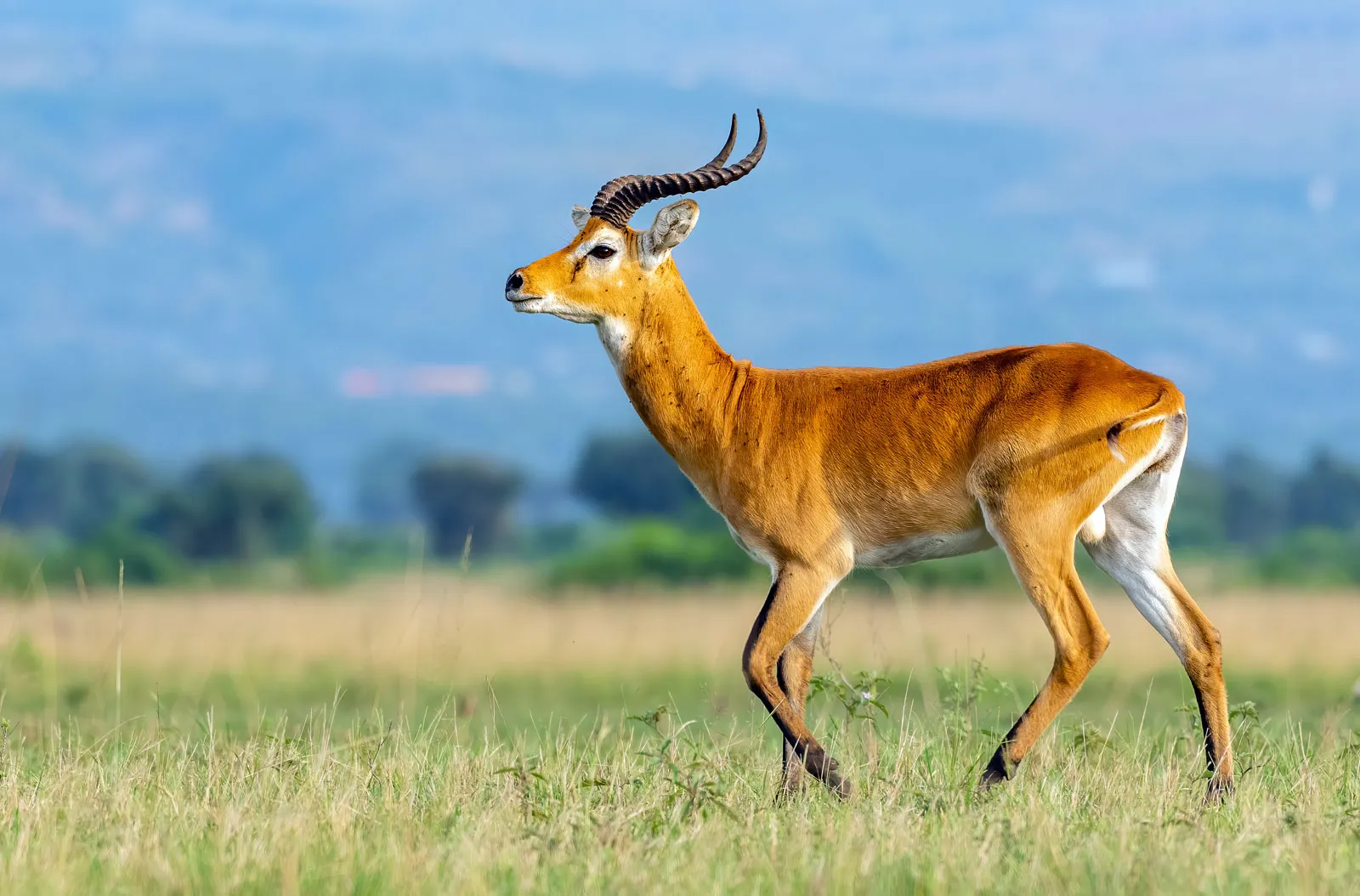
The Uganda kob is one of the most recognizable antelopes in East Africa and holds special significance as a national symbol of Uganda.
It has a rich reddish-brown coat, white underparts, and a graceful, compact build. Males are distinguished by their curved, lyre-shaped horns, while females lack horns and tend to move in larger groups.
Kobs are highly social animals, often forming large herds that graze together in open grasslands. This group behavior provides safety in numbers, reducing the risk of predation.
One of the most fascinating aspects of kob behavior is their lek mating system. Males establish and defend small territories known as leks, where they display to attract females.
These displays involve:
Posturing and circling behavior
Chasing rival males
Maintaining small, defended patches of ground
Females visit these leks to select mates, creating concentrated areas of activity that are often hotspots for predators.
Habitat and Distribution in Queen Elizabeth National Park
Both topi and Uganda kob thrive in the savannah and grassland ecosystems of Queen Elizabeth National Park.
The park’s diverse habitats, including open plains, wetlands, and acacia woodlands, provide ideal conditions for grazing and movement.
Topis prefer slightly drier, open areas where they can use speed and visibility to their advantage.
Uganda kobs are often found in areas with a mix of grassland and water access, such as near the Kazinga Channel, where grazing is abundant and water is readily available.
Their distribution within the park often overlaps, but each species occupies slightly different ecological niches.
Predator–Prey Dynamics
Topis and Uganda kobs play a critical role in supporting predator populations within the park.
Lions, leopards, and spotted hyenas rely heavily on these antelopes as a food source. The abundance of kob, in particular, makes it one of the primary prey species for lions in the region.
Topis, due to their speed and alertness, are less frequently caught but still contribute to predator diets.
This dynamic creates a balanced ecosystem where predator and prey populations regulate each other naturally.
Behavioural Differences: Survival Strategies Compared
The contrast between topi and kob behavior highlights different approaches to survival.
Topis rely on:
Speed and endurance
Elevated vigilance points
Smaller, more alert group formations
Uganda kobs rely on:
Large herd structures
Social cooperation
Reproductive strategies centered around leks
These differences reduce direct competition between the species and allow them to coexist within the same environment.
Reproduction and Life Cycle
Both species follow seasonal breeding patterns influenced by rainfall and food availability.
Topi calves are typically born in periods when grass is abundant, ensuring sufficient nutrition for growth.
Uganda kobs synchronize breeding around lek systems, where dominant males have higher reproductive success.
In both cases, young antelopes must quickly adapt to life in predator-rich environments. Within hours of birth, calves are able to stand and move, an essential survival trait.
Best Time to See Topi and Uganda Kob
Both species can be seen year-round in Queen Elizabeth National Park.
Early morning and late afternoon are the best times for observation, as antelopes are most active during cooler hours.
Dry seasons often provide better visibility due to shorter grass, making it easier to spot herds across the plains.
Lekking behavior in Uganda kobs can be observed at various times of the year, offering unique wildlife viewing opportunities.
Ecological Importance
Topis and Uganda kobs are essential for maintaining the ecological balance of the park.
As grazers, they help control grass growth and influence vegetation patterns. Their feeding behavior contributes to nutrient cycling and habitat maintenance.
They also serve as a key food source for predators, ensuring the stability of the entire food chain.
The presence of Damaliscus lunatus and Kobus kob thomasi in Queen Elizabeth National Park defines the character of its savannah ecosystems.
While the topi represents speed, alertness, and independence, the Uganda kob embodies social structure, cultural symbolism, and ecological abundance.
Together, they create one of the most dynamic and visually engaging wildlife experiences in Uganda. For safari travelers, observing these antelopes offers insight into the complexity of predator-prey relationships and the subtle strategies that define survival in the African wilderness.