
African Rock Python: Uganda’s Largest Snake
The African rock python is the largest snake species in Uganda and one of the most powerful reptiles on the continent. Scientifically known as Python sebae, this formidable constrictor is widely distributed across sub-Saharan Africa and thrives in a variety of habitats, particularly those close to water.
Despite its size and strength, the African rock python is elusive and rarely seen, making any encounter in the wild a memorable and rare experience. It plays a critical ecological role as both predator and regulator within Uganda’s ecosystems.
Size and Physical Characteristics
The Python sebae is renowned for its impressive size. Adults commonly reach lengths of 3 to 5 meters, with some individuals growing even larger under optimal conditions.
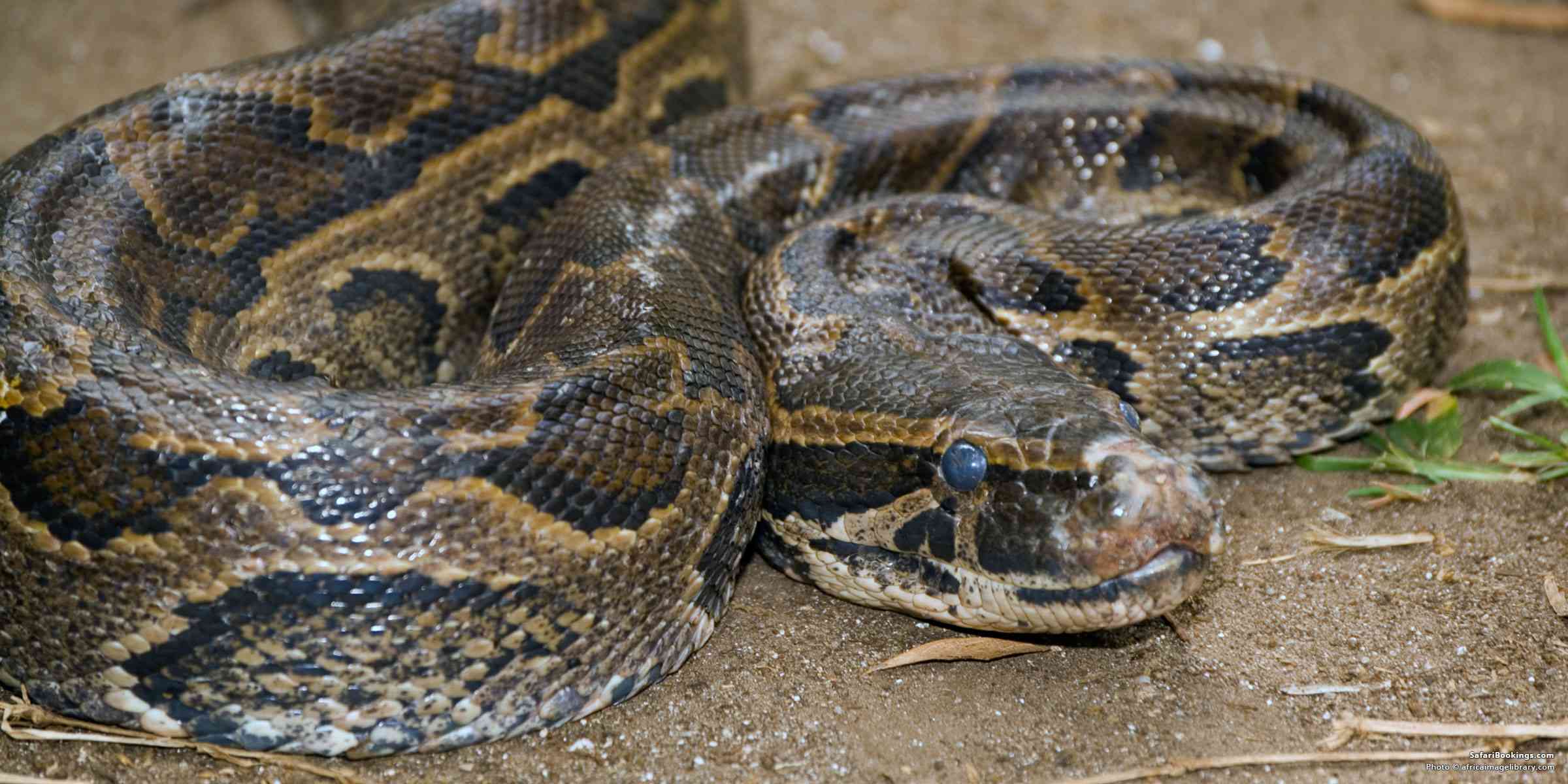
Its body is thick and muscular, built for constriction rather than venom delivery. The snake’s coloration consists of complex patterns of brown, olive, and tan, which provide excellent camouflage in grasslands, forests, and riverine environments.
Its triangular head, heat-sensitive pits, and powerful jaws make it a highly efficient predator capable of detecting and capturing a wide range of prey.
Habitat: Where African Rock Pythons Live
African rock pythons are highly adaptable and can be found in multiple habitats across Uganda, though they are most commonly associated with water-rich environments.
Key habitats include:
Riverbanks and lakeshores
Swamps and wetlands
Savannah grasslands
Forest edges
In Uganda, they are frequently reported in:
Queen Elizabeth National Park, particularly near water channels and wetlands
Murchison Falls National Park, along the Nile River
Lake Mburo National Park, around lakes and marshy areas
Bwindi Impenetrable National Park, where forest cover provides concealment
These environments offer both prey availability and suitable shelter.
Hunting Behaviour: Power Over Poison
Unlike venomous snakes, the African rock python relies entirely on strength to subdue its prey.
Its hunting process involves:
Ambushing prey using camouflage
Striking quickly with sharp teeth
Wrapping its body around the prey
Constricting until the prey suffocates
Once subdued, the python swallows its prey whole, often consuming animals much larger than expected.
Its diet includes:
Antelopes
Rodents
Birds
Reptiles
Occasionally monkeys
Juveniles feed on smaller prey, gradually increasing in size as they grow.
Behaviour and Lifestyle
African rock pythons are mostly solitary and secretive.
They are:
Primarily nocturnal or crepuscular
Excellent swimmers
Strong climbers, especially when young
During the day, they often rest in burrows, thick vegetation, or near water sources to avoid heat and detection.
Despite their size, they are generally non-aggressive unless provoked or threatened.
Reproduction and Maternal Care
One of the most remarkable aspects of the Python sebae is its reproductive behavior.
Females lay large clutches of eggs, sometimes exceeding 50 eggs in a single breeding cycle.
Unlike many reptiles, the female remains with the eggs, coiling around them to provide protection and regulate temperature. She can even generate heat through muscular contractions, helping incubate the eggs.
After hatching, the young snakes are independent and must fend for themselves from the start.
Role in the Ecosystem
African rock pythons are apex predators within their ecological niche.
They help control populations of rodents and other animals, maintaining balance within ecosystems.
By regulating prey populations, they contribute to the overall health of habitats ranging from wetlands to savannahs.
Their presence indicates a functioning and relatively undisturbed environment.
Encounters with Humans
Although powerful, African rock pythons rarely pose a threat to humans.
Incidents are extremely uncommon and usually occur when the snake feels threatened or cornered.
In rural areas, pythons may occasionally come into conflict with humans, particularly when livestock or poultry are involved.
Conservation efforts focus on promoting coexistence and reducing unnecessary killing of these important reptiles.
Best Time and Places to See African Rock Pythons
Sightings of the Python sebae are rare due to their secretive nature.
However, the best chances occur:
Near water sources
During early morning or late evening
On boat safaris or quiet game drives
Locations such as Queen Elizabeth National Park and Murchison Falls National Park offer occasional sightings, especially along riverbanks.
Patience and experienced guides are key to spotting this elusive species.
Conservation Status
The African rock python is currently classified as Least Concern, but it faces localized threats.
These include:
Habitat destruction
Human persecution
Illegal wildlife trade
Protecting wetlands and natural habitats is essential for maintaining stable populations.
Final Thoughts
The Python sebae stands as Uganda’s largest and most powerful snake, combining size, strength, and adaptability.
Though rarely seen, its presence adds depth to Uganda’s wildlife diversity, reminding travelers that the country’s ecosystems extend far beyond the more visible mammals and birds.
Whether encountered along the Nile in Murchison Falls National Park or hidden within the wetlands of Queen Elizabeth National Park, the African rock python represents the raw, untamed side of Africa’s natural world.