
Uganda’s Wetlands: Mabamba Swamp and the Shoebill Quest
Uganda is often celebrated for its savannah safaris and gorilla trekking, but one of its most extraordinary and underrated ecosystems is its wetland network. Among these, Mabamba Bay Wetland stands out as one of the most important birding sites in East Africa.
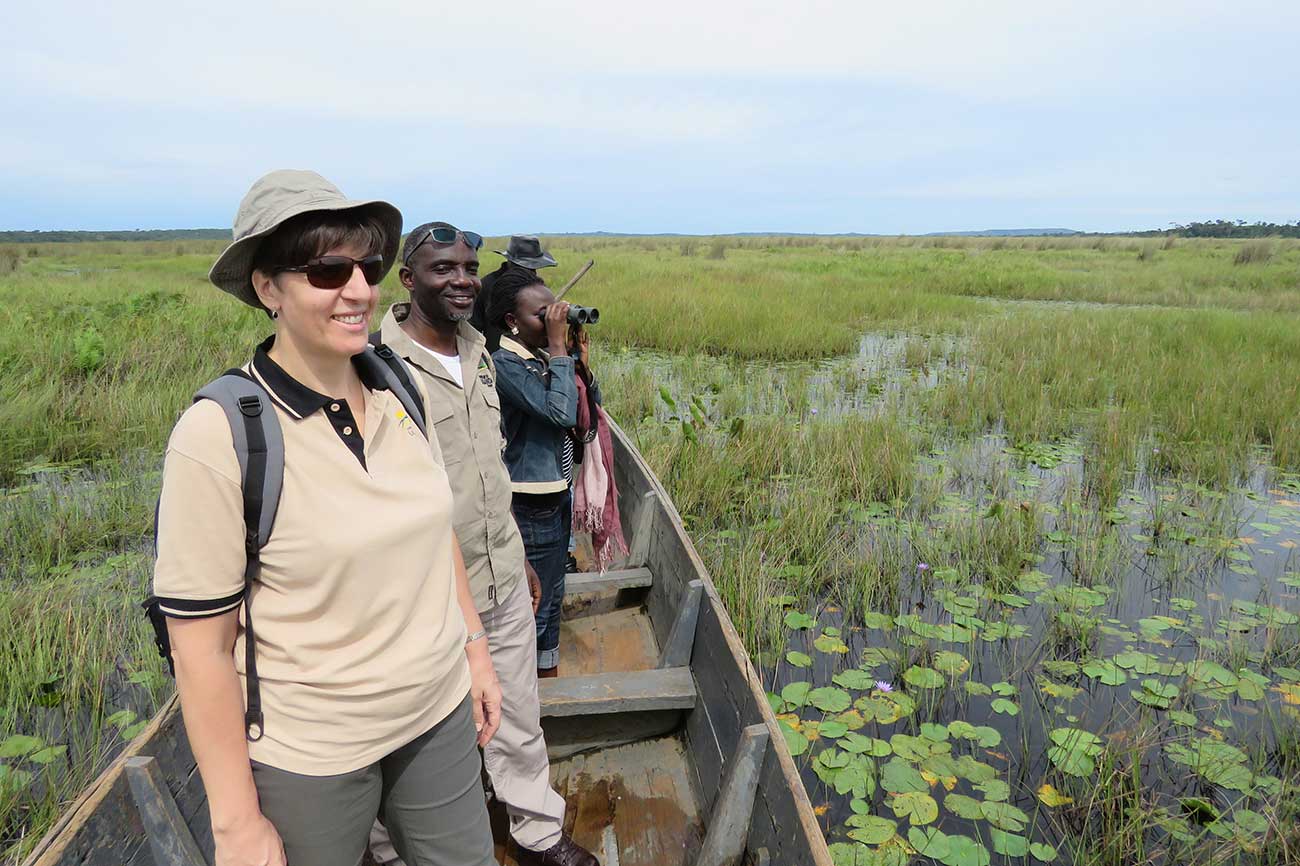
Located on the fringes of Lake Victoria, this vast papyrus swamp is internationally recognized as a critical habitat for rare and endangered bird species, most famously the prehistoric-looking shoebill stork. The experience of navigating its narrow channels in a wooden canoe offers a completely different kind of safari—quiet, slow-paced, and deeply immersive.
Unlike traditional game drives in national parks, wetland exploration is about patience, observation, and subtle movement through nature. It is here that Uganda reveals another layer of its biodiversity, far from the open plains and forest trails.
Understanding Mabamba Bay Wetland Ecosystem
Mabamba Bay Wetland is a Ramsar-listed wetland of international importance. This means it is recognized globally for its ecological value, especially as a habitat for waterbirds and aquatic biodiversity.
The wetland is dominated by thick papyrus reeds, floating vegetation, and narrow water channels that create a natural labyrinth. These conditions make it ideal for birds that depend on shallow waters and dense cover for feeding and nesting.
Its proximity to Entebbe makes it one of the most accessible birding destinations in Uganda, often visited as a half-day or full-day excursion.
The ecosystem supports hundreds of bird species, fish populations, amphibians, and small mammals. However, its global fame is primarily linked to one iconic species—the shoebill stork.
The Shoebill Stork: Uganda’s Living Prehistoric Icon
The shoebill stork is one of the most sought-after birds in Africa. With its massive shoe-shaped bill, motionless hunting style, and prehistoric appearance, it feels like a creature from another era.
In Mabamba Bay Wetland, the shoebill is the primary target for most visitors. The wetland provides ideal feeding conditions, especially in shallow swamp channels where lungfish and other aquatic prey are abundant.
Spotting a shoebill is never guaranteed, which adds to the excitement. Early morning canoe trips significantly increase the chances, as the birds are more active during cooler hours.
When sighted, the shoebill often stands completely still, waiting patiently for prey before striking with remarkable speed. Observing this behavior in its natural habitat is one of the most memorable wildlife encounters in Uganda.
The Shoebill Quest Experience
The shoebill quest in Mabamba Bay Wetland typically begins early in the morning from Entebbe. Travelers are driven to the wetland edge, where local guides and fishermen prepare traditional wooden canoes.
These canoes are manually paddled through narrow channels, allowing silent movement through the papyrus swamp. This quiet approach is essential, as noise can easily disturb birdlife and reduce sighting chances.
The journey through the wetland is slow and meditative. Along the way, you may encounter kingfishers, herons, African jacanas walking on floating vegetation, and fish eagles perched above the swamp.
The anticipation builds gradually until, if fortunate, the guide signals the presence of a shoebill. At that moment, the experience shifts from exploration to focused observation.
Birdlife Diversity Beyond the Shoebill
While the shoebill is the star attraction, Mabamba Bay Wetland is rich in avian diversity.
Common sightings include:
- African fish eagles
- Malachite kingfishers
- African jacanas
- Purple herons
- Squacco herons
- Pied kingfishers
- Papyrus gonoleks
The wetland is especially important for papyrus-endemic species, which depend on this specific habitat type for survival.
Migratory birds also pass through the wetland seasonally, adding further diversity to the ecosystem.
Ecological Importance of Uganda’s Wetlands
Uganda’s wetlands, including Mabamba Bay Wetland, play a critical role in environmental stability. They act as natural water filters, flood control systems, and carbon storage zones.
For Lake Victoria’s ecosystem, these wetlands are essential in maintaining fish breeding grounds and water quality. Without them, both biodiversity and local livelihoods would be significantly affected.
Wetlands also support fishing communities who rely on sustainable harvesting practices passed down through generations.
Conservation Challenges and Protection Efforts
Despite its importance, the wetland faces several challenges including encroachment, pollution, and habitat degradation. Human settlement expansion around Lake Victoria has increased pressure on natural swamp areas.
Conservation efforts in Mabamba Bay Wetland involve community-based tourism initiatives. Local fishermen often serve as bird guides, providing both income and incentives to protect the ecosystem.
This model of eco-tourism ensures that conservation and livelihoods are linked, making protection efforts more sustainable.
Best Time to Visit Mabamba Swamp
The shoebill can be seen year-round in Mabamba Bay Wetland, but early mornings offer the highest chances of sightings.
Dry seasons generally provide easier canoe navigation, while wetter periods enhance bird activity and wetland fullness.
Regardless of season, patience is essential, as wildlife viewing in wetlands is never guaranteed.
How the Shoebill Quest Fits Into Uganda Safaris
A visit to Mabamba Bay Wetland is often included at the beginning or end of broader Uganda itineraries. It pairs well with:
- City tours in Entebbe
- Wildlife safaris in Murchison Falls National Park
- Gorilla trekking in Bwindi Impenetrable National Park
This makes it a perfect add-on experience for travelers with extra time around Lake Victoria.
A Quiet but Powerful Safari Experience
The shoebill quest in Mabamba Bay Wetland offers a completely different perspective on Uganda’s wildlife. Instead of large mammals on open plains, it focuses on silence, patience, and detailed observation of wetland life.
Seeing a shoebill stork in the wild is not just a birding achievement—it is a rare encounter with one of Africa’s most ancient and iconic species.
For travelers seeking something beyond traditional safari experiences, Uganda’s wetlands deliver a peaceful, authentic, and deeply memorable adventure on the edges of Lake Victoria.