
Uganda’s Road Network: Which Routes Require 4WD?
Uganda’s road network is one of the most important factors shaping any safari or travel experience. Unlike destinations where infrastructure is uniformly developed, Uganda presents a mix of modern highways, gravel roads, dirt tracks, and remote park routes. This variation makes one question essential for any traveler or tour planner: when do you actually need a 4WD vehicle?
The short answer is that not all routes require 4WD—but many of the most rewarding destinations do. The long answer depends on terrain, weather, and how deep into Uganda’s wilderness you intend to go.
This guide breaks down Uganda’s road system with precision, helping you understand exactly where a 4WD is necessary and where it is optional.
The Structure of Uganda’s Road Network
Uganda’s transport system can be divided into three main categories.
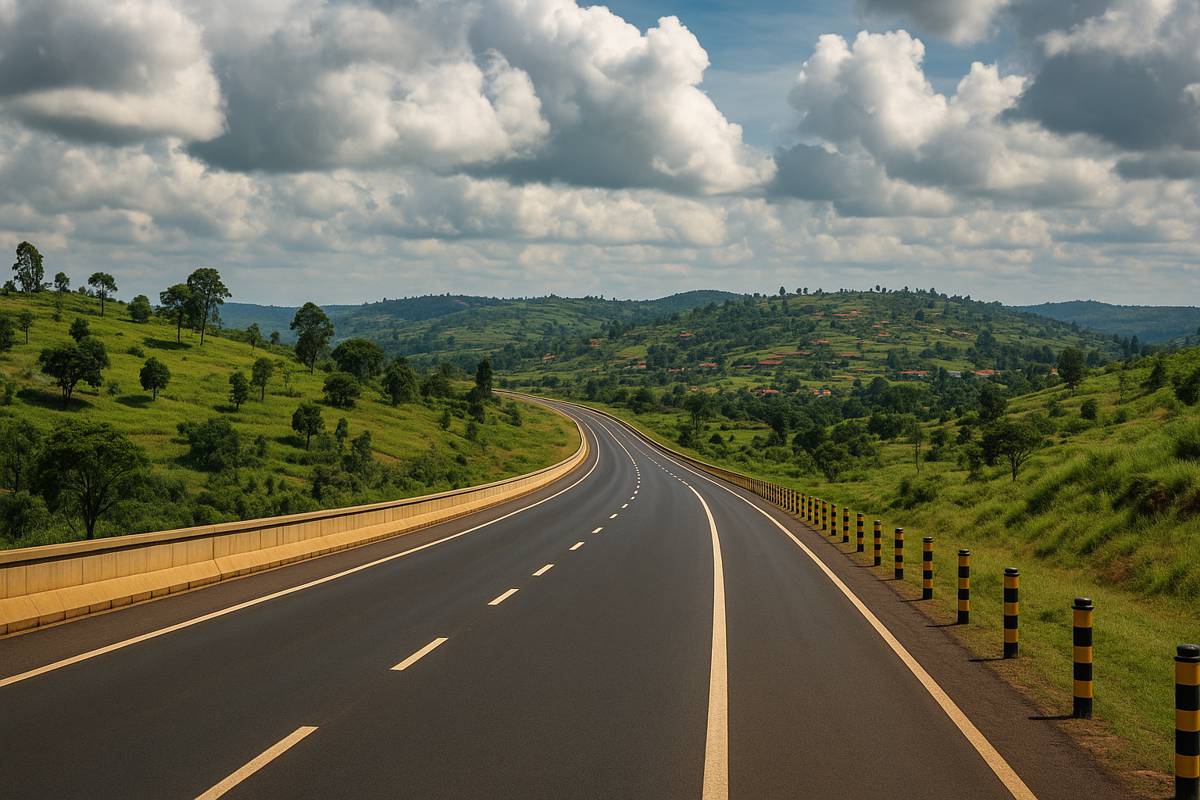
The first category is paved highways connecting major cities such as Kampala and Entebbe. These roads are generally in good condition and can be navigated with standard 2WD vehicles.
The second category includes murram (gravel) roads connecting towns and rural areas. These vary in quality and may require more caution, especially after rain.
The third category consists of park tracks and remote access roads leading to national parks such as Bwindi Impenetrable National Park and Kidepo Valley National Park. These are where 4WD becomes critical.
Understanding this hierarchy is key to planning safe and efficient travel.
When You Do NOT Need a 4WD
Travel between major urban centers and along primary highways does not require a 4WD vehicle.
Routes such as:
- Kampala to Entebbe
- Kampala to Jinja
- Kampala to Mbarara (main highway sections)
are paved and suitable for standard vehicles.
Even some national parks, like Lake Mburo National Park, can be accessed in dry conditions with a 2WD vehicle, although caution is still advised.
If your itinerary is limited to cities and short-distance travel, a 4WD is not essential.
When a 4WD Becomes Necessary
A 4WD vehicle becomes necessary when you leave paved roads and enter rural or protected areas.
Key scenarios include:
- Traveling during rainy seasons
- Accessing remote lodges
- Driving inside national parks
- Navigating steep or muddy terrain
In Uganda, “possible without 4WD” does not mean “advisable without 4WD.” Conditions can change quickly, and what looks manageable can become difficult after a single rainstorm.
Critical Routes That REQUIRE 4WD
Bwindi Impenetrable National Park
Access to Bwindi Impenetrable National Park is one of the clearest cases where 4WD is essential.
Roads leading to sectors like Buhoma, Rushaga, and Nkuringo involve steep gradients, narrow paths, and often muddy conditions. During the rainy season, these roads can become slippery and challenging even for experienced drivers.
A 4WD vehicle is not optional here—it is necessary.
Kidepo Valley National Park
Kidepo Valley National Park is one of Uganda’s most remote parks. The journey involves long distances on rough, unpaved roads.
Even in dry conditions, the terrain is rugged. During rains, sections can become nearly impassable without a proper 4WD.
This is one of the most demanding routes in Uganda.
Murchison Falls National Park (Interior Tracks)
While access to Murchison Falls National Park via main roads is manageable, game drive tracks inside the park require 4WD.
The northern sector, especially around Paraa and the Nile delta, involves sandy and uneven tracks that are not suitable for 2WD vehicles.
Queen Elizabeth National Park
Queen Elizabeth National Park has a mix of accessible and challenging routes.
Main access roads are generally manageable, but game drive areas like Kasenyi plains and Ishasha sector can become muddy and difficult, especially after rain.
A 4WD vehicle significantly improves safety and mobility here.
Routes Where 4WD Is Strongly Recommended
Kibale Forest National Park
Access to Kibale Forest National Park is possible with 2WD in dry conditions, but surrounding roads and lodge access points often require 4WD, especially in wet weather.
Rwenzori Mountains Region
The foothills of Rwenzori Mountains National Park involve steep and sometimes muddy roads.
While not always mandatory, 4WD is highly recommended for reliability.
Lake Bunyonyi and Southwestern Highlands
The mountainous terrain around southwestern Uganda, including areas near Lake Bunyonyi, involves steep climbs and winding roads.
Even when dry, these routes benefit from 4WD due to elevation and road conditions.
Seasonal Impact: Why Weather Changes Everything
Uganda’s two rainy seasons (March–May and October–November) dramatically affect road conditions.
During these periods:
- Dirt roads become muddy and slippery
- Drainage issues create waterlogged sections
- Hills become difficult to climb
A road that is easily navigable in dry season can become impassable in rain without 4WD.
This is why most tour operators default to 4WD vehicles year-round.
Self-Drive vs Driver-Guide: A Practical Perspective
Technically, you can self-drive in Uganda—but this is where many travelers underestimate the challenge.
A 4WD vehicle helps, but it does not replace local knowledge.
Driver-guides understand:
- Seasonal road behavior
- Alternative routes
- Park navigation
- Emergency handling
For routes involving Bwindi Impenetrable National Park or Kidepo Valley National Park, a professional driver-guide is often the safer and more efficient choice.
Fuel, Distance, and Logistics
Remote travel in Uganda also requires logistical planning.
Fuel stations are widely available in towns but limited near parks. Long-distance routes—especially to Kidepo Valley National Park—require advance planning.
A 4WD vehicle is typically better equipped for long-range travel and rough conditions.
The Real Answer: Do You Need 4WD in Uganda?
Here is the honest assessment.
If you are staying in cities or traveling short distances on paved roads, you do not need a 4WD.
If you are visiting national parks, remote lodges, or traveling during rainy seasons, you absolutely do.
If your itinerary includes places like Bwindi Impenetrable National Park, Queen Elizabeth National Park, or Kidepo Valley National Park, a 4WD is the correct and professional choice.
Plan for Reality, Not Possibility
Uganda’s road network is not designed for uniform travel—it is designed around geography, weather, and conservation landscapes.
The difference between a smooth safari and a difficult one often comes down to vehicle choice.
A 4WD is not about luxury—it is about access, safety, and reliability.
If your goal is to experience Uganda fully—from gorilla trekking in Bwindi Impenetrable National Park to game drives in Queen Elizabeth National Park—then a 4WD is not just recommended. It is part of doing the journey properly.