
Mabamba Swamp Birding Tour: How to See the Shoebill Stork
A birding tour to Mabamba Bay Wetland is one of the most reliable and rewarding wildlife experiences in East Africa for bird enthusiasts and nature travelers. Located along the fringes of Lake Victoria, this vast papyrus swamp is best known as one of the top global habitats for the rare shoebill stork.
Unlike traditional safari experiences that focus on large mammals, Mabamba offers a slow, quiet, and highly specialized form of wildlife viewing. The goal is not speed or distance covered, but patience, observation, and precision in locating one of Africa’s most iconic birds.
This guide explains exactly how to plan a successful shoebill stork tour, what to expect, and how to maximize your chances of seeing this prehistoric-looking bird in the wild.
Understanding Mabamba Bay Wetland
Mabamba Bay Wetland is a Ramsar-designated wetland of international importance. It consists of dense papyrus swamps, shallow water channels, and floating vegetation systems that support a wide variety of birdlife.
The wetland lies just west of Entebbe, making it one of the most accessible birding sites in Uganda. Its proximity to the international airport also makes it ideal for short excursions before or after longer safaris.
The ecosystem is shaped by the interface between freshwater inflows and Lake Victoria, creating nutrient-rich habitats that attract fish, amphibians, and birds.
The Shoebill Stork: Why It Is So Special
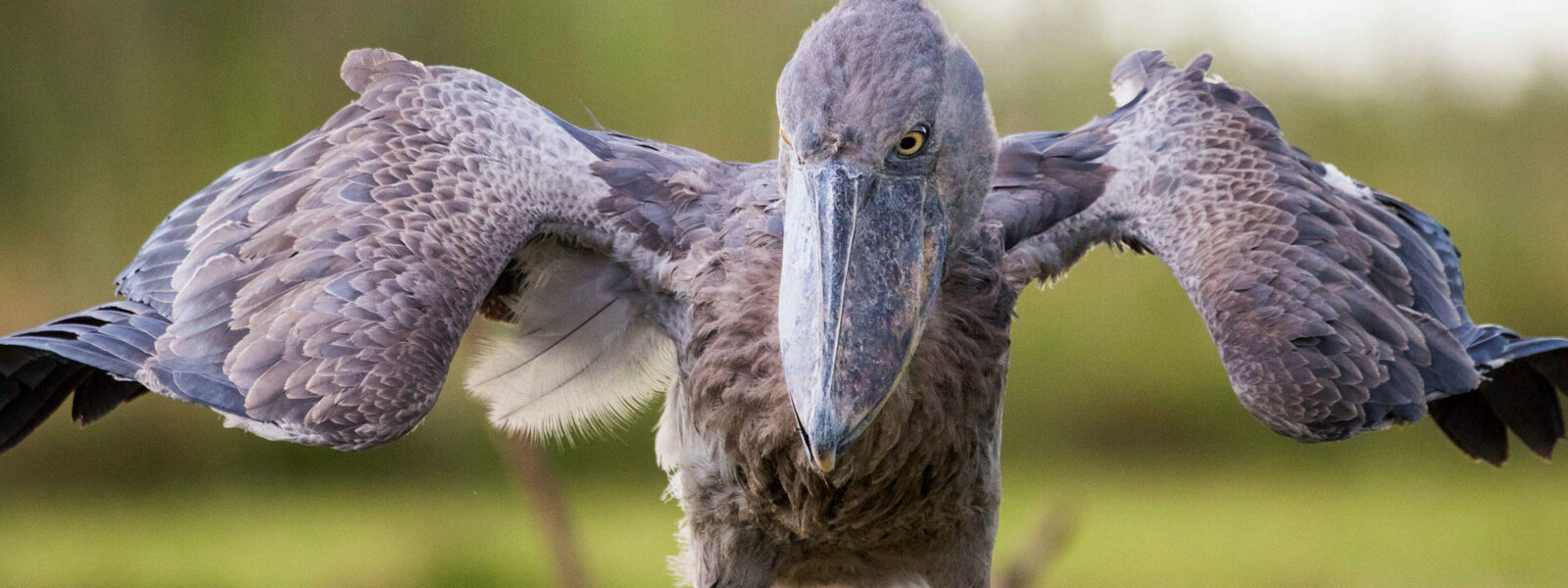
The shoebill stork is the main attraction of Mabamba Bay Wetland. Scientifically known as Balaeniceps rex, it is one of the most unusual birds in the world.
It is easily recognized by its massive shoe-shaped bill, grey plumage, and statuesque posture. The bird is known for standing completely still for long periods while hunting, waiting for fish such as lungfish to surface before striking with remarkable speed.
Its prehistoric appearance and rare distribution make it a highly sought-after species for birdwatchers and wildlife photographers.
How the Shoebill Tour Works
A typical shoebill tracking experience in Mabamba Bay Wetland begins early in the morning, usually from Entebbe.
Travelers are driven to the wetland launch site where local guides and fishermen organize canoe trips. These traditional wooden canoes are paddled manually, allowing for silent movement through narrow swamp channels.
The quiet approach is essential because noise can easily disturb bird activity. The canoe ride itself becomes part of the experience, as you slowly navigate through papyrus tunnels and open water patches.
Guides use their deep knowledge of the wetland to track recent shoebill sightings, often relying on location patterns, feeding behavior, and seasonal water levels.
Best Time to See the Shoebill Stork
The shoebill can be seen throughout the year in Mabamba Bay Wetland, but certain conditions improve your chances.
Early morning hours are the most productive, typically between 6:00 AM and 10:00 AM. During this time, shoebills are more active and feeding in shallow waters.
Dry seasons generally make canoe navigation easier, while wet seasons can spread birds across a wider area. However, sightings remain possible year-round due to the stable wetland ecosystem.
Bird Species You May Encounter
While the shoebill is the highlight, Mabamba Bay Wetland is home to a rich diversity of bird species.
Common sightings include:
- African fish eagle
- Malachite kingfisher
- Pied kingfisher
- African jacana walking on lily pads
- Purple heron
- Squacco heron
- Papyrus gonolek
The wetland is especially important for papyrus-dependent species that are rarely seen in other habitats.
Step-by-Step Guide to a Successful Shoebill Tour
A successful visit to Mabamba Bay Wetland depends on preparation and timing.
First, arrange transport from Entebbe early in the morning. Most tours start before sunrise to maximize bird activity.
Second, work with experienced local guides. Their knowledge of shoebill movement patterns significantly increases sighting success.
Third, prepare for a slow-paced canoe experience. Unlike safari vehicles, movement is gentle and silent, requiring patience.
Fourth, bring binoculars and a camera with a zoom lens if possible. The wetland environment often places birds at varying distances.
Finally, manage expectations. While sightings are common, they are never guaranteed due to the bird’s natural movement patterns.
Conservation Importance of Mabamba Swamp
Mabamba Bay Wetland is not only a tourist destination but also a critical conservation area. It is recognized internationally for its ecological importance as a Ramsar site.
The wetland acts as a breeding ground for fish and a habitat for numerous bird species. It also plays a key role in regulating water systems connected to Lake Victoria.
Local communities are actively involved in conservation through eco-tourism. Many former fishermen now work as bird guides, helping to protect the ecosystem while earning sustainable income.
This community-based model has significantly improved conservation outcomes and reduced habitat destruction.
What to Bring for the Tour
A shoebill tour in Mabamba Bay Wetland requires minimal but essential preparation.
Recommended items include lightweight clothing, waterproof footwear, insect repellent, binoculars, a hat, sunscreen, and a camera.
Because canoe rides are open, it is also advisable to carry a waterproof bag for electronics.
Why Mabamba Is the Best Shoebill Location in Uganda
Although shoebills can occasionally be seen in other wetlands across Uganda, Mabamba Bay Wetland remains the most reliable location for sightings.
Its combination of suitable habitat, stable water levels, and established guiding systems makes it the top choice for birding tours.
Its proximity to Entebbe further strengthens its accessibility, allowing even short-stay visitors to include it in their itinerary.
A Quiet Safari with a Rare Reward
A birding tour to Mabamba Bay Wetland offers a completely different safari experience compared to Uganda’s national parks. Instead of chasing big game, the focus is on silence, patience, and the subtle beauty of wetland ecosystems.
The chance to see the shoebill stork in its natural habitat is a rare privilege, made even more special by the peaceful canoe journey through the papyrus channels.
For travelers seeking a unique and meaningful wildlife experience near Lake Victoria, Mabamba remains one of Uganda’s most unforgettable natural treasures.