
Bigodi Wetland Sanctuary: Birding and Primates on a Budget
Just outside the famous chimpanzee trekking hub of Kibale Forest National Park lies one of Uganda’s most rewarding community conservation areas—Bigodi Wetland Sanctuary. This compact but highly biodiverse wetland is a prime example of how eco-tourism and community livelihoods can work together to protect nature while offering affordable travel experiences.
Unlike large national parks that require long drives and high entry costs, Bigodi is accessible, budget-friendly, and easy to integrate into any western Uganda safari itinerary. It is especially popular among birders, primate lovers, and travelers looking for a relaxed nature walk after chimpanzee trekking.
The sanctuary is managed by the local community under the Kibale Association for Rural and Environmental Development (KAFRED), making it one of Uganda’s best examples of community-based conservation tourism.
Location and Landscape of Bigodi Wetland
Bigodi Wetland Sanctuary is located in Kamwenge District, just a short distance from the edge of Kibale Forest National Park. Its proximity to the forest creates a unique ecological transition zone where wetland and tropical rainforest species overlap.
The sanctuary is made up of swampy channels, papyrus reeds, forest edges, and cultivated land. This mix of habitats supports a surprisingly high diversity of wildlife in a relatively small area.
The walking trail through the wetland is approximately 4–5 kilometers long and takes around 2–3 hours to complete, depending on wildlife sightings and walking pace.
Birding Experience in Bigodi Wetland
Bigodi Wetland Sanctuary is one of the best birding destinations in western Uganda, with over 200 recorded bird species.
The wetland is especially famous for papyrus-dependent birds, forest edge species, and colorful tropical species that thrive in mixed habitats.
Common bird sightings include:
- Great blue turaco
- Papyrus gonolek
- White-winged warbler
- Black-and-white casqued hornbill
- Pied kingfisher
- Ross’s turaco
- Hornbills and weavers
The highlight for many birders is the great blue turaco, a striking, colorful bird often seen flying between forest patches and wetland edges.
Because the sanctuary is relatively quiet compared to major parks, birding here is more relaxed and allows for closer observation of species behavior.
Primate Encounters in Bigodi Wetland
One of the most unique aspects of Bigodi Wetland Sanctuary is the presence of multiple primate species that move between the wetland and nearby forest zones.
Visitors commonly encounter:
- Black-and-white colobus monkeys
- Red colobus monkeys
- L’Hoest’s monkeys
- Red-tailed monkeys
- Vervet monkeys
- Occasionally chimpanzees at the forest edge
The proximity to Kibale Forest National Park increases the likelihood of primate sightings, making Bigodi an excellent extension activity after chimpanzee trekking.
Unlike structured game drives, sightings here are more natural and spontaneous, often occurring during slow walking sections of the trail.
The Community Tourism Model
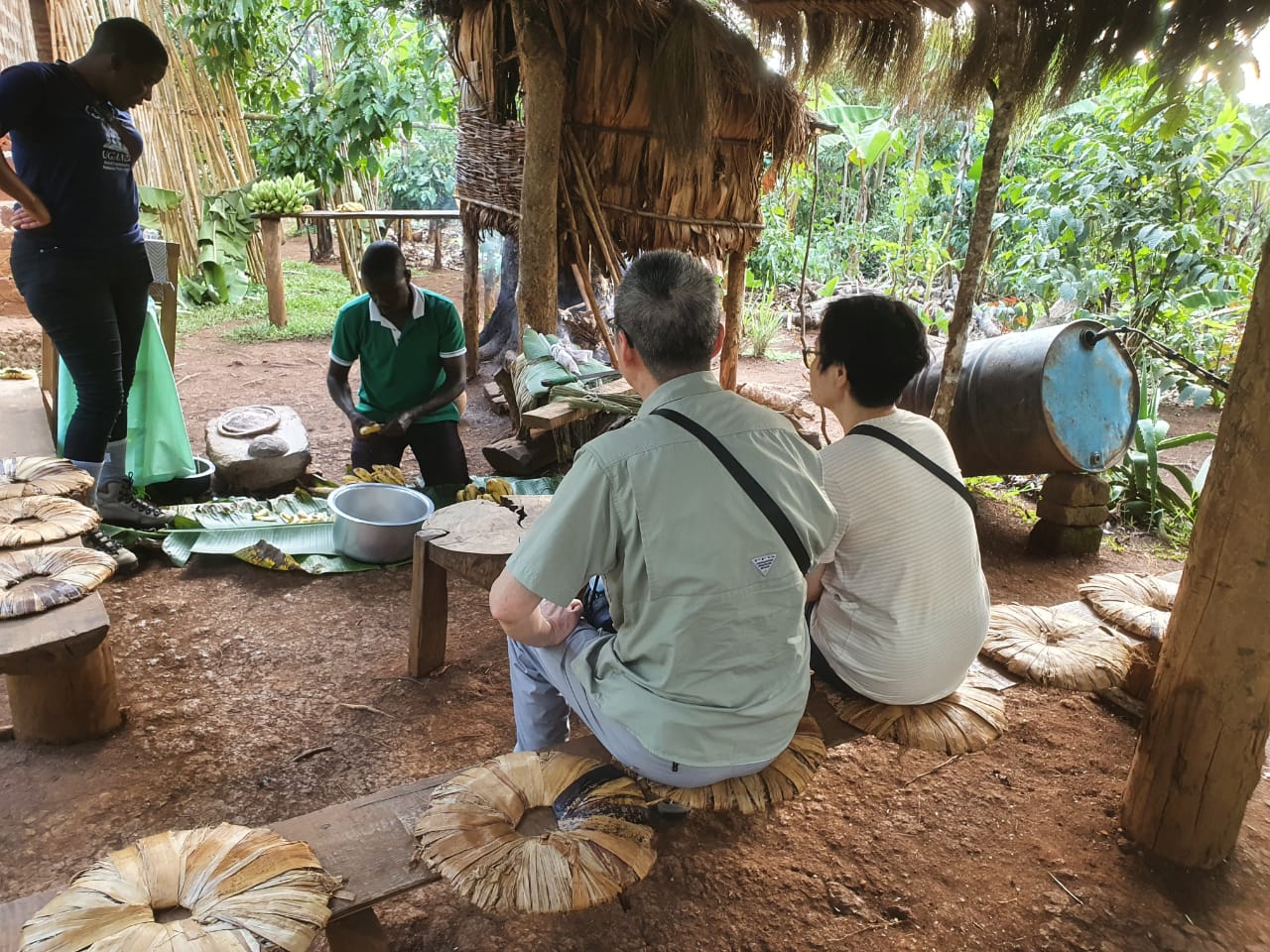
Bigodi Wetland Sanctuary is managed by a local community organization rather than a national park authority. This model ensures that tourism revenue directly benefits surrounding villages.
Funds generated from entrance fees support:
- Local schools
- Health services
- Conservation education programs
- Employment for guides and community members
This approach has significantly reduced habitat destruction and increased awareness of conservation among local residents.
Visitors are guided by trained local experts who provide detailed knowledge about bird species, plants, and wildlife behavior.
The Bigodi Nature Walk Experience
A typical visit to Bigodi Wetland Sanctuary begins with a briefing at the visitor center near Kibale.
The guided walk follows a narrow trail through swamp, forest edge, and farmland areas. Wooden boardwalks and natural paths allow safe passage through wetland sections.
Unlike high-speed safari experiences, Bigodi emphasizes slow observation. Guides encourage visitors to stop frequently, listen to bird calls, and observe primates moving through the canopy.
This relaxed pace makes it ideal for photographers, birders, and travelers recovering from longer safari drives.
Wildlife Beyond Birds and Primates
While birds and primates dominate the experience, Bigodi Wetland Sanctuary also supports other wildlife species.
Visitors may encounter:
- Bush pigs
- Small antelope species in surrounding areas
- Otters in wetland channels
- Butterflies and insects in large diversity
The ecological richness of the sanctuary reflects its location between forest and wetland ecosystems.
Best Time to Visit Bigodi Wetland
The sanctuary can be visited year-round, but conditions vary slightly with seasons.
During dry seasons, trails are easier to walk and bird visibility is generally better. During wetter months, the wetland becomes more active, with increased bird movement and lush vegetation.
Early morning and late afternoon visits offer the best wildlife activity and lighting conditions.
How Bigodi Fits Into Uganda Safari Itineraries
Bigodi Wetland Sanctuary is most commonly visited as an extension of chimpanzee trekking in Kibale Forest National Park.
It also fits well into longer safari circuits that include:
- Queen Elizabeth National Park for game drives and boat safaris
- Murchison Falls National Park for Nile wildlife experiences
- Gorilla trekking in Bwindi Impenetrable National Park
Because it is low-cost and time-efficient, it is often used as a budget-friendly add-on activity.
Conservation Challenges and Successes
Like many wetland ecosystems, Bigodi Wetland Sanctuary faces challenges such as land pressure, agricultural expansion, and climate variability.
However, the community-based tourism model has been highly effective in reducing destructive activities and promoting sustainable land use.
The success of Bigodi is often cited as a model for conservation-linked tourism across Uganda.
Why Bigodi Is Perfect for Budget Travelers
One of the strongest advantages of Bigodi Wetland Sanctuary is affordability. Entry fees are significantly lower than national park permits, and guided walks are short and efficient.
Travelers do not need expensive vehicles or long transfers, making it ideal for:
- Backpackers
- Birdwatchers
- Students and researchers
- Safari travelers looking for a low-cost add-on
Despite its low cost, the biodiversity experience is extremely rich.
A Small Sanctuary with Big Rewards
Bigodi Wetland Sanctuary proves that meaningful wildlife experiences do not always require large budgets or vast national parks. Its combination of birdlife, primates, and community conservation creates a deeply engaging and educational experience.
Its proximity to Kibale Forest National Park makes it one of the most accessible and valuable extensions on any western Uganda safari.
For travelers seeking an affordable, relaxed, and highly rewarding nature experience, Bigodi remains one of Uganda’s hidden gems—small in size but exceptionally rich in biodiversity and cultural significance.