
Uganda’s Bat Caves: Visiting Maramagambo Forest
Deep within the southern sector of Queen Elizabeth National Park lies one of Uganda’s most atmospheric and lesser-known natural attractions—Maramagambo Forest. This vast tropical forest is famous for its dense vegetation, crater lakes, rich primate life, and most notably, its bat caves.
Unlike open savannah game drives, a visit to Maramagambo is a journey into thick rainforest, echoing with bird calls, rustling canopies, and the hidden movement of wildlife. The bat caves here are both fascinating and eerie, offering a completely different perspective on Uganda’s biodiversity.
This destination is ideal for travelers who want to combine wildlife safari experiences with forest exploration, geology, and unique ecological encounters.
Location and Ecological Setting
Maramagambo Forest is part of the larger ecosystem surrounding Queen Elizabeth National Park. It sits in the western arm of the East African Rift Valley, an area characterized by volcanic activity, crater lakes, and fertile forested landscapes.
The forest is one of the largest surviving tropical forests in Uganda outside protected mountain regions. It forms a natural corridor between savannah and wetland ecosystems, allowing a wide range of species to coexist.
The terrain includes thick evergreen forest, crater lakes such as Lake Nyamasingiri and Lake Kyasanduka, and underground cave systems that provide shelter for thousands of bats.
The Famous Bat Caves of Maramagambo
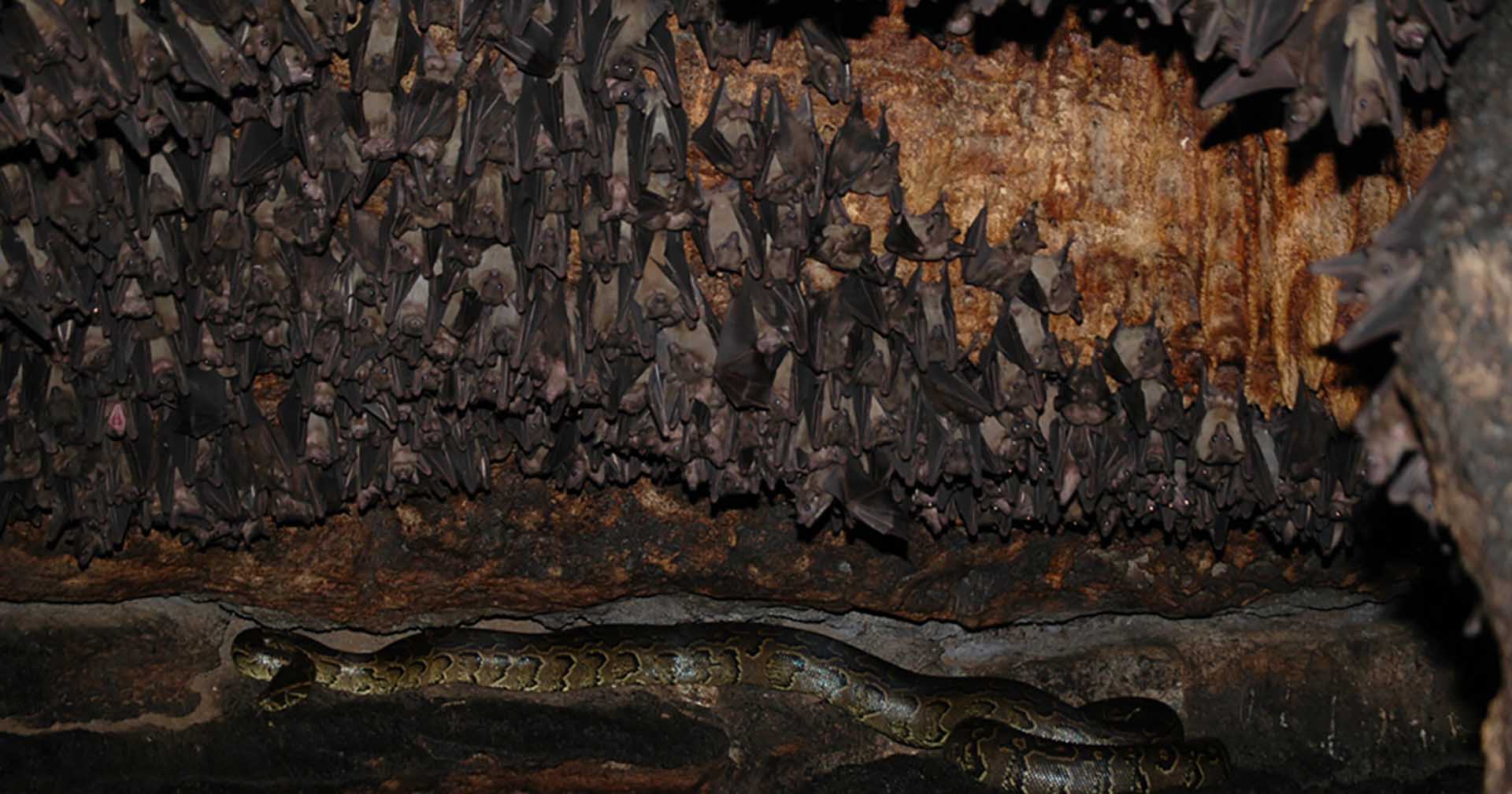
The bat caves are the main attraction in Maramagambo Forest. These natural limestone and volcanic rock formations are home to large colonies of fruit bats and insect-eating bats.
Inside the caves, thousands of bats hang from the ceilings in dense clusters, creating a powerful sensory experience filled with constant movement and sound. The air is cool, damp, and rich with the smell of the forest ecosystem above.
One of the most visited caves is the bat cave near Lake Nyamasingiri. Over time, these caves have become ecologically significant due to their role in seed dispersal and forest regeneration, as bats move between feeding areas and roosting sites.
The Ecological Role of Bats
The bats in Maramagambo Forest play a crucial role in maintaining forest health. Fruit bats, in particular, are key seed dispersers, helping regenerate tree species across the forest.
Insect-eating bats help control insect populations, contributing to ecological balance within both forest and nearby savannah ecosystems.
This makes the bat caves not just a tourist attraction, but an important component of Uganda’s biodiversity system.
Visitor Experience in Maramagambo Forest
A visit to Maramagambo Forest is typically organized as a guided nature walk. Visitors enter the forest with experienced Uganda Wildlife Authority guides who provide safety briefings and ecological explanations.
The trail to the bat caves passes through dense forest sections, crater lake viewpoints, and small clearings where monkeys and birds are often seen.
As you approach the caves, the environment becomes quieter and more enclosed, creating a noticeable shift in atmosphere. Inside the cave vicinity, the presence of bats becomes increasingly apparent through sound and movement.
Visitors are usually allowed to view the cave entrance and surrounding areas, but access inside is regulated for safety and conservation reasons.
Wildlife in Maramagambo Forest
Beyond the bat caves, Maramagambo Forest is home to a wide variety of wildlife species.
Common sightings include:
- Black-and-white colobus monkeys
- Blue monkeys
- Red-tailed monkeys
- Olive baboons
- Forest elephants (occasionally)
- Numerous bird species including hornbills and turacos
The forest’s dense vegetation makes wildlife sightings more challenging than in open savannah parks, but the diversity is significantly higher.
Crater Lakes and Scenic Landscapes
One of the most striking features of Maramagambo Forest is its volcanic landscape. The forest contains several crater lakes formed by ancient volcanic activity in the Albertine Rift.
These lakes are surrounded by steep forested walls and offer dramatic viewpoints. Some are filled with clear water, while others have unique ecological conditions that support different aquatic life.
The combination of forest, caves, and crater lakes creates one of the most visually diverse environments in western Uganda.
Safety and Conservation Considerations
The bat caves in Maramagambo Forest are carefully managed due to ecological sensitivity and past concerns about disease transmission in cave environments.
Guided visits are strictly controlled to ensure visitor safety and minimize disturbance to bat populations.
Conservation authorities monitor bat colonies regularly, as they are sensitive to human interference and environmental changes.
Visitors are advised to follow all guide instructions, avoid loud noises, and maintain safe distances from wildlife.
Best Time to Visit Maramagambo Forest
The forest can be visited year-round, but dry seasons generally offer easier walking conditions along forest trails.
During wetter months, the forest becomes lush and vibrant, with increased bird activity and richer vegetation.
Morning visits are recommended for better wildlife activity and cooler temperatures.
How Maramagambo Fits Into a Uganda Safari
Maramagambo Forest is often included as part of a broader itinerary in western Uganda, especially when visiting Queen Elizabeth National Park.
It can be combined with:
- Game drives in Kasenyi plains
- Boat cruises on the Kazinga Channel
- Ishasha sector tree-climbing lions
- Gorilla trekking in Bwindi Impenetrable National Park
This makes it a valuable extension for travelers seeking ecological diversity beyond standard safari routes.
A Hidden Underground World in Uganda’s Forests
The bat caves of Maramagambo Forest offer a rare glimpse into a hidden ecological world where bats, forests, and volcanic geology intersect.
Unlike Uganda’s more famous wildlife destinations, this experience is quieter, more atmospheric, and deeply connected to forest ecology.
Combined with its proximity to Queen Elizabeth National Park, Maramagambo provides a unique contrast to savannah safaris and adds depth to any western Uganda itinerary.
For travelers seeking something unusual, educational, and slightly mysterious, the bat caves and forest trails of Maramagambo deliver a memorable and distinctive adventure.