
Cheetah in Uganda: Do They Exist and Where to See Them
The cheetah is one of Africa’s most iconic predators, famous for its speed, elegance, and distinctive spotted coat. Known scientifically as Acinonyx jubatus, it is the fastest land animal on Earth. But when it comes to Uganda, a common question arises: do cheetahs actually exist here?
The answer is yes—but with important limitations. Unlike lions, elephants, or leopards, cheetahs are extremely rare in Uganda and are confined to very specific regions. Understanding where to find them requires knowledge of habitat, conservation history, and current distribution patterns.
Do Cheetahs Live in Uganda?
Cheetahs do exist in Uganda, but their population is small and geographically restricted. Historically, cheetahs roamed wider parts of the country, particularly in open savannah regions. However, habitat loss, human expansion, and competition with other predators have reduced their range significantly.
Today, Uganda is not considered a primary cheetah destination compared to countries like Kenya or Tanzania. However, sightings are still possible under the right conditions.
Where to See Cheetahs in Uganda
The only reliable place to see cheetahs in Uganda is Kidepo Valley National Park.
Located in the remote northeastern part of the country, Kidepo offers vast open savannah landscapes that resemble parts of northern Kenya. This habitat is ideal for cheetahs, which rely on visibility and space for high-speed hunting.
Kidepo’s features that support cheetahs include:
Open grasslands for sprinting
Low predator density compared to other parks
Abundant prey such as gazelles and small antelope
Because of its isolation, Kidepo has preserved a more natural predator-prey balance, making it Uganda’s only stronghold for cheetahs.
Why Cheetahs Are Rare in Uganda
Cheetahs require very specific environmental conditions that are not widely available across Uganda.
They prefer:
Open plains rather than dense forests
Low competition from larger predators like lions
Large territories for hunting
Most of Uganda’s major parks, such as Queen Elizabeth National Park and Murchison Falls National Park, have higher densities of lions and other predators. This makes them less suitable for cheetahs, which are more vulnerable and avoid direct competition.
In addition, Uganda’s landscape includes large areas of forest and woodland, which are not ideal for cheetah hunting strategies.
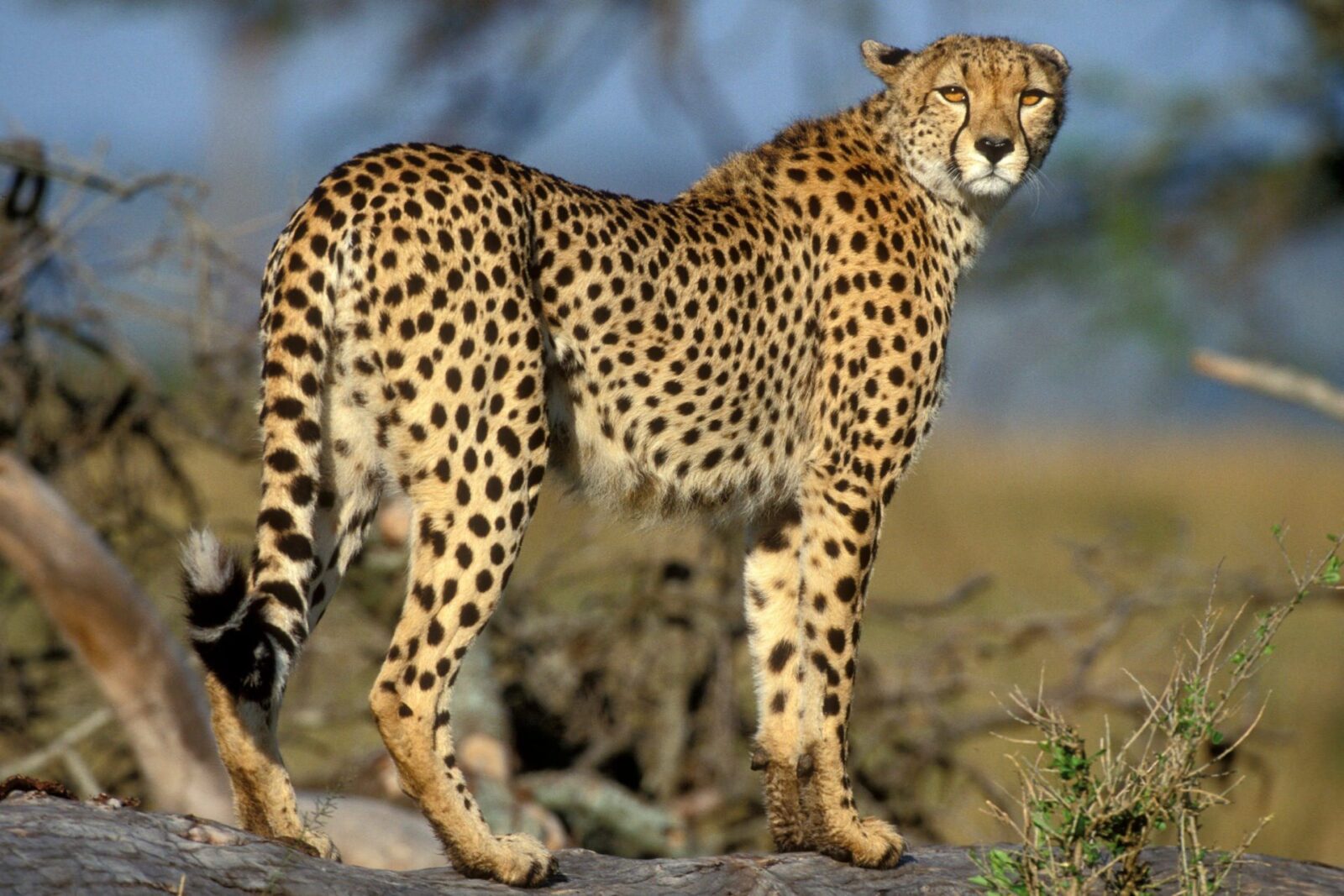
Behaviour of Cheetahs: Built for Speed
The Acinonyx jubatus is uniquely adapted for speed rather than strength.
It can reach speeds of up to 100–120 km/h in short bursts, making it the fastest land animal. However, this speed comes at a cost—cheetahs tire quickly and must catch their prey within seconds.
Their hunting strategy involves:
Spotting prey from a distance
Stalking to get within range
Launching a high-speed chase
Tripping the prey using a swipe of the paw
Unlike lions or leopards, cheetahs rely on speed rather than ambush or power.
Cheetahs vs Other Predators in Uganda
Cheetahs are at a disadvantage when competing with larger predators.
Lions and hyenas can easily steal their kills, forcing cheetahs to eat quickly or abandon food altogether. This competition is one reason cheetahs prefer areas with fewer dominant predators.
In Uganda, this dynamic limits their distribution to regions like Kidepo, where predator density is relatively lower compared to more popular parks.
Best Time to See Cheetahs in Uganda
If you are planning to see cheetahs in Kidepo Valley National Park, timing is important.
Early morning and late afternoon offer the best chances, as cheetahs are more active during cooler hours.
Dry seasons provide better visibility because:
Vegetation is shorter
Prey animals gather in open areas
Road access is easier
Even in the best conditions, sightings are not guaranteed due to their low population density.
Safari Expectations: Managing Realistic Sightings
It is important to set realistic expectations when searching for cheetahs in Uganda.
Unlike Kenya’s Maasai Mara or Tanzania’s Serengeti, where cheetahs are relatively common, Uganda offers only occasional sightings.
A safari in Uganda should therefore be viewed as a broader wildlife experience that may include:
Lions
Leopards
Elephants
Buffalo
Unique landscapes and birdlife
If seeing cheetahs is a top priority, combining Uganda with a Kenya or Tanzania safari is often recommended.
Conservation Status
The Acinonyx jubatus is currently classified as Vulnerable, with declining populations across Africa.
Major threats include:
Habitat loss
Human-wildlife conflict
Decline in prey populations
Competition with larger predators
In Uganda, conservation efforts focus on protecting habitats like Kidepo and maintaining ecosystem balance.
Why Kidepo Is Special for Cheetahs
Kidepo Valley National Park is one of Africa’s most remote and least visited parks, which contributes to its importance for cheetah conservation.
Its open plains, minimal human disturbance, and unique ecosystem create conditions that are rare elsewhere in Uganda.
For travelers willing to venture off the typical safari route, Kidepo offers not only the chance to see cheetahs but also one of the most authentic wilderness experiences in East Africa.
Final Thoughts
The Acinonyx jubatus does exist in Uganda, but it remains one of the country’s rarest large predators. Sightings are limited primarily to Kidepo Valley National Park, where the landscape supports their unique hunting style.
While Uganda is not a primary cheetah destination, the possibility of encountering one in such a remote and untouched environment adds a sense of rarity and excitement to any safari.
For travelers seeking exclusivity and raw wilderness, the search for cheetahs in Uganda becomes more than just a sighting—it becomes part of the adventure itself.