
Uganda’s Giraffes: The Nubian Giraffe Subspecies
Uganda is home to one of the most distinctive and conservation-significant giraffe populations in Africa—the Nubian giraffe. Scientifically classified as Giraffa camelopardalis camelopardalis, this giraffe subspecies is among the rarest in the world and plays a central role in Uganda’s wildlife conservation story.(Uganda’s Giraffes: The Nubian Giraffe Subspecies)
Unlike the more widely distributed giraffe populations in East Africa, Uganda’s giraffes are part of a carefully protected and recovering population. Their presence in national parks is not just a safari highlight—it is a conservation success story shaped by translocations, protection efforts, and habitat management.
What Is the Nubian Giraffe?
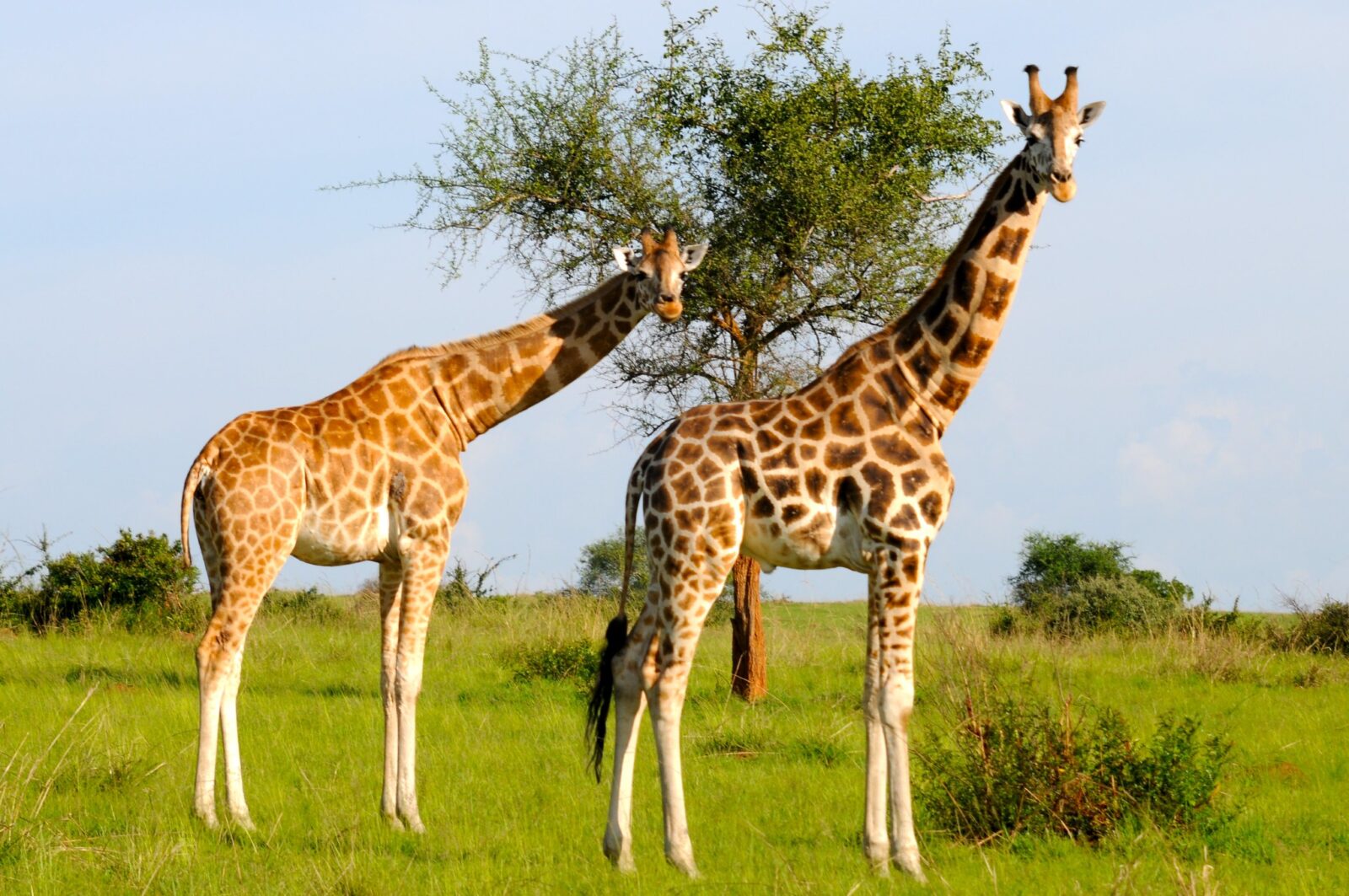
The Nubian giraffe is a subspecies of the northern giraffe group, distinguished by its unique coat pattern and restricted geographic range.
Its markings are irregular, large, and sharply defined, often separated by lighter lines. These patterns differ from the more uniform and reticulated patterns seen in other giraffe subspecies.
Historically, Nubian giraffes ranged across parts of northeastern Africa, including South Sudan and western Ethiopia. Today, their distribution is highly fragmented, making Uganda one of their most important remaining strongholds.
Where to See Nubian Giraffes in Uganda
The best places to see Nubian giraffes in Uganda are within protected conservation areas where populations have been successfully established and managed.
The primary locations include:
Murchison Falls National Park, which hosts the largest population of Nubian giraffes in the country. The northern sector of the park, particularly around Paraa and the Nile delta, offers excellent viewing opportunities.
Kidepo Valley National Park, where a smaller but growing population exists within open savannah landscapes.
Lake Mburo National Park, where giraffes were reintroduced as part of a conservation initiative to expand their range and improve population security.
These parks provide the open grasslands and acacia woodlands that giraffes depend on for feeding and movement.
Conservation Success: From Decline to Recovery
The story of the Nubian giraffe in Uganda is one of recovery and strategic conservation.
Decades ago, giraffe populations declined sharply due to poaching, habitat loss, and civil unrest. At one point, their numbers were critically low, raising concerns about long-term survival.
Conservation organizations and the Uganda Wildlife Authority initiated efforts to protect remaining populations and reintroduce giraffes into suitable habitats.
One of the most significant milestones was the translocation of giraffes to Lake Mburo National Park. This effort established a new, viable population and reduced the risk of losing the species from a single location.
Today, Uganda’s Nubian giraffe population is steadily increasing, making it one of the most encouraging conservation stories in East Africa.
Habitat and Feeding Behaviour
Nubian giraffes are adapted to savannah and woodland environments, where they rely on trees and shrubs for food.
Their diet consists mainly of:
Leaves from acacia and other trees
Twigs and shoots
Occasionally fruits and flowers
Their long necks and prehensile tongues allow them to reach vegetation that is inaccessible to most other herbivores. This feeding strategy reduces competition and allows them to thrive in diverse environments.
Giraffes spend much of their day feeding, often moving slowly across the landscape in search of suitable vegetation.
Social Structure and Behaviour
Nubian giraffes are generally social animals, but their group structure is fluid rather than fixed.
They form loose herds that change composition over time. These groups may include females with calves, bachelor males, or mixed individuals.
Unlike animals with strict hierarchies, giraffe societies are relatively relaxed. However, males do engage in dominance behavior known as “necking,” where they swing their necks and heads to establish hierarchy.
Despite their size, giraffes are calm and non-aggressive, making them one of the most peaceful large mammals to observe on safari.
Reproduction and Life Cycle
Female giraffes give birth after a gestation period of about 15 months.
Calves are born standing, often dropping nearly two meters to the ground at birth. Within hours, they are able to stand and walk, an essential adaptation for survival in predator-rich environments.
Mothers are highly protective, and calves often stay close to them during the early stages of life.
Predators such as lions pose a threat to young giraffes, but adult giraffes are rarely attacked due to their size and powerful defensive kicks.
Ecological Importance
Nubian giraffes play a vital role in shaping their ecosystems.
By feeding on tree foliage, they help control vegetation growth and maintain balance in savannah environments. Their browsing behavior can influence plant structure and promote biodiversity.
They also contribute to seed dispersal, helping maintain healthy plant populations across large areas.
Best Time to See Giraffes in Uganda
Giraffes can be seen year-round in Uganda’s national parks.
They are most active during early morning and late afternoon, when they feed and move across open landscapes.
Dry seasons often provide better visibility, as shorter vegetation makes it easier to spot them from a distance.
Game drives in Murchison Falls National Park offer some of the best opportunities for close encounters.
Why Uganda Is Important for Nubian Giraffes
Uganda is one of the last strongholds for the Nubian giraffe, making it critically important for the subspecies’ survival.
Protected areas such as Murchison Falls National Park and Lake Mburo National Park serve as safe habitats where populations can grow without significant human pressure.
Continued conservation efforts are essential to ensure that this rare subspecies continues to recover and expand its range.
The Giraffa camelopardalis camelopardalis represents one of Uganda’s most important wildlife conservation achievements. From near decline to gradual recovery, its story reflects the impact of targeted conservation and habitat protection.
Seeing Nubian giraffes in places like Murchison Falls National Park is more than just a safari highlight—it is a chance to witness a species that has been given a second chance.
For travelers, conservationists, and wildlife enthusiasts, Uganda offers one of the best opportunities in Africa to observe this rare and remarkable giraffe in its natural environment.