
African Leopard: The Most Elusive of the Big Five
The African leopard is one of the most mysterious and adaptable predators on the continent. Known scientifically as Panthera pardus pardus, this solitary big cat is famous for its stealth, intelligence, and ability to thrive in a wide range of habitats.
Unlike lions, which live in prides, or cheetahs, which rely on speed, the leopard survives through secrecy. It is rarely seen, moves mostly at night, and avoids confrontation whenever possible. This elusive nature is what makes spotting a leopard on safari one of the most exciting wildlife experiences in Africa.
What Makes the African Leopard So Elusive?
The African leopard has evolved to be one of the most efficient ambush predators in the animal kingdom. Its entire survival strategy is built around remaining unseen.
Several key traits contribute to its elusive nature.
Its rosette-patterned coat provides perfect camouflage in dappled light, allowing it to blend into trees, grass, and rocky terrain. Even when a leopard is nearby, it is often invisible to the untrained eye.
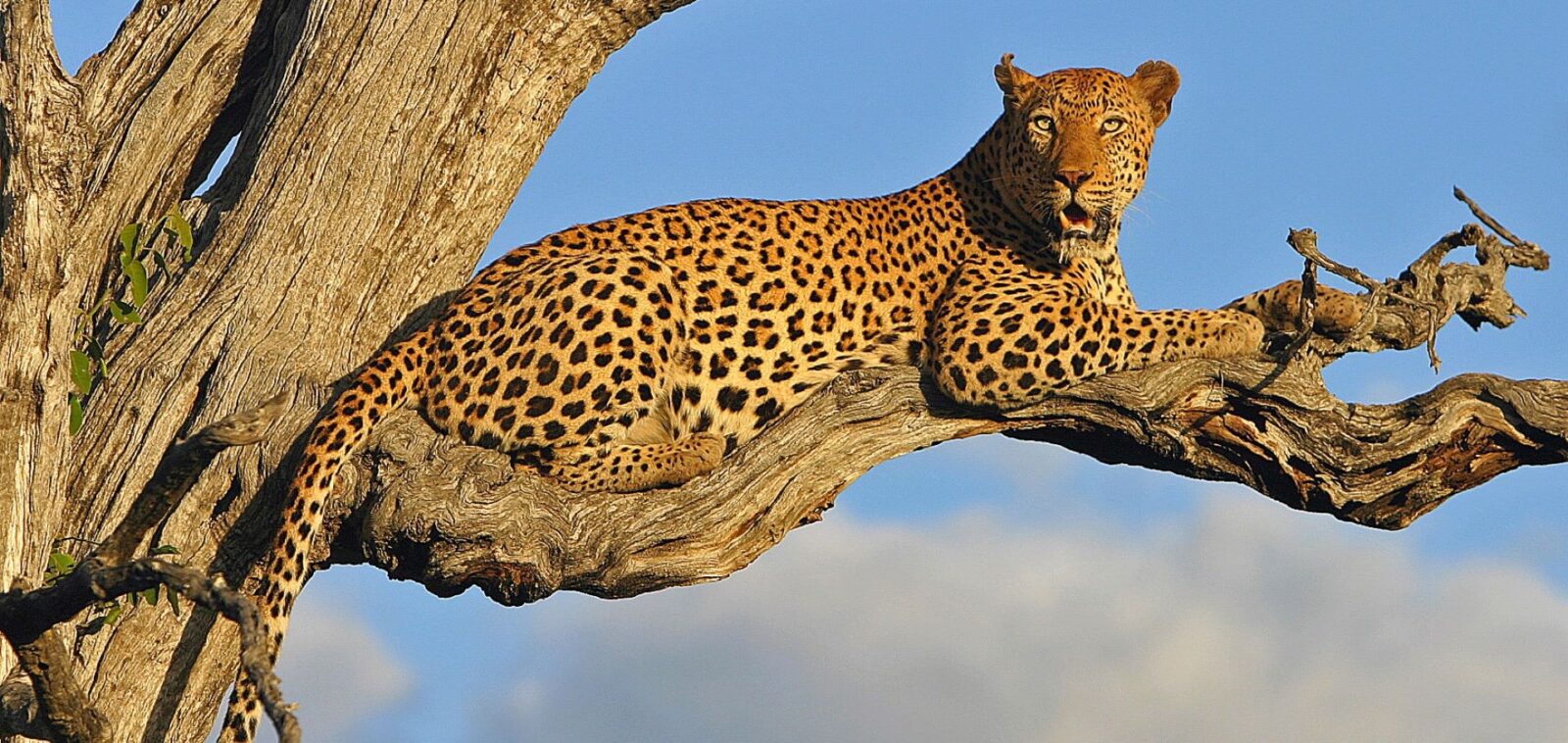
Leopards are primarily nocturnal, meaning they hunt and move under the cover of darkness. During the day, they rest in trees, dense vegetation, or rocky outcrops where they remain hidden.
They are also solitary animals. Each leopard maintains its own territory and avoids others except during mating or when raising cubs. This reduces the number of sightings compared to social predators like lions.
Behaviour and Hunting Strategy
Leopards rely on stealth, patience, and precision rather than speed or strength alone.
A typical hunt involves:
- Silent stalking through cover
- Slow, deliberate movement toward prey
- A short, explosive attack at close range
- A suffocating bite to the throat
Unlike cheetahs, which chase prey over distance, leopards depend on getting as close as possible before launching their attack.
Their diet is highly flexible and includes antelope, monkeys, birds, rodents, and even reptiles. This adaptability allows them to survive in environments where other predators struggle.
One of the leopard’s most distinctive behaviors is dragging prey into trees. This protects the kill from scavengers such as hyenas and lions, allowing the leopard to feed undisturbed over several days.
Strength and Adaptability
Despite being smaller than lions, leopards are incredibly strong. They can carry prey heavier than their own body weight up into trees.
Their adaptability is one of their greatest strengths. Leopards are found in a wide range of habitats, including:
- Savannah grasslands
- Dense forests
- Mountainous regions
- Semi-arid environments
They are also one of the few large predators that can survive near human settlements, although this often leads to conflict.
Territory and Communication
Leopards are highly territorial animals. Each individual maintains a defined territory that overlaps minimally with others of the same sex.
Territory size varies depending on prey availability and habitat but can range from 15 to over 100 square kilometers.
Leopards communicate through:
- Scent marking (urine and glands)
- Scratch marks on trees
- Vocalizations such as rasping calls
These signals help avoid direct confrontation and maintain spacing between individuals.
Reproduction and Life Cycle
Female leopards give birth to 1–3 cubs after a gestation period of about three months.
Cubs are hidden in dense vegetation for the first few weeks to protect them from predators. The mother raises them alone, teaching them hunting skills and survival techniques.
Young leopards stay with their mother for up to two years before becoming independent. Survival rates are relatively low due to predation and competition from other carnivores.
Where to See African Leopards
Because of their elusive nature, leopard sightings are never guaranteed, but certain safari destinations offer higher chances.
Top locations include:
- Maasai Mara National Reserve – Strong populations and frequent sightings
- Serengeti National Park – Riverine forests and kopjes provide ideal habitat
- Kruger National Park – One of the best places for consistent sightings
- South Luangwa National Park – Famous for high leopard density and night drives
- Queen Elizabeth National Park – Occasional sightings in Ishasha and Mweya areas
Leopards are often spotted resting in trees during the day or moving along riverbanks at dusk.
Best Time to See Leopards on Safari
Early morning and late afternoon are the best times to see leopards, as they are more active during cooler hours.
Dry seasons improve visibility because:
- Vegetation is thinner
- Animals gather near water sources
- Tracks are easier to follow
Night game drives in parks where they are permitted significantly increase the chances of seeing leopards in action.
Why Leopard Sightings Are Special
Unlike lions or elephants, leopard sightings feel rare and personal. Because they are solitary and secretive, encountering one often feels like discovering something hidden.
Guides play a crucial role in locating leopards by reading tracks, listening for alarm calls from other animals, and understanding movement patterns.
For many safari travelers, seeing a leopard is one of the most memorable highlights of their journey.
Conservation Status
The African leopard is currently classified as Vulnerable, facing threats such as:
Habitat loss and fragmentation
Human-wildlife conflict
Poaching and illegal wildlife trade
Decline in prey populations
Conservation efforts focus on habitat protection, anti-poaching measures, and community-based wildlife management.
Final Thoughts
The Panthera pardus pardus is one of Africa’s most fascinating predators, defined by its stealth, intelligence, and adaptability.
As the most elusive of the Big Five, it represents the hidden side of the African wilderness—quiet, powerful, and rarely seen. Spotting a leopard in the wild is not just about luck; it is about patience, timing, and understanding its behavior.
For safari travelers, a leopard encounter transforms an ordinary game drive into an unforgettable moment, offering a glimpse into one of nature’s most secretive and perfectly adapted hunters