
Spotted Hyena: Africa’s Most Misunderstood Predator
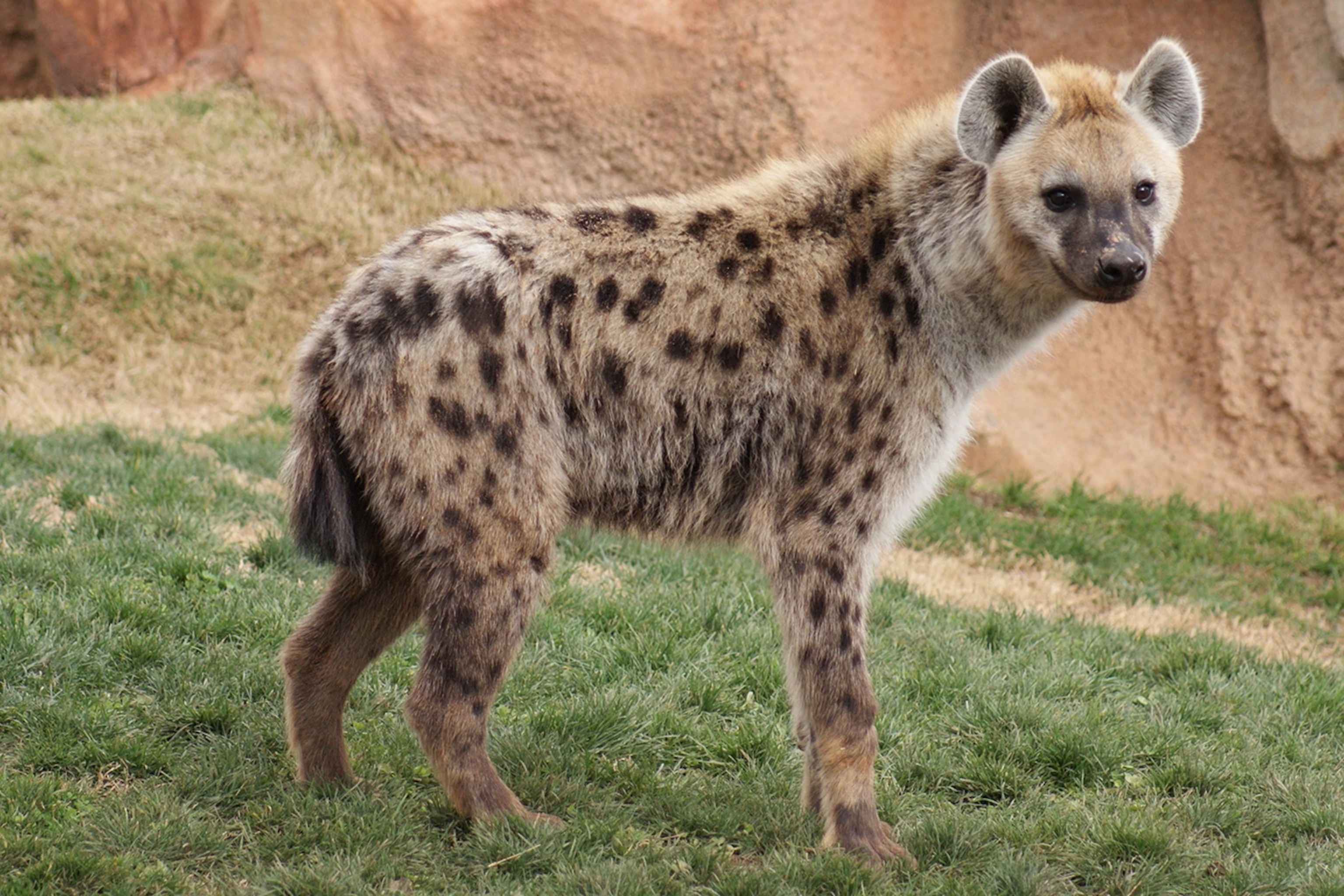
The spotted hyena, scientifically known as Crocuta crocuta, is one of Africa’s most intelligent and socially complex predators, yet it remains one of the most misunderstood. Often portrayed as a scavenger lurking in the shadows of more “noble” predators, the reality is far more sophisticated. In ecosystems across Africa, the spotted hyena is not just surviving—it is dominating, hunting efficiently, and shaping the balance of wildlife populations. (Spotted Hyena: Africa’s Most Misunderstood Predator)
Understanding the true nature of this species requires moving beyond myths and focusing on behavior, ecology, and social dynamics. When viewed through this lens, the spotted hyena emerges as one of the most strategically advanced carnivores on the continent.
The Misconception: Scavenger or Skilled Hunter?
The reputation of the spotted hyena as a scavenger is largely inaccurate. While it does scavenge when the opportunity arises, scientific studies show that hyenas hunt a significant portion of their food, particularly in ecosystems such as Serengeti National Park. Their ability to switch between hunting and scavenging is not a weakness but a highly effective survival strategy.
Hyenas are endurance hunters. Rather than relying on explosive speed like cheetahs or coordinated ambush like lions, they depend on stamina and persistence. They can pursue prey over long distances, gradually exhausting it before making the final kill. This method allows them to target animals that might otherwise escape faster predators.
Their powerful jaws further reinforce their dominance. A spotted hyena can crush bones with ease, extracting nutrients that other predators leave behind. This ability ensures that almost nothing from a carcass goes to waste, making them essential recyclers in the ecosystem.
Social Structure: A Matriarchal Power System
One of the most remarkable aspects of spotted hyena behavior is its social organization. Hyenas live in large groups known as clans, which can include dozens of individuals. These clans are not loosely organized; they operate under a strict hierarchy that governs access to food, mating opportunities, and social interactions.
Unlike most mammalian societies, spotted hyena clans are matriarchal. Females dominate males in both size and authority, and the highest-ranking female leads the entire group. Her offspring inherit her status, creating a lineage-based system that maintains order within the clan.
This dominance structure is not symbolic—it directly affects survival. High-ranking individuals gain priority access to food and resources, while lower-ranking members must wait their turn or risk confrontation. This hierarchy creates a highly structured society where every individual understands its position.
Intelligence and Communication
Spotted hyenas are among the most intelligent carnivores in Africa. Their cognitive abilities include problem-solving, memory of social relationships, and cooperative strategies during hunts. These traits allow them to function effectively in complex social systems and competitive environments.
Communication within a clan is equally sophisticated. Hyenas use a wide range of vocalizations, including whoops, grunts, and the well-known “laughing” sounds. These vocal signals are not random; they convey specific information about status, excitement, or conflict.
The long-distance “whoop” call is particularly important, allowing clan members to locate each other across vast territories. Combined with scent marking and body language, these communication methods help maintain cohesion and reduce unnecessary conflict within the group.
Territorial Behaviour and Predator Rivalry
Spotted hyenas are highly territorial animals, and their territories often overlap with those of other major predators. This overlap leads to one of the most intense rivalries in the African wilderness—the competition between hyenas and lions.
In areas such as Maasai Mara National Reserve, these interactions are a regular feature of the ecosystem. Hyenas may steal kills from lions if they outnumber them, while lions will dominate and displace hyenas when they have the advantage.
This constant competition shapes predator behavior on both sides. Hyenas must be strategic and opportunistic, while lions must defend their kills and territories aggressively. The result is a dynamic balance of power that defines the predator landscape.
Reproduction and Early Life
The reproductive biology of spotted hyenas is as unusual as their social structure. Females give birth to one or two cubs after a gestation period of about 110 days. Unlike many other carnivores, hyena cubs are born highly developed, with open eyes and fully erupted teeth.
This early development reflects the competitive nature of their society. Cubs must establish dominance from a very young age, even competing with siblings for access to milk and attention. This competition can be intense, but it prepares them for life within a strict social hierarchy.
Cubs are raised in communal dens, where multiple females bring their young. Despite the shared space, each mother is responsible for her own offspring, reinforcing the importance of rank and lineage.
Ecological Importance of Spotted Hyenas
The role of the spotted hyena in the ecosystem cannot be overstated. As both a predator and a scavenger, it performs functions that are essential for maintaining ecological balance.
By hunting herbivores, hyenas help regulate prey populations, preventing overgrazing and maintaining vegetation health. By consuming carcasses, they reduce the spread of disease and recycle nutrients back into the environment.
In many ways, the spotted hyena acts as both a regulator and a cleaner within the ecosystem, ensuring that energy flows efficiently through the food chain.
Where to See Spotted Hyenas in the Wild
Spotted hyenas are widely distributed across sub-Saharan Africa, and they are commonly seen in many major safari destinations. Some of the best places to observe them include Serengeti National Park, Maasai Mara National Reserve, Ngorongoro Crater, Kruger National Park, and Queen Elizabeth National Park.
They are most active during the night and early morning, but sightings during daylight hours are also common, especially in open savannah environments. Watching a hyena clan interact, feed, or move across the landscape provides valuable insight into their complex social lives.
Conservation Status and Challenges
The spotted hyena is currently classified as a species of Least Concern, but this does not mean it is free from threats. Habitat loss, human-wildlife conflict, and persecution continue to impact populations in certain regions.
Because of their misunderstood reputation, hyenas are sometimes targeted by humans more than other predators. Conservation efforts must therefore focus not only on habitat protection but also on changing perceptions and promoting coexistence.
Final Thoughts
The Crocuta crocuta is far more than the scavenger it is often portrayed to be. It is a highly intelligent, socially complex, and ecologically vital predator that plays a central role in Africa’s ecosystems.
Its matriarchal society, endurance hunting strategies, and ability to adapt to different environments make it one of the most successful carnivores on the continent. For safari travelers, observing spotted hyenas offers a deeper understanding of predator dynamics and challenges many of the assumptions often associated with this remarkable species.
In the end, the spotted hyena is not just misunderstood—it is underestimated.