
African Jacana: The Lily-Trotter of Uganda’s Swamps
The African jacana is one of the most fascinating wetland birds in Africa, instantly recognizable for its ability to walk effortlessly across floating vegetation. Scientifically known as Actophilornis africanus, this unique species is often called the “lily-trotter” because of how it appears to glide across water lilies.
Widely distributed across sub-Saharan Africa, the African jacana is especially common in Uganda’s swamps, lakes, and slow-moving waterways. Its unusual anatomy, reversed gender roles, and striking appearance make it one of the most intriguing birds to observe on a safari.
Why the African Jacana Is Called the Lily-Trotter
The nickname “lily-trotter” comes from the jacana’s extraordinary ability to walk on floating vegetation such as water lilies.
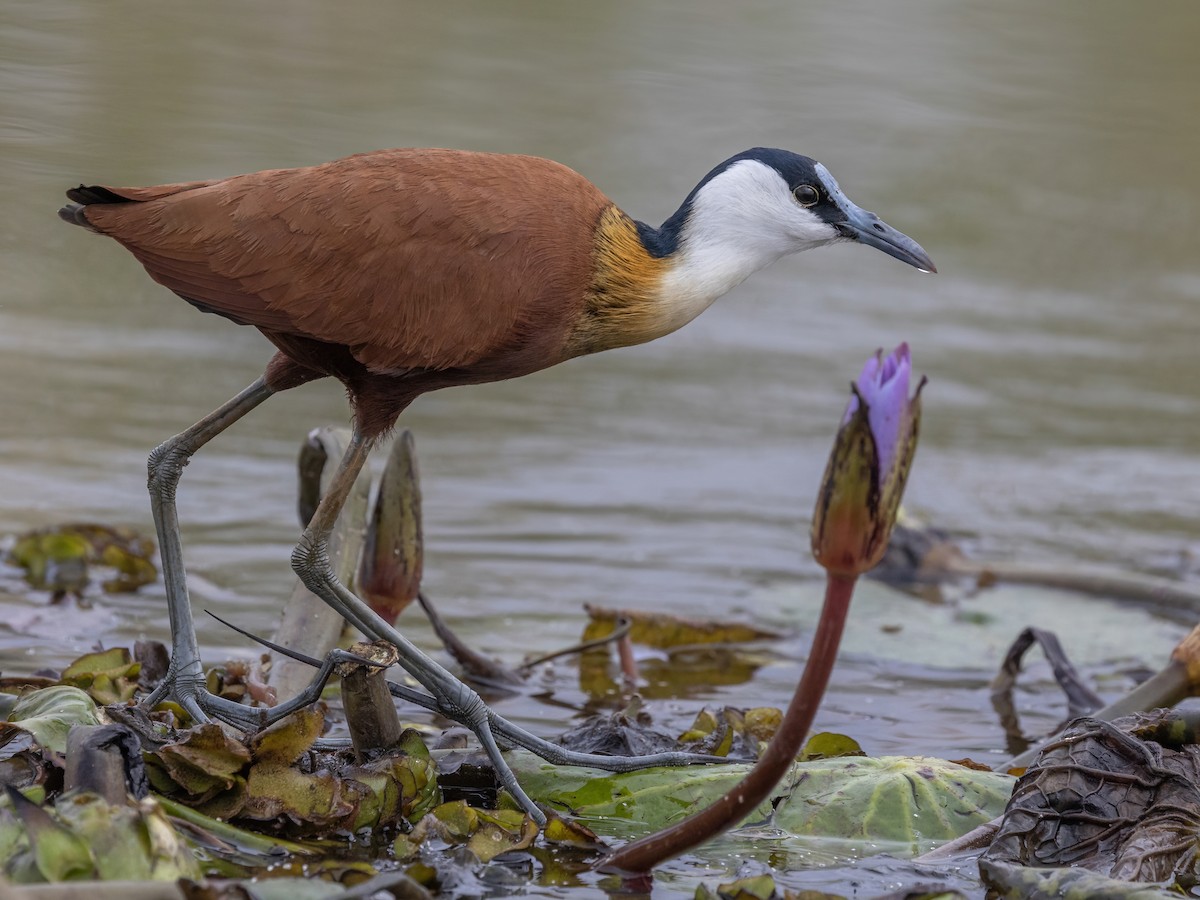
This is made possible by its extremely long toes and claws, which spread its weight over a larger surface area. Instead of sinking, the bird distributes its weight evenly, allowing it to move across delicate plants that would not support most other birds.
Watching an African jacana step lightly across lily pads creates the illusion that it is walking on water, making it one of the most visually distinctive birds in wetland environments.
Physical Appearance and Identification
The African jacana is a medium-sized bird with a striking and elegant appearance.
It has a rich chestnut-brown body, contrasted by black head and neck coloration. A pale blue frontal shield sits above its beak, adding to its distinctive look.
Its long legs and exceptionally elongated toes are its most defining features. These adaptations are perfectly suited for life on floating vegetation.
In flight, the jacana reveals bright yellow patches on its wings, which are usually hidden when it is walking.
Habitat: Where to Find African Jacanas in Uganda
African jacanas are closely associated with freshwater wetlands, where floating vegetation is abundant.
In Uganda, they are commonly found in:
Mabamba Swamp, one of the best wetland birding locations near Lake Victoria
Queen Elizabeth National Park, especially along the Kazinga Channel
Murchison Falls National Park, along the Nile River and delta areas
Lake Mburo National Park, where wetlands and lakes support diverse birdlife
These habitats provide the floating plants, insects, and small aquatic creatures that jacanas depend on.
Behaviour and Movement
The African jacana is a highly active and agile bird, constantly moving across floating vegetation in search of food.
Its movement is slow and deliberate, carefully placing each step to maintain balance on unstable surfaces. Despite this careful approach, it can move quickly when needed, especially when avoiding predators.
Jacanas are also capable of short flights, but they prefer to remain on vegetation where they are most comfortable and efficient.
Feeding Habits
The African jacana is primarily an insectivore, feeding on a variety of small creatures found on or near the water’s surface.
Its diet includes:
Insects and larvae
Small invertebrates
Aquatic insects
Occasionally seeds
It forages by picking food directly from floating plants or the water’s surface, using its sharp eyesight to locate prey.
Unique Social Structure: Role Reversal in Parenting
One of the most unusual aspects of the African jacana is its reversed gender roles.
In this species, females are larger and more dominant than males. A single female may mate with multiple males, each of whom takes responsibility for raising the eggs and chicks.
After laying eggs in multiple nests, the female leaves the males to incubate and care for the young.
Male jacanas are responsible for:
Incubating the eggs
Protecting the nest
Caring for chicks after hatching
This role reversal is rare among birds and makes the African jacana a unique example of polyandry in the animal kingdom.
Reproduction and Chick Behaviour
Jacana nests are built on floating vegetation, making them vulnerable to water movement and predators.
The male carefully constructs and maintains the nest, ensuring it remains stable.
When chicks hatch, they are highly vulnerable but also surprisingly capable. In moments of danger, the male can carry chicks under his wings, holding them against his body while moving across vegetation.
This behavior is one of the most remarkable survival strategies among birds.
Ecological Importance
African jacanas play an important role in wetland ecosystems.
By feeding on insects and small invertebrates, they help control populations and maintain ecological balance. Their presence is also an indicator of healthy wetland environments with stable vegetation and water quality.
Protecting jacanas therefore contributes to the conservation of entire wetland ecosystems.
Best Time to See African Jacanas
African jacanas can be seen year-round in Uganda, as they are resident birds.
They are most active during early morning and late afternoon, when feeding activity is highest.
Because they remain on floating vegetation, they are relatively easy to spot compared to more elusive wetland birds.
Boat safaris and canoe excursions offer excellent viewing opportunities, especially in areas with dense water lilies.
Conservation Status
The African jacana is currently classified as Least Concern, with stable populations across much of its range.
However, it still faces threats from:
Wetland destruction
Water pollution
Habitat disturbance
Conserving wetlands is essential for ensuring the long-term survival of this species and many others that share its habitat.
Final Thoughts
The Actophilornis africanus is one of Africa’s most unique and visually captivating birds. Its ability to walk on water vegetation, combined with its unusual social structure, sets it apart from almost all other bird species.
Whether seen gliding across lily pads in Mabamba Swamp or feeding along the waterways of Queen Elizabeth National Park, the African jacana offers a memorable glimpse into the complexity of wetland life.
For birdwatchers and safari travelers, this “lily-trotter” represents the delicate balance of Uganda’s swamps—graceful, adaptive, and essential to the ecosystems it inhabits.