
Grey Crowned Crane: Uganda’s National Bird Explained
The Grey Crowned Crane is one of the most iconic and elegant birds in Africa and holds a special place in Uganda’s identity. Scientifically known as Balearica regulorum, this striking bird is instantly recognizable by its golden crown of stiff feathers, graceful movements, and elaborate courtship displays.
As Uganda’s national bird, the Grey Crowned Crane is featured prominently on the country’s flag and coat of arms, symbolizing peace, beauty, and resilience. Beyond its symbolism, it is also an ecologically important species found in wetlands and open grasslands across East Africa.
This guide explores everything about the Grey Crowned Crane, including its behavior, habitat, cultural significance, and where to see it in Uganda.
Why the Grey Crowned Crane Is Uganda’s National Bird
The Grey Crowned Crane was chosen as Uganda’s national bird due to its calm nature and dignified presence. Historically, it was admired for its gentle behavior and non-aggressive temperament, qualities that aligned with the values Uganda sought to represent at independence.
Its image appears on the national flag, where it stands on one leg—a posture often associated with balance and composure. This symbolism reflects harmony, stability, and national pride.
Unlike many other large birds, the Grey Crowned Crane is known for its peaceful coexistence with other species, further reinforcing its symbolic importance.
Physical Appearance and Unique Features
The Grey Crowned Crane is one of the most visually striking birds in Africa.
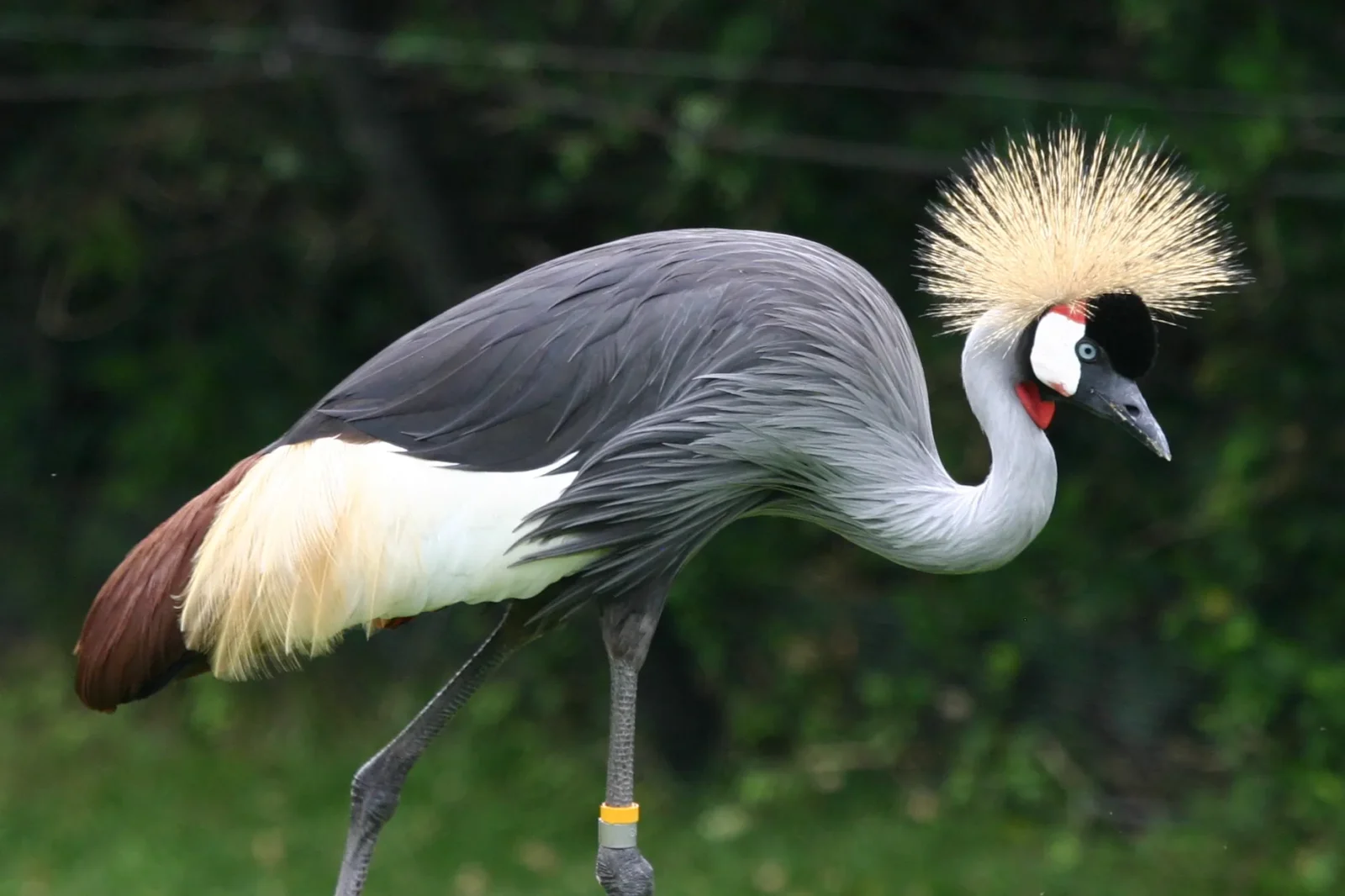
It is characterized by a tall, slender body, long legs, and a graceful neck. Its most distinctive feature is the golden crown of feathers on its head, which gives the bird its name.
Its plumage is mainly grey, with white wings accented by chestnut and gold feathers. The face features a mix of white and red patches, along with a small inflatable throat sac used in vocalization.
Unlike most cranes, the Grey Crowned Crane can perch in trees due to its long hind toe, a rare adaptation among crane species.
Behaviour and Social Life
Grey Crowned Cranes are social birds that are often seen in pairs or small groups. They are generally monogamous, forming long-term pair bonds that can last for life.
Their behavior is characterized by elegance and coordination, especially during courtship displays.
These displays involve:
Rhythmic dancing with jumps and bows
Wing spreading and shaking
Loud, trumpeting calls
These performances are not only used for attracting mates but also for strengthening bonds between partners.
Outside the breeding season, cranes may gather in larger flocks, particularly in areas with abundant food and water.
Habitat: Where Grey Crowned Cranes Live
Grey Crowned Cranes are closely associated with wetlands but also use surrounding grasslands and agricultural areas.
In Uganda, they are commonly found in:
Queen Elizabeth National Park, where open savannah and wetlands provide ideal habitat
Murchison Falls National Park, particularly in delta and floodplain areas
Lake Mburo National Park, known for its accessible wetlands and birdlife
They prefer areas with shallow water for nesting and feeding, combined with open land for foraging.
Feeding Habits
The Grey Crowned Crane is an omnivore with a varied diet.
It feeds on:
Seeds and grains
Insects
Small reptiles
Frogs
Plant matter
Its foraging behavior often involves walking slowly through grasslands or wetlands, picking food from the ground. In agricultural areas, it may feed on crops, which sometimes brings it into conflict with farmers.
Reproduction and Nesting
Breeding usually takes place during the wet season when food is abundant.
Grey Crowned Cranes build nests in wetlands using grasses and vegetation. These nests are typically hidden in tall reeds or papyrus to protect them from predators.
A female lays 2–5 eggs, and both parents share incubation duties. After hatching, chicks are cared for by both parents and remain dependent for several weeks.
The strong pair bond between adults plays a key role in successful breeding and chick survival.
Cultural and Ecological Importance
In Uganda, the Grey Crowned Crane is more than just a bird—it is a national symbol deeply connected to culture and identity.
Its presence on the flag and coat of arms reflects national pride, while its behavior represents peace and unity.
Ecologically, the crane plays a role in maintaining balance within wetland ecosystems by controlling insect populations and dispersing seeds.
Conservation Status and Threats
Despite its importance, the Grey Crowned Crane is currently classified as Endangered.
Major threats include:
Wetland destruction and drainage
Habitat fragmentation
Illegal capture and trade
Human disturbance
Loss of wetland habitats is the most significant threat, as cranes depend on these areas for breeding and feeding.
Conservation efforts in Uganda focus on wetland protection, community awareness, and enforcement of wildlife laws.
Best Time to See Grey Crowned Cranes
Grey Crowned Cranes can be seen year-round in Uganda, but sightings are often best during the early morning and late afternoon when they are most active.
Wet seasons may offer better chances of observing breeding behavior and courtship displays, while dry seasons provide easier viewing conditions due to reduced vegetation.
Because they are not strictly migratory within Uganda, they remain a reliable species for birdwatchers throughout the year.
Final Thoughts
The Balearica regulorum is one of Africa’s most elegant and meaningful bird species. As Uganda’s national bird, it represents peace, beauty, and cultural identity while also playing an important ecological role.
From its golden crown to its graceful movements and elaborate dances, the Grey Crowned Crane is a symbol of the country’s natural heritage. Whether seen in the wetlands of Queen Elizabeth National Park or the open landscapes of Lake Mburo National Park, encountering this bird is both a visual and cultural experience.
For travelers and wildlife enthusiasts, the Grey Crowned Crane offers a deeper connection to Uganda—not just as a destination, but as a living ecosystem shaped by beauty, balance, and conservation.