
Rwenzori Mountains in Detail: Flora, Fauna and Routes
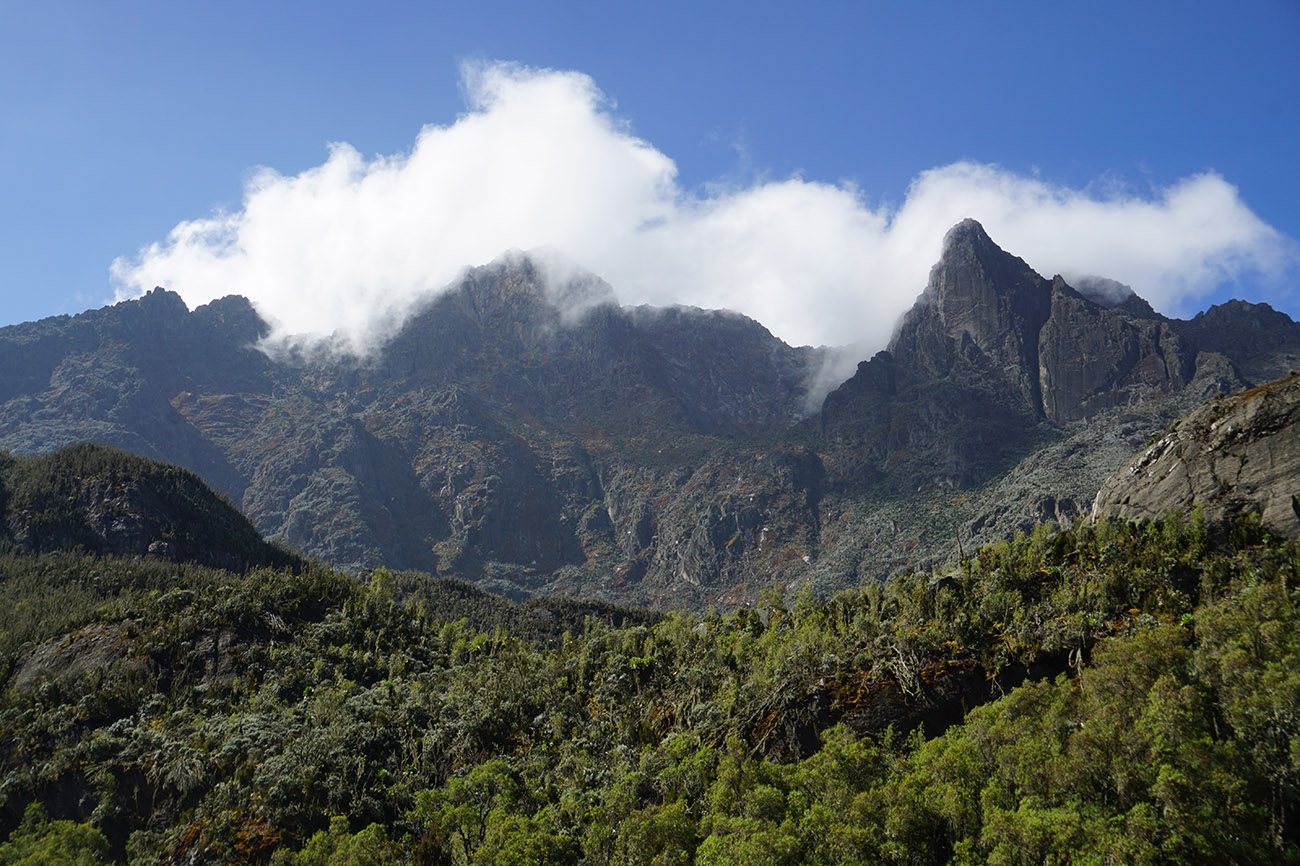
Rwenzori Mountains National Park is one of Africa’s most complex mountain ecosystems, combining extreme altitude gradients, permanent moisture, glacial remnants, and some of the most unusual vegetation zones on the continent. Known historically as the “Mountains of the Moon,” the Rwenzori range is not only a trekking destination but also a living ecological laboratory where tropical rainforest transitions into alpine desert and glacial terrain within a relatively short vertical distance.
Unlike volcanic peaks such as Kilimanjaro or Mount Elgon, the Rwenzoris are fault-block mountains formed through tectonic uplift. This geological structure, combined with high rainfall from equatorial weather systems, has created a unique biodiversity profile that supports rare flora, endemic fauna, and highly specialized ecosystems.
This detailed breakdown focuses on the mountain’s flora, fauna, and trekking routes, giving trekkers and researchers a grounded understanding of what makes this range one of Africa’s most scientifically significant landscapes.
Geographic and Ecological Context
Rwenzori Mountains National Park lies along the western arm of the East African Rift Valley, bordering the Democratic Republic of the Congo. The mountain range spans approximately 120 kilometers in length and rises sharply from the surrounding lowland plains.
The combination of altitude (ranging from about 1,000 meters to over 5,100 meters), heavy rainfall, and permanent cloud cover creates one of the wettest alpine environments in Africa. This constant moisture is the primary driver of the Rwenzori’s ecological diversity.
The park is a UNESCO World Heritage Site due to its exceptional range of vegetation zones and its importance as a water catchment system feeding major rivers in the region.
Flora of the Rwenzori Mountains
The vegetation of Rwenzori Mountains National Park changes dramatically with altitude, forming one of the clearest ecological successions in Africa.
Lowland and Montane Forests (1,000 – 2,500 meters)
At the base of the mountains, dense tropical rainforest dominates the landscape. These forests are rich in biodiversity and form part of the larger Albertine Rift ecosystem.
Common plant species include hardwood trees, ferns, and thick undergrowth adapted to humid conditions. These forests are often shrouded in mist and receive high annual rainfall.
This zone is also heavily biodiverse in terms of animal life, although vegetation density makes visibility limited.
Bamboo Zone (2,500 – 3,000 meters)
As elevation increases, dense bamboo forests take over. This zone is relatively narrow but ecologically important, acting as a transitional belt between rainforest and higher-altitude vegetation.
The bamboo here grows in thick clusters and can reach significant heights. It provides habitat for primates and small mammals while also stabilizing slopes against erosion.
Heather and Moorland Zone (3,000 – 4,000 meters)
One of the most iconic features of the Rwenzori landscape is the heather and moorland zone. This area is dominated by giant lobelias, giant groundsels, and moss-covered vegetation that thrives in cold, wet conditions.
The giant lobelia (Lobelia wollastonii) is particularly striking, with tall stalks and rosette-shaped leaves adapted to extreme temperature fluctuations.
Mosses and lichens cover rocks, trees, and soil surfaces, creating a surreal, almost prehistoric landscape.
Alpine and Glacier Zone (Above 4,000 meters)
At higher elevations, vegetation becomes sparse. Only hardy species adapted to freezing temperatures and intense UV exposure survive.
This zone includes rocky terrain, bare ground, and remnants of glaciers. Although the glaciers have significantly reduced due to climate change, they remain a defining feature of the highest peaks.
Fauna of the Rwenzori Mountains
Wildlife in Rwenzori Mountains National Park is adapted to dense forest and steep terrain. While not as visible as in savannah ecosystems, the biodiversity is significant.
Mammals
Chimpanzees inhabit the lower montane forests, although sightings are rare due to dense vegetation and elusive behavior.
Other primates include black-and-white colobus monkeys, blue monkeys, and L’Hoest’s monkeys, all of which are adapted to forest canopies.
Forest elephants are present in some sections of the park but are rarely seen due to their low population density and remote habitats.
Smaller mammals include duikers, hyraxes, and various rodent species adapted to high-altitude conditions.
Birds
The Rwenzori Mountains are a major birding destination with over 200 recorded species, including several Albertine Rift endemics.
Notable species include the Rwenzori turaco, handsome francolin, and various sunbirds and warblers. Bird diversity increases in forested and bamboo zones, where food sources and nesting sites are abundant.
Birdwatching is particularly rewarding in early morning hours when activity levels are highest.
Reptiles and Amphibians
Due to the wet climate, amphibians such as frogs and toads are common throughout lower and mid-elevation zones. Reptile diversity is lower at higher altitudes but still present in forested areas.
Trekking Routes in the Rwenzori Mountains
Trekking in Rwenzori Mountains National Park is structured around established routes that vary in length, difficulty, and scenery.
Central Circuit Trail
The Central Circuit is the most popular trekking route. It typically takes 7 to 9 days and offers a comprehensive experience of the mountain’s ecological zones.
The route starts from the Nyakalengija trailhead and loops through multiple valleys and ridges before reaching high-altitude camps near the summit zones.
Key features include exposure to multiple vegetation zones, glacier views, and access to Margherita Peak for experienced climbers.
Kilembe Trail
The Kilembe Trail is located on the southern side of the mountain and is considered one of the most scenic routes.
It is slightly less crowded than the Central Circuit and offers varied landscapes, including steep valleys, waterfalls, and panoramic ridge walks.
This route also provides access to high-altitude camps and summit attempts, depending on weather and conditions.
Sine Camp Route (Variations)
Some itineraries include shorter or modified routes focusing on lower elevation trekking experiences. These are suitable for travelers who want to experience the Rwenzori environment without attempting high-altitude summits.
These routes still pass through rainforest, bamboo zones, and moorland, offering strong ecological diversity in shorter durations.
Trekking Conditions and Challenges
Trekking in Rwenzori Mountains National Park is physically demanding due to constant rainfall, muddy trails, and steep ascents.
Unlike dry mountain environments, the Rwenzoris remain wet throughout the year. This creates slippery conditions that require careful footing and strong endurance.
Altitude is another major factor. As trekkers ascend beyond 3,000 meters, oxygen levels decrease, increasing fatigue and the risk of altitude sickness.
Despite these challenges, the structured hut system along major routes provides basic shelter and support for multi-day expeditions.
Climate Influence on Flora and Fauna
The unique combination of equatorial location and high altitude creates a climate that supports both tropical and alpine ecosystems within short distances.
Heavy rainfall ensures continuous plant growth, while temperature variation across elevations drives distinct ecological zones.
This climatic diversity is one of the key reasons why the Rwenzori Mountains are considered one of Africa’s most ecologically important mountain systems.
Conservation and Environmental Pressure
Rwenzori Mountains National Park faces ongoing conservation challenges, including climate change impacts on glaciers, human encroachment on lower slopes, and biodiversity pressure from surrounding agricultural communities.
Glacial retreat is one of the most visible indicators of climate change in the region, with significant ice loss recorded over the past decades.
Conservation efforts focus on protecting forest cover, maintaining water catchment systems, and supporting sustainable tourism as a key economic driver for the region.
Conclusion
The Rwenzori Mountains represent one of Africa’s most extraordinary natural environments, defined by dramatic ecological transitions, rare plant species, and a challenging yet rewarding trekking experience.
From dense rainforest and bamboo forests to surreal moorlands and alpine glaciers, the mountain offers a complete vertical journey through multiple ecological worlds.
For trekkers and nature enthusiasts, Rwenzori Mountains National Park provides not just a physical challenge, but a deep immersion into one of the continent’s most unique and scientifically significant landscapes.