
Shoebill Stork: Everything About Uganda’s Prehistoric Bird
The shoebill stork is one of the most extraordinary and mysterious birds in Africa. Known scientifically as Balaeniceps rex, this prehistoric-looking species has captured global attention for its massive shoe-shaped bill, silent hunting style, and dinosaur-like appearance.
Uganda is widely regarded as one of the best places in the world to see the shoebill in its natural habitat. Found in remote wetlands and papyrus swamps, this bird offers one of the most unique wildlife experiences available in East Africa.
This guide explores everything you need to know about the shoebill, including its behavior, habitat, hunting strategy, and the best places to see it in Uganda.
What Is a Shoebill Stork?
Despite its common name, the shoebill is not a true stork. It belongs to its own unique family, making it one of the most distinctive bird species in the world.
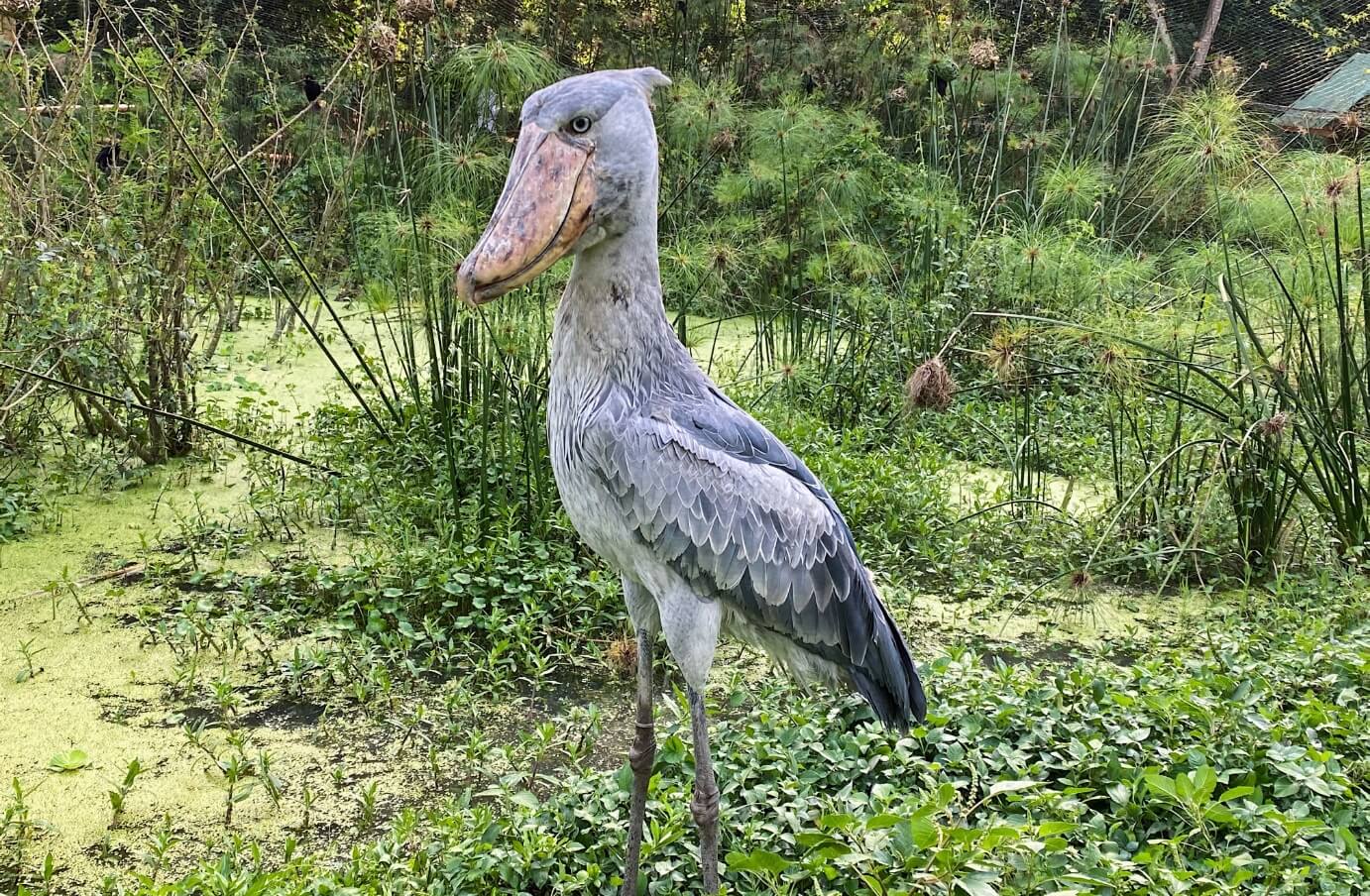
The name “shoebill” comes from its enormous bill, which resembles a wooden clog or shoe. This bill is not just for appearance—it is a powerful hunting tool designed to catch large prey in wetland environments.
An adult shoebill can grow up to 1.5 meters tall, with a wingspan reaching over 2.5 meters. Its grey-blue plumage, intense stare, and slow movements contribute to its prehistoric appearance.
Why the Shoebill Is Called a Prehistoric Bird
The shoebill is often described as a “living dinosaur,” and for good reason.
Its physical features and behavior resemble ancient bird species that lived millions of years ago. Its slow, deliberate movements, powerful beak, and solitary nature give it an almost ancient presence in the wetlands it inhabits.
When standing still, a shoebill can remain motionless for long periods, blending into the swamp environment. This stillness, combined with its intense gaze, makes it one of the most striking birds to observe in the wild.
Habitat: Where Shoebills Live
Shoebills are found in freshwater swamps, marshes, and wetlands across central and eastern Africa. In Uganda, they are most commonly associated with large papyrus swamps and slow-moving water systems.
Top locations to see shoebills in Uganda include:
Mabamba Swamp, located near Lake Victoria and easily accessible from Entebbe. This is the most reliable and popular site for shoebill sightings.
Murchison Falls National Park, particularly in the Nile Delta area, where shoebills are often seen during boat safaris.
Ziwa Rhino Sanctuary, where guided swamp walks offer another opportunity to see this bird.
These habitats provide the shallow waters and abundant fish populations that shoebills rely on for survival.
Hunting Behaviour: Silent and Precise
The shoebill is a highly specialized predator with a unique hunting strategy.
It relies on patience rather than speed. A shoebill will stand completely still for long periods, waiting for prey to come within range. When the moment is right, it strikes with incredible speed and precision.
Its diet includes:
- Lungfish
- Catfish
- Frogs
- Small reptiles, including baby crocodiles
The bill plays a crucial role in hunting. It is large, sharp-edged, and powerful enough to grasp slippery prey and crush it if necessary.
Unlike many birds, the shoebill hunts alone, reinforcing its solitary nature.
Behaviour and Temperament
Shoebills are generally solitary birds. They prefer to live and hunt alone, coming together only during breeding season.
They are known for their calm and almost expressionless demeanor, but they can also display unique behaviors.
One of the most famous is “bill-clattering,” a rapid knocking of the upper and lower bill that produces a loud, machine-gun-like sound. This is often used during greeting or communication.
Despite their size, shoebills are not aggressive toward humans and are often tolerant of quiet observers at a distance.
Reproduction and Life Cycle
Shoebills build large nests on floating vegetation within swamps. These nests are carefully constructed to remain stable in wet environments.
A female typically lays 1–3 eggs, but usually only one chick survives. The stronger chick often outcompetes its siblings, a behavior known as sibling rivalry.
Both parents are involved in raising the chick, including feeding and protecting it from predators. They also use water to cool the eggs and chicks in the hot swamp environment.
Why Uganda Is the Best Place to See Shoebills
Uganda offers some of the most accessible and reliable shoebill habitats in Africa.
Mabamba Swamp is particularly प्रसिद्ध for consistent sightings, often achieved through guided canoe excursions. The calm waters and dense papyrus vegetation create ideal conditions for spotting these birds.
Murchison Falls National Park provides a more remote and scenic experience, especially in the Nile Delta where birdlife is abundant.
Compared to other countries, Uganda’s combination of accessibility, experienced guides, and stable habitats makes it a top destination for shoebill tracking.
Best Time to See Shoebills
Shoebills can be seen year-round in Uganda, but certain conditions improve the chances of a successful sighting.
Early morning is the best time, when birds are more active and the weather is cooler.
Dry seasons (December to February and June to August) are generally more favorable because water levels are stable and vegetation is less dense.
However, because shoebills are resident birds, sightings are possible at any time of year with the right guide.
Conservation Status
The shoebill is currently classified as Vulnerable, with a declining population.
Major threats include:
- Wetland destruction and drainage
- Human disturbance
- Illegal wildlife trade
Conservation efforts focus on protecting wetland habitats and promoting eco-tourism, which provides incentives for local communities to preserve these environments.
Final Thoughts
The Balaeniceps rex is one of Africa’s most remarkable birds, combining prehistoric appearance with highly specialized hunting behavior.
Its presence in Uganda’s wetlands adds a unique dimension to any safari, offering something completely different from traditional big game experiences. Whether spotted in the calm waters of Mabamba Swamp or the remote delta of Murchison Falls National Park, encountering a shoebill is a rare and unforgettable moment.
For travelers seeking something unusual, mysterious, and deeply connected to Africa’s ancient natural history, the shoebill stands as one of the most compelling wildlife experiences available.