
Hippopotamus Facts: Africa’s Most Territorial Animal
The hippopotamus is one of Africa’s most powerful and misunderstood animals. Often seen calmly resting in rivers and lakes, hippos are responsible for more human fatalities in Africa than most other large animals. Their calm appearance hides an extremely territorial and aggressive nature, especially in water.
Found across sub-Saharan Africa, the common hippopotamus thrives in freshwater habitats and plays a critical role in aquatic ecosystems. Understanding hippo behavior is essential for both wildlife enthusiasts and safari travelers.
This guide explores key facts about the hippopotamus, including its behavior, intelligence, habitat, and why it is considered Africa’s most territorial animal.
What Is a Hippopotamus?
The hippopotamus, scientifically known as Hippopotamus amphibius, is a large semi-aquatic mammal native to Africa. It belongs to a group of animals that spend much of their time in water but rely on land for feeding.
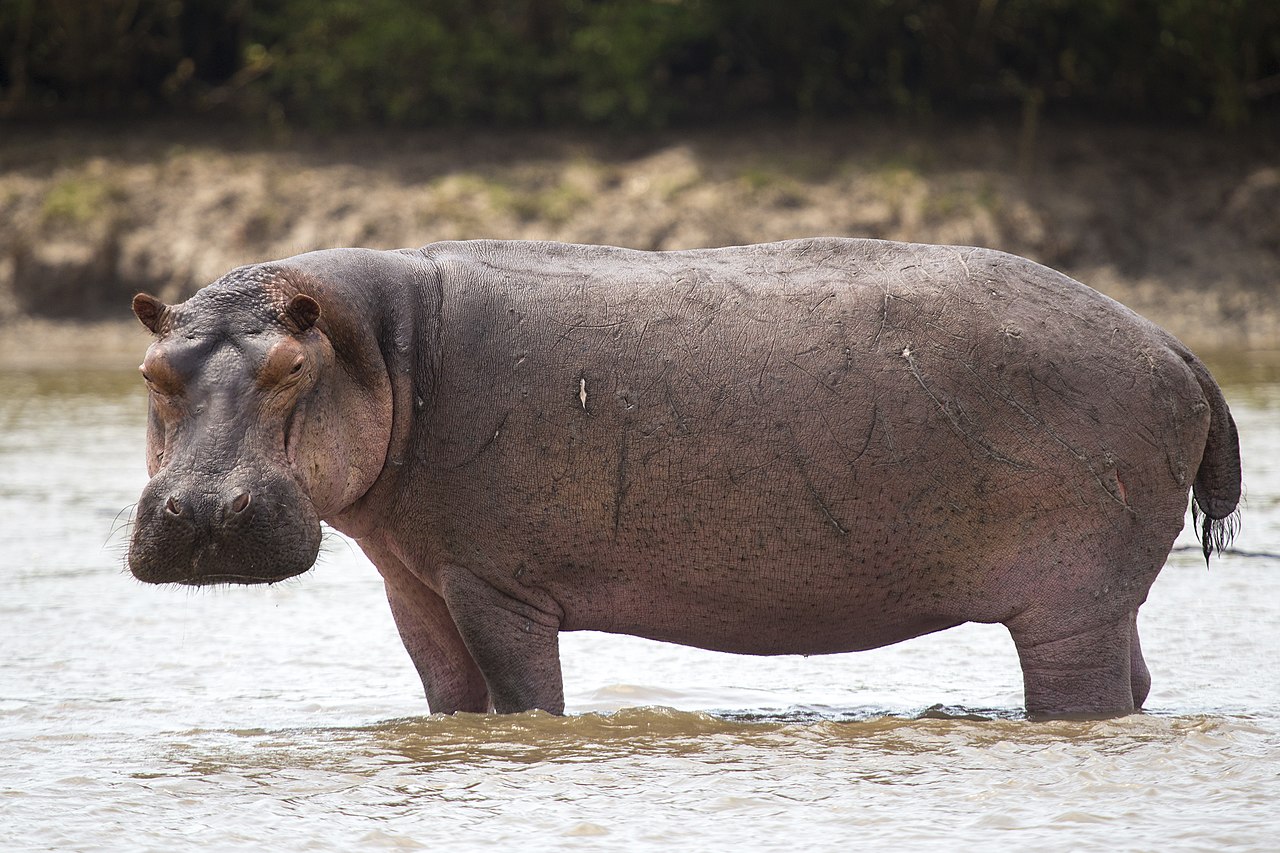
Despite its bulky body and short legs, the hippo is highly adapted to life in rivers and lakes. Its eyes, ears, and nostrils are positioned on top of its head, allowing it to stay mostly submerged while remaining alert.
Adult males can weigh up to 1,500–2,000 kilograms, making them one of the largest land mammals after elephants and rhinos.
Why Are Hippos So Territorial?
Hippos are extremely territorial, particularly in water. Male hippos establish and defend specific stretches of rivers or lakes, known as territories.
These territories are not just resting areas—they are breeding zones where dominant males control access to females.
A territorial male will:
- Patrol his section of water regularly
- Display aggression through yawning (showing large tusks)
- Charge intruders, including other hippos and humans
- Engage in violent fights with rival males
Conflicts between males can be intense and sometimes fatal. Large canine teeth, which can grow over 50 cm long, are used as weapons during these encounters.
Hippos and Water Territory
Water is the center of a hippo’s life. During the day, groups of hippos—called pods—stay in water to keep cool and protect their sensitive skin from the sun.
Each pod usually has a dominant male, multiple females, and younger males. While females and juveniles share space, adult males must respect territorial boundaries.
If another male enters a territory, the resident male may attack immediately. This makes rivers and lakes highly structured social environments.
Interestingly, hippos are less territorial on land. At night, when they leave the water to graze, multiple individuals may feed in overlapping areas without conflict.
How Dangerous Are Hippos?
Hippos are considered one of the most dangerous animals in Africa.
They are responsible for hundreds of human fatalities each year, mainly due to:
- Boat encounters in rivers
- Accidental intrusion into territory
- Blocking paths between water and grazing areas
A hippo can run at speeds of up to 30 km/h on land, which is faster than most humans expect. In water, they move with surprising agility by pushing off riverbeds rather than swimming.
Their aggression is often defensive rather than predatory, but the result can still be deadly.
Hippo Behavior and Social Structure
Hippos live in groups called pods, typically consisting of 10 to 30 individuals, although larger groups can form in areas with abundant water.
The social structure is dominated by one territorial male, who maintains control through displays of strength and aggression.
Communication is an important part of hippo society. They use:
- Vocalizations (grunts, roars, and wheezes)
- Body language
- Water splashing and dung spreading
One unique behavior is “dung showering,” where a hippo spins its tail while defecating to spread scent and mark territory.
Feeding Habits: Giants on Grass
Despite their massive size, hippos are herbivores.
They leave the water at night to graze on grasses, sometimes traveling up to 5–10 kilometers in search of food. An adult hippo can consume around 30–40 kilograms of grass in a single night.
Their feeding behavior plays an important ecological role, as it helps shape vegetation patterns and nutrient cycling between land and water ecosystems.
Adaptations for a Semi-Aquatic Life
Hippos are highly adapted to living both in water and on land.
Key adaptations include:
- Thick skin that secretes a natural sunscreen-like substance
- Webbed feet for stability in water
- Eyes and nostrils positioned for surface breathing
- Ability to hold breath for up to 5 minutes
They also submerge frequently during the day, often rising automatically to breathe without waking fully.
Reproduction and Life Cycle
Female hippos give birth to a single calf after a gestation period of about eight months.
Birth usually occurs in shallow water or on land near water. Calves can nurse both underwater and on land, an unusual trait among mammals.
Young hippos stay close to their mothers for protection, especially in crowded pods where territorial males can be aggressive.
Where to See Hippos in Africa
Hippos are found in many of Africa’s major rivers, lakes, and wetlands.
Top destinations include:
- Queen Elizabeth National Park (Kazinga Channel)
- Murchison Falls National Park (Nile River)
- Serengeti National Park
- Maasai Mara National Reserve
Boat safaris are one of the best ways to observe hippos safely while maintaining a respectful distance.
Conservation Status
The hippopotamus is currently listed as Vulnerable due to habitat loss, water scarcity, and illegal hunting.
Major threats include:
- Loss of freshwater habitats
- Human-wildlife conflict
- Poaching for ivory (from canine teeth)
Conservation efforts focus on habitat protection and reducing conflict between humans and hippos.
Final Thoughts
The Hippopotamus amphibius is one of Africa’s most fascinating and dangerous animals. Its territorial nature, immense strength, and complex social behavior make it a dominant force in freshwater ecosystems.
While they may appear calm and slow, hippos demand respect and caution. Understanding their behavior is essential for safe wildlife viewing and deeper appreciation of Africa’s natural ecosystems.
For safari travelers, seeing hippos in the wild—especially along rivers like the Nile or Kazinga Channel—is an unforgettable experience that highlights both the beauty and intensity of African wildlife.