
Uganda Wildlife Education Centre (Entebbe Zoo): Worth Visiting?
The Uganda Wildlife Education Centre, commonly referred to as the Entebbe Zoo, is one of Uganda’s most accessible wildlife attractions. Located in Entebbe along the shores of Lake Victoria, it serves as both a conservation facility and an educational hub.
For many travelers, especially those with limited time in Uganda, the central question remains: is it actually worth visiting, particularly if a full safari is already part of the itinerary? The answer is nuanced. The centre offers real value, but its worth depends on expectations, travel style, and how it fits into a broader Uganda experience.
Understanding the Purpose of the Centre
The Uganda Wildlife Education Centre was originally established as a reception centre for injured, orphaned, and confiscated animals. Over time, it evolved into a structured institution focused on conservation, research, and public education.
Unlike commercial zoos built purely for display, this facility operates with a conservation-first model. Many of the animals housed here are not captured from the wild for exhibition but are instead rescued individuals that cannot survive independently due to injury, trauma, or human imprinting.
This distinction is critical. It means that a visit is not just about viewing animals, but about understanding the challenges facing wildlife in Uganda, including habitat loss, poaching, and human-wildlife conflict.
Location and Setting
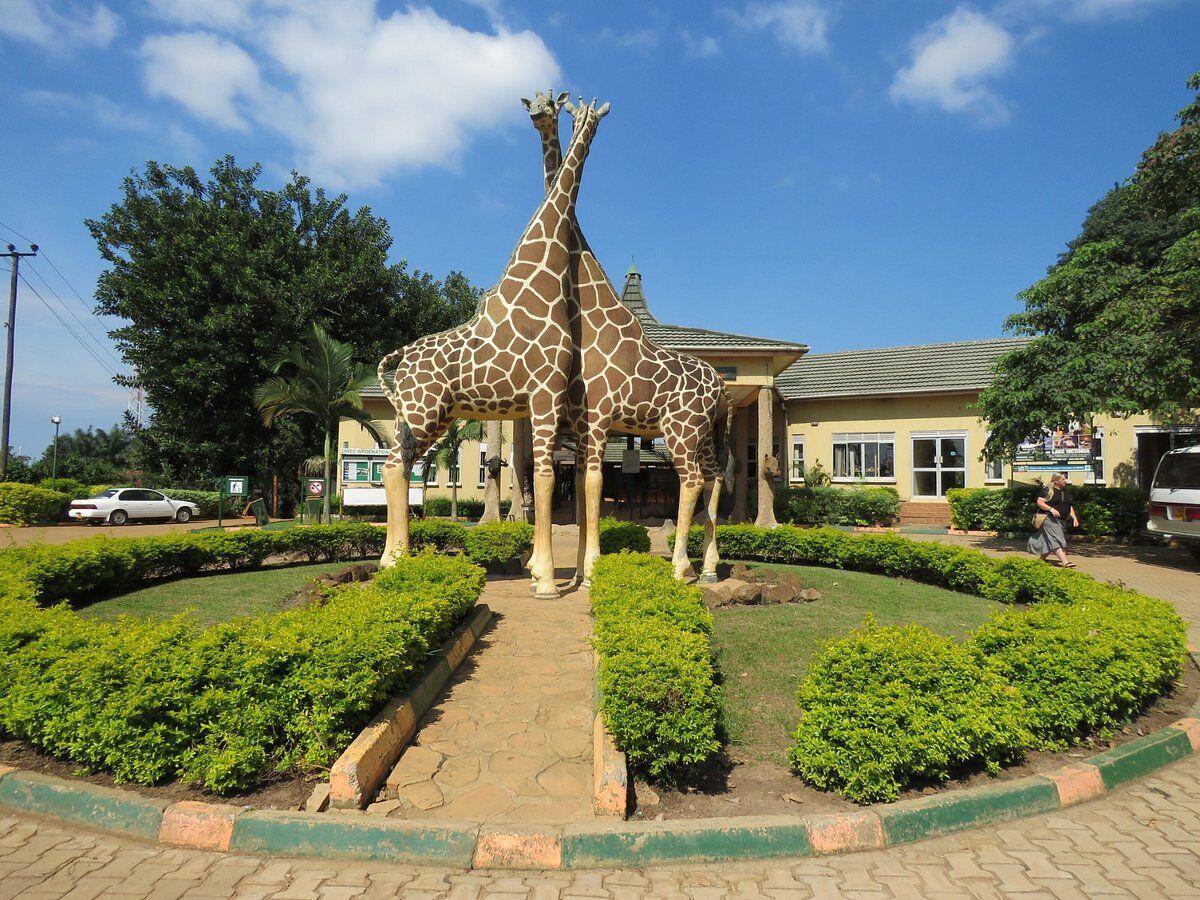
Situated in Entebbe, the centre benefits from a naturally scenic environment influenced by Lake Victoria. The grounds are green, spacious, and well-vegetated, giving the experience a park-like atmosphere rather than a confined zoo setting.
The proximity to the lake also contributes to a cooler microclimate compared to inland areas, making it comfortable for walking tours. Tall trees, shaded paths, and open lawns create a relaxed environment suitable for both short visits and extended exploration.
Its location just minutes from Entebbe International Airport makes it one of the most convenient wildlife attractions in Uganda.
What You Can Expect to See
The Uganda Wildlife Education Centre offers a broad representation of Uganda’s wildlife within a compact area.
Visitors can expect to encounter:
• Large mammals such as lions, leopards, and hyenas
• Herbivores including giraffes, zebras, and antelope species
• Elephants and occasionally rhinos in controlled environments
• Primates such as chimpanzees, baboons, and monkeys
• Reptiles including crocodiles and snakes
• A wide variety of bird species
The enclosures are designed to mimic natural habitats as much as possible, with vegetation, water features, and space for movement. While not equivalent to wild ecosystems, these environments are more advanced than traditional cage-based zoo systems.
The Nature of the Experience
Visiting the Uganda Wildlife Education Centre is fundamentally different from a national park safari.
In a safari setting, wildlife viewing depends on tracking animals across large landscapes, often requiring patience and long drives. Here, animals are accessible and visible within a defined space, allowing for a more predictable and time-efficient experience.
This makes the visit:
• Less physically demanding
• More structured and controlled
• Easier for photography
• Suitable for all age groups
The pace is entirely flexible. Visitors can move at their own speed, spend more time at specific enclosures, or complete the entire circuit within a few hours.
Educational Value
One of the strongest aspects of the Uganda Wildlife Education Centre is its educational role.
Interpretive signage, guided tours, and staff interactions provide insights into:
• Animal behavior and ecology
• Conservation challenges in Uganda
• Rehabilitation processes for rescued wildlife
• The importance of protected areas
For travelers who want to understand the context behind wildlife tourism—not just see animals—this adds significant depth to the experience.
It is particularly valuable for first-time visitors to Africa, as it introduces key species and conservation themes before or after a safari.
Unique Interactive Experiences
The centre offers several structured programs that go beyond standard viewing.
These include behind-the-scenes tours where visitors learn how animals are fed, treated, and managed. There are also specialized experiences such as assisting keepers during feeding routines or observing primates during scheduled interactions.
These programs provide a closer look at the operational side of wildlife conservation, making the visit more immersive and informative.
Advantages of Visiting
The Uganda Wildlife Education Centre offers several clear advantages.
First is convenience. Its location in Entebbe makes it easily accessible for travelers arriving or departing Uganda. It fits perfectly into half-day schedules or layovers.
Second is guaranteed wildlife viewing. Unlike national parks, where sightings are never certain, the centre ensures that visitors will see a wide range of species within a short time.
Third is affordability. Compared to multi-day safaris, the cost of visiting is significantly lower, making it accessible to a broader range of travelers.
Fourth is its relaxed environment. The setting is calm and manageable, offering a low-pressure experience compared to long safari drives.
Limitations and Considerations
Despite its strengths, the Uganda Wildlife Education Centre has limitations that must be clearly understood.
It is not a wilderness experience. Animals are housed in managed environments, which means the unpredictability and scale of wild ecosystems are absent.
The overall size of the centre is relatively small compared to national parks, so the experience is shorter and less immersive in terms of landscape diversity.
Some enclosures, while improved, still reflect the realities of captivity and may not fully replicate natural conditions.
For travelers seeking dramatic wildlife interactions—such as predator hunts or large herd movements—this setting cannot replace a safari.
Who Should Visit
The centre is particularly valuable for specific types of travelers.
It is ideal for those with limited time who cannot commit to a full safari. It also works well for families with children, as the environment is safe, educational, and easy to navigate.
First-time visitors to Uganda benefit from the introductory exposure to wildlife, while those with long layovers in Entebbe can make productive use of their time.
It is also a strong option for travelers interested in conservation work rather than purely recreational tourism.
Who Might Skip It
There are cases where visiting may not be necessary.
Travelers who already have extensive safari plans covering multiple national parks may find the experience redundant.
Those who prioritize only wild, untouched environments may prefer to allocate their time elsewhere.
In such situations, the centre becomes optional rather than essential.
Best Time to Visit
The Uganda Wildlife Education Centre is open year-round due to Uganda’s stable climate.
Morning visits are generally recommended because animals tend to be more active and temperatures are cooler. Afternoon visits are still viable but may involve reduced animal activity due to heat.
Seasonal changes have minimal impact compared to national parks, making it a reliable attraction regardless of time of year.
Duration of Visit
Most visitors spend between two to three hours exploring the centre.
However, those participating in guided tours or interactive programs may spend half a day or longer. The flexible layout allows visitors to adjust their schedule based on interest and time availability.
Accommodation Option Inside the Centre
One unique feature is the ability to stay within the facility itself.
Accommodation options include simple cottages and budget-friendly lodging. Staying overnight allows visitors to experience the environment after regular visiting hours, including the sounds of animals at night and quieter early morning conditions.
This adds an additional dimension to the visit, particularly for those interested in a more immersive conservation experience.
Role in Uganda’s Conservation Strategy
The Uganda Wildlife Education Centre plays a significant role in Uganda’s broader conservation framework.
It acts as a rehabilitation centre for rescued animals, reducing pressure on wild populations. It also serves as a public education platform, raising awareness about the importance of protecting biodiversity.
Through outreach programs, it connects conservation efforts with local communities, helping to address issues such as poaching and habitat encroachment.
This dual role—care and education—makes it an important institution beyond tourism.
Final Evaluation
So, is the Uganda Wildlife Education Centre worth visiting?
Yes, but with clear expectations.
It is highly valuable as an accessible, educational, and convenient wildlife experience. It is especially useful before or after a safari, or for travelers who cannot access remote national parks.
However, it should not be seen as a replacement for a true safari experience. Instead, it complements broader travel plans by providing context, accessibility, and guaranteed wildlife viewing.
Final Thoughts
The Uganda Wildlife Education Centre offers a practical and meaningful introduction to Uganda’s wildlife.
Set within the calm environment of Entebbe and influenced by the presence of Lake Victoria, it combines conservation, education, and accessibility in a single location.
For the right traveler, at the right time in their itinerary, it is not just worth visiting—it is a strategically valuable part of understanding Uganda’s wildlife story.