
Source of the Nile: History, Myth and How to Visit
Jinja is one of East Africa’s most significant tourism and historical destinations, globally recognized as the gateway to the legendary River Nile. At its core lies the Source of the Nile, the point where waters from Lake Victoria begin their long journey northwards through multiple countries before eventually reaching the Mediterranean Sea.
This location is not simply a scenic attraction. It is a geographical turning point, a historical discovery site, and a cultural landmark that has shaped global understanding of African river systems for more than a century. For visitors, it combines natural beauty, historical depth, and quiet adventure in a single experience.
Geographic Reality of the Source
The Source of the Nile is situated on the northern shore of Lake Victoria in Jinja. It is not a single spring or isolated point but a broad hydrological transition zone where lake water begins to flow into the Victoria Nile.
This area is characterized by calm lake waters that gradually narrow into a defined river channel. The surrounding environment includes papyrus wetlands, small islands, and dense shoreline vegetation that supports a rich ecosystem.
From this point, the Nile continues its journey through Uganda, South Sudan, Sudan, and Egypt before emptying into the Mediterranean Sea. This makes the site one of the most important hydrological origins on Earth.
Historical Discovery and Exploration
The Source of the Nile gained international attention during the 19th century, when European explorers sought to determine the origin of the Nile River.
British explorer John Hanning Speke is credited with identifying Lake Victoria as the primary source in 1858 during his expeditions in East Africa. His findings triggered intense debate within the geographical community, particularly with explorer Richard Burton, who questioned parts of his conclusions.
This discovery placed Jinja at the center of global exploration history. It became a reference point for maps, academic studies, and colonial-era navigation records, firmly establishing its international significance.
Today, monuments and markers around the site commemorate this period of exploration and the scientific debates that shaped modern geography.
Mythology and Cultural Significance
Long before scientific exploration, the Nile River system held deep cultural meaning for communities living around Lake Victoria.
For many local societies, water bodies are associated with life, fertility, continuity, and spiritual balance. The Nile, as a major life-supporting river, naturally became a symbol of abundance and survival.
Beyond East Africa, the Nile also holds strong historical and spiritual importance in ancient Egyptian civilization, where it was regarded as a divine river that sustained agriculture, civilization, and cultural development.
In modern Uganda, the Source of the Nile remains a powerful national symbol representing natural heritage, historical identity, and tourism pride.
Modern Visitor Experience
Visiting the Source of the Nile in Jinja is a structured yet flexible experience that combines boat tours, scenic viewpoints, and light adventure activities.
Boat tours are the primary way to experience the source. These guided trips take visitors across calm waters toward the point where Lake Victoria transitions into the Nile. Along the way, visitors observe birdlife, fishing activity, and the gradual change in water movement.
The riverbank viewpoints offer elevated perspectives where visitors can clearly see the difference between the wide lake and the narrowing river channel. These spots are commonly used for photography and interpretation of the site’s geography.
Some tours include visits to nearby islands, which provide additional ecological insights and a closer look at wetland ecosystems within the source area.
Activities Around the Source of the Nile
The Source of the Nile is also part of a wider adventure tourism hub in Jinja. Visitors often combine their visit with other activities in the region.
White water rafting on the Nile is one of the most popular activities, offering high-adrenaline experiences on downstream rapids. Kayaking, boat cruising, and fishing also take place along calmer sections of the river.
On land, quad biking through rural landscapes provides a different perspective of the region, while bungee jumping over the Nile offers one of East Africa’s most extreme adventure experiences.
This combination of historical significance and adventure tourism makes the area highly versatile for different types of travelers.
Ecological Environment
The Source of the Nile ecosystem is influenced by both lake and river environments. Lake Victoria supports a rich aquatic ecosystem that includes fish species, wetland vegetation, and diverse bird populations.
Common bird species include kingfishers, herons, fish eagles, and cormorants, all of which thrive in the wetland habitats surrounding the source.
Papyrus reeds dominate the shoreline, playing a critical role in stabilizing the ecosystem, filtering water, and providing habitat for wildlife.
This ecological balance is essential for maintaining water quality and supporting both tourism and local livelihoods.
Accessibility and Transport
Jinja is located approximately 80–90 kilometers east of Kampala and is accessible by road in about 2–3 hours depending on traffic conditions.
The Source of the Nile is located a short distance from the town center and can be reached by private vehicle, taxi, or organized tour transport.
Its proximity to the capital makes it ideal for day trips or short weekend excursions.
Best Time to Visit
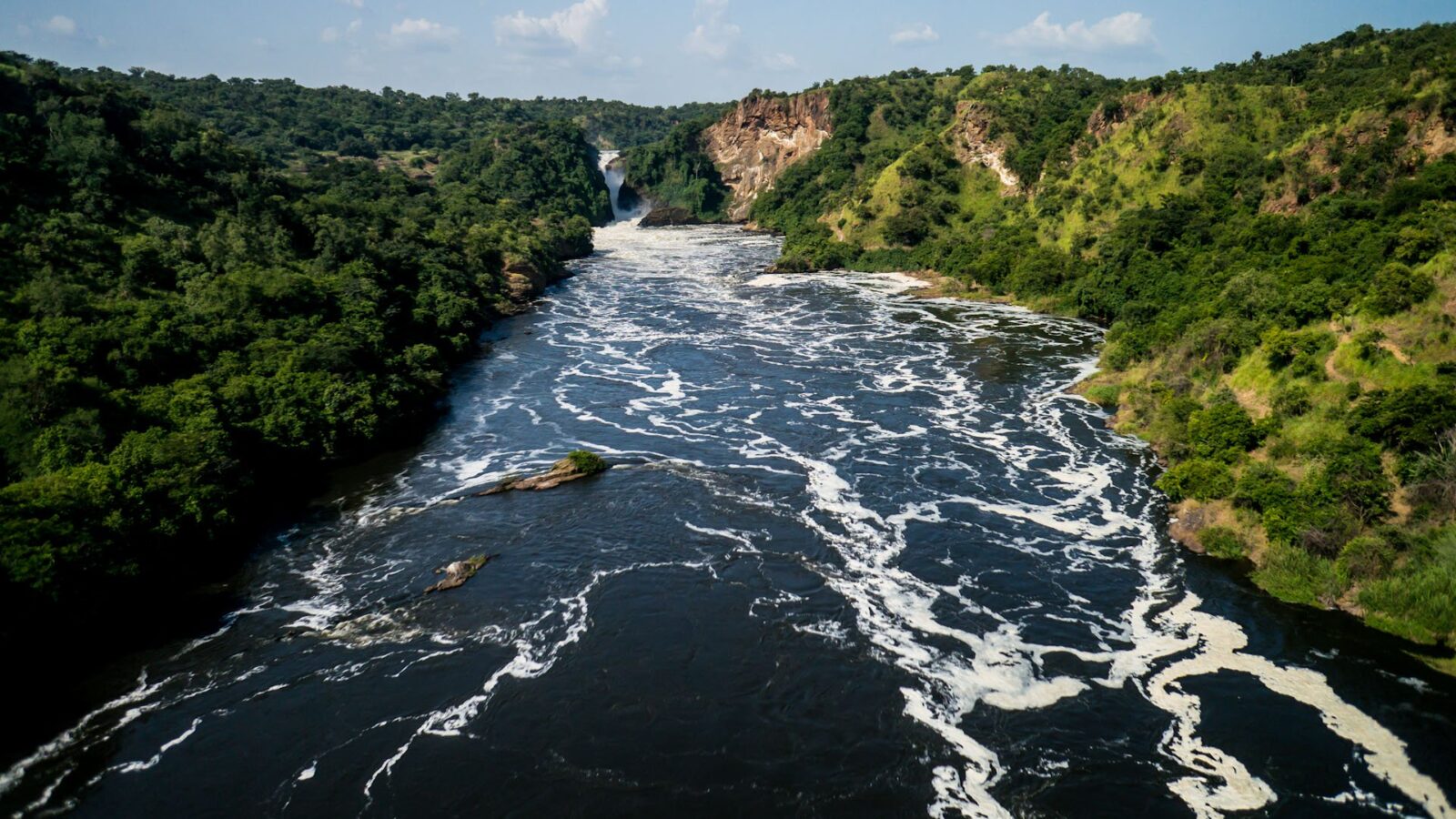
The Source of the Nile can be visited throughout the year due to Uganda’s stable equatorial climate.
However, dry seasons from June to August and December to February are generally preferred for clearer views, more stable outdoor conditions, and smoother water-based activities.
Rainy seasons can enhance the intensity of the river environment but may limit some outdoor activities due to weather variability.
Cultural and Economic Importance
Tourism at the Source of the Nile contributes significantly to the local economy of Jinja.
Local communities benefit through guiding services, transport operations, craft sales, hospitality, and tourism-related employment.
The site also plays a key role in Uganda’s national tourism identity, positioning the country as a destination for both adventure and historical exploration.
Conservation and Environmental Protection
As tourism increases, environmental management has become increasingly important in the Source of the Nile area.
Efforts focus on protecting wetland ecosystems, maintaining water quality, and regulating tourism activities to ensure long-term sustainability.
Responsible boating practices, waste management, and environmental awareness campaigns are increasingly part of the tourism framework.
Why the Source of the Nile Matters
The Source of the Nile is significant for multiple reasons. It represents the beginning of the world’s longest river, a major milestone in global exploration history, and a vital ecological system.
It also serves as a cultural symbol connecting local traditions, national identity, and international curiosity about Africa’s natural landscapes.
Final Thoughts
The Source of the Nile in Jinja is more than a geographical point. It is a living landscape shaped by water, history, and culture.
From the calm expanse of Lake Victoria to the flowing beginnings of the Nile River, the site offers a rare blend of natural beauty and historical importance.
For travelers, it remains one of East Africa’s most iconic and meaningful destinations, combining geography, adventure, and heritage in a single unforgettable experience.