
African Elephant Facts: Behaviour, Intelligence and Conservation
The African elephant is one of the most iconic and intellectually advanced animals on the planet. Known for its immense size, complex emotions, and deep social bonds, it plays a vital ecological role in shaping Africa’s landscapes. In East Africa, elephants are a highlight of safaris in protected areas such as Queen Elizabeth National Park and Murchison Falls National Park, where large herds still roam freely across savannahs, woodlands, and river valleys.
Scientifically classified as African Elephant, this species is not only the largest land mammal on Earth but also one of the most emotionally and socially complex.
Physical Power and Adaptation
African elephants are instantly recognizable due to their enormous size, large ears, and long trunks. Adult males can weigh up to 6,000 kilograms or more, while females are generally smaller but still massive compared to most animals.
Their trunks are one of the most versatile biological tools in the animal kingdom. Containing over 40,000 muscles, the trunk is used for breathing, drinking, feeding, communication, and even delicate tasks like picking up small objects.
Their large ears are not just for hearing—they also regulate body temperature. By flapping their ears, elephants cool blood flowing through them, helping them survive in hot savannah climates.
Social Structure: A Matriarchal Society
Elephant society is highly structured and matriarchal. Herds are led by an older, experienced female known as the matriarch. She guides the group, makes decisions about movement, and helps the herd survive during droughts or danger.
Family units typically consist of related females and their offspring. Male elephants usually leave the herd when they reach adolescence and live more solitary or loosely associated lives.
The strength of elephant society lies in its cooperation. Herd members communicate constantly, care for young calves collectively, and protect one another from threats.
Intelligence and Emotional Depth
African elephants are among the most intelligent animals ever studied. Their brains are highly developed, particularly in areas associated with memory, emotion, and social awareness.
One of their most famous traits is their exceptional memory. Elephants can remember water sources, migration routes, and individuals—even after many years of separation.
They also demonstrate self-awareness. In mirror tests, some elephants recognize themselves, a trait shared by only a few species including humans, great apes, and dolphins.
Emotional intelligence is equally remarkable. Elephants display joy, grief, empathy, and even behaviors that resemble mourning. They may touch the bones of deceased elephants, remain near them, and show signs of emotional distress.
Communication and Sound
Elephants communicate using a wide range of vocalizations, many of which are too low-frequency for human ears to hear (infrasound). These sounds can travel several kilometers, allowing herds to coordinate over long distances.
They also use body language such as ear positioning, trunk movements, and touch. Physical contact is a key part of their communication system, reinforcing social bonds within the herd.
Feeding Behaviour and Ecological Role
Elephants are herbivores with enormous appetites. An adult can consume up to 150 kilograms of vegetation per day, including grasses, leaves, bark, and fruit.
Their feeding behavior significantly shapes ecosystems. By uprooting trees, dispersing seeds, and creating clearings, elephants act as “ecosystem engineers,” influencing the structure of entire landscapes.
In places like Queen Elizabeth National Park, their movements help maintain the balance between forest and savannah habitats.
Movement and Migration Patterns
Elephants are highly mobile animals that can travel long distances in search of food and water. Their migration routes are often passed down through generations, guided by the memory of older matriarchs.
Seasonal movements are influenced by rainfall, vegetation availability, and water sources. These routes are essential for survival, especially in dry seasons when resources become scarce.
Reproduction and Family Life
Elephants have one of the longest gestation periods in the animal kingdom—about 22 months. This long developmental period allows calves to be born highly dependent but well-prepared for survival.
Calves are cared for not only by their mothers but also by other females in the herd, a behavior known as allomothering. This cooperative care strengthens social bonds and improves calf survival rates.
Young elephants learn essential survival skills through observation and interaction, including feeding techniques and social behavior.
Conservation Status and Threats
African elephants face significant conservation challenges. The species is threatened primarily by poaching for ivory, habitat loss, and human-wildlife conflict.
Although conservation efforts have helped stabilize populations in some regions, others continue to experience declines due to illegal hunting and shrinking habitats.
Protected areas such as Murchison Falls National Park play a crucial role in safeguarding elephant populations and maintaining ecological balance.
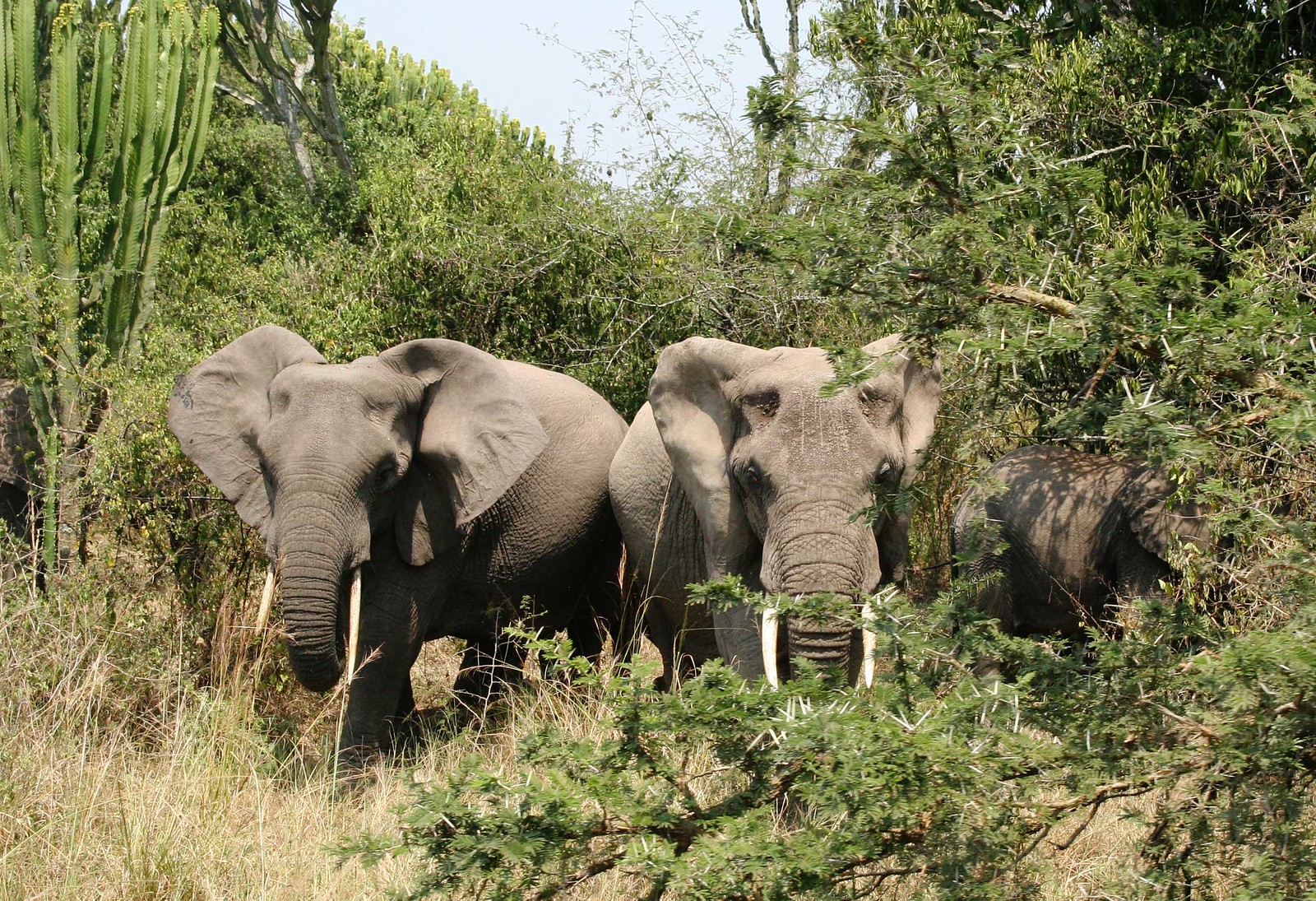
Human-Elephant Conflict
As human populations expand, elephants increasingly come into contact with agricultural land. This can lead to crop raiding, which creates conflict between communities and wildlife.
Conservation strategies now focus on coexistence methods such as wildlife corridors, electric fencing, and community-based conservation programs to reduce conflict while protecting elephant populations.
Tourism and Conservation Impact
Elephant tourism is a major part of East Africa’s safari industry. Responsible tourism helps fund conservation efforts, supports local communities, and raises awareness about the importance of protecting wildlife.
However, it must be carefully managed to avoid disturbing natural behavior or habitats.
Final Thoughts: Why Elephants Matter
African elephants are more than just safari highlights—they are keystone species that shape ecosystems, maintain biodiversity, and embody the emotional depth of the animal kingdom.
Observing them in places like Murchison Falls National Park is a powerful reminder of the intelligence and complexity of wildlife.
Their survival depends on continued conservation efforts, habitat protection, and responsible tourism. Protecting elephants ensures the preservation of Africa’s landscapes and the ecological systems that depend on them.
In every sense, elephants represent memory, wisdom, and continuity in the natural world.