
Okapi: Congo’s Forest Unicorn and What Tourists Can See
The Animal That Feels Like a Myth
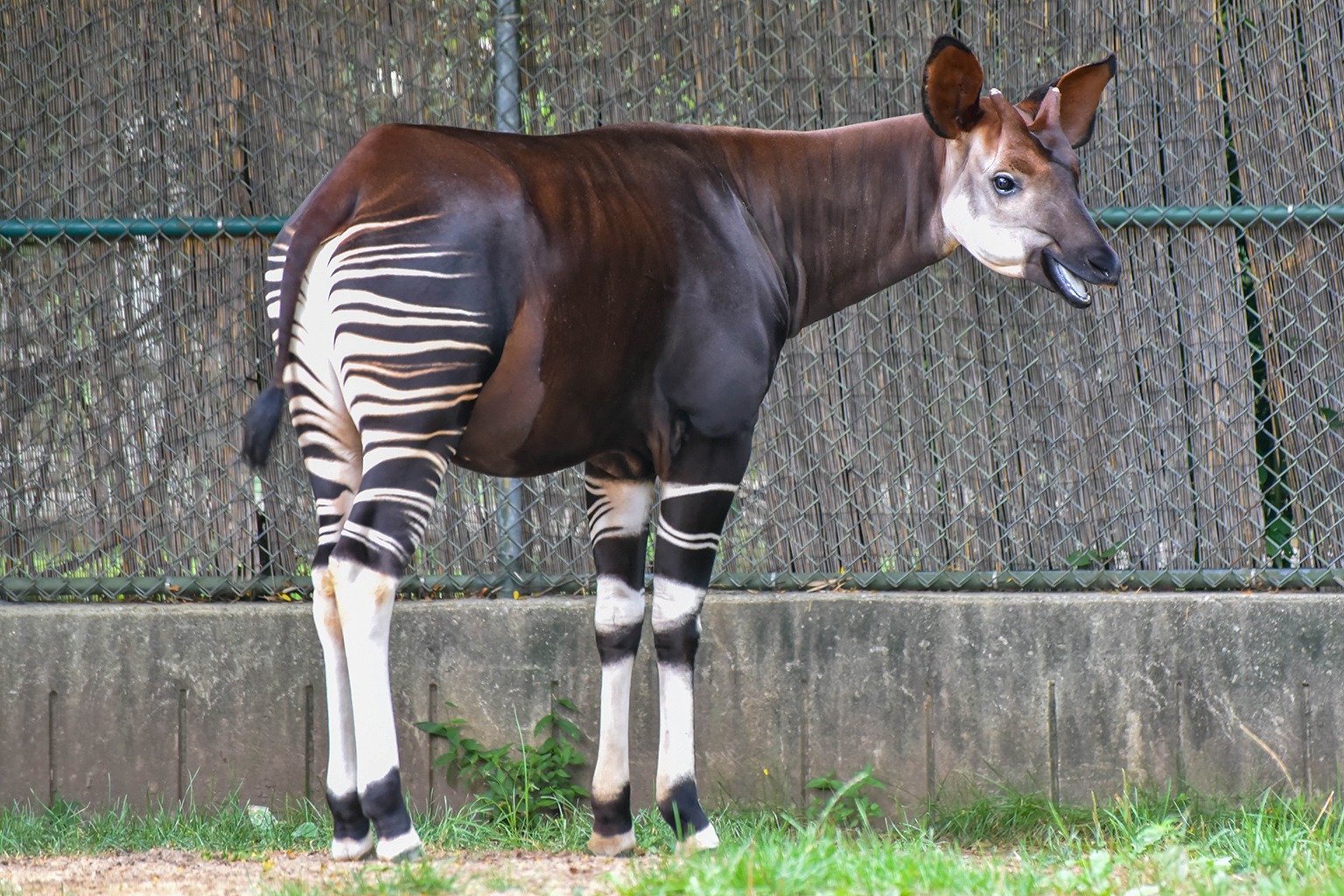
The okapi is one of Africa’s most unusual mammals, so distinctive in appearance that early explorers refused to believe it was real. With zebra-like striped hindquarters, a giraffe-like head, and a deep forest habitat, it has earned the nickname “forest unicorn.” Scientifically, it is the only living relative of the giraffe, yet it looks like it belongs to an entirely different evolutionary story.
Despite its fame among wildlife enthusiasts, the okapi is not something most safari travelers in East Africa will actually see. Its range is extremely restricted, its habitat is difficult to access, and it lives in one of the most remote rainforest systems on the continent. Understanding what is realistically possible for tourists requires separating biology, geography, and travel logistics.
Where Okapis Actually Live
Okapis are endemic to the dense rainforests of the Democratic Republic of Congo, primarily within the central and northeastern forest blocks. Their core stronghold is the Okapi Wildlife Reserve, a UNESCO World Heritage Site located deep within the Ituri Forest.
This habitat is not part of standard East African safari circuits that include Uganda, Kenya, or Tanzania. Even within Congo, access is limited and often dependent on security conditions, permits, and specialized expedition planning.
The key takeaway is simple: okapis are not a general East African safari species. They are geographically restricted, and their range does not extend into Uganda’s national parks such as Bwindi Impenetrable National Park or savannah systems like Queen Elizabeth National Park.
Why the Okapi Is So Rarely Seen
The okapi is a master of concealment. It evolved in dense rainforest environments where visibility is extremely limited, and it has developed behaviors that make it exceptionally difficult to observe.
It is solitary, highly sensitive to disturbance, and prefers deep forest interiors rather than edges or clearings. Its coat provides camouflage in dappled forest light, and it tends to avoid open movement during daylight hours.
Even in protected areas where populations exist, direct sightings are rare. Most knowledge about okapis comes from camera traps, ranger observations, and research tracking rather than tourist encounters.
Physical Characteristics: Why It Looks So Strange
The okapi’s appearance is a combination of traits that seem mismatched until viewed through an evolutionary lens.
Its body shape is compact and muscular, adapted for maneuvering through dense vegetation. The legs, especially the hind legs, feature striking zebra-like stripes that are thought to help with camouflage and possibly visual communication in shaded forest environments.
Its head and neck structure, however, clearly reveal its giraffe ancestry. It has a long, flexible tongue used for stripping leaves and cleaning its body, similar to giraffes. This adaptation allows it to feed on vegetation that is otherwise difficult to reach.
The result is an animal that appears almost artificially assembled, which is why it has long captured human imagination.
Diet and Feeding Behavior
Okapis are herbivores with a highly selective diet. They feed on leaves, buds, fruits, and fungi found in the understory of dense rainforest.
Unlike savannah grazers, okapis do not rely on open grasslands. Instead, they move slowly through thick vegetation, using their long tongues to access leaves and shoots that are out of reach for many other herbivores.
Their feeding patterns are closely tied to forest composition, and they play a subtle role in shaping vegetation dynamics in their habitat.
Behavior: Solitary and Secretive
Okapis are primarily solitary animals. Adults maintain individual home ranges and only come together briefly for mating.
They communicate through scent marking and subtle vocalizations, but they do not form herds or social groups like many other African mammals.
This solitary lifestyle further reduces the likelihood of human observation, especially in dense forest environments where visibility is already low.
Predators and Survival Strategy
In their natural habitat, okapis face predation from large carnivores such as leopards. Their primary defense mechanisms are stealth, silence, and avoidance.
They rely heavily on remaining undetected rather than confronting threats. When disturbed, they retreat deeper into dense vegetation where movement becomes more difficult for predators.
Calves are especially vulnerable, and maternal protection is a key survival factor during early life stages.
Conservation Status: A Species Under Pressure
The okapi is classified as endangered due to habitat loss, hunting pressure, and political instability in parts of its range.
Although protected areas exist, enforcement challenges and remote geography make conservation complex. Logging, mining, and human settlement encroachment have reduced and fragmented suitable habitat in some regions.
Conservation efforts focus on habitat protection, anti-poaching patrols, and community engagement programs in and around forest reserves.
Can Tourists Actually See Okapis?
For most safari travelers in East Africa, the answer is effectively no.
Okapi sightings in the wild are extremely rare even for researchers working in their core habitat in Congo. Tourism infrastructure around okapi habitats is limited, and access is often difficult due to logistical and security constraints.
Unlike gorilla trekking in Uganda or Rwanda, there is no established, reliable tourist experience centered around okapi viewing.
In rare cases, visitors to specialized conservation centers or controlled environments in Congo may see okapis in semi-captive or sanctuary settings, but these are not standard safari experiences.
Okapi in Captivity: The Only Reliable Viewing Option
Outside of the wild, okapis can be seen in a small number of accredited zoos around the world. These institutions participate in conservation breeding programs aimed at maintaining genetic diversity and supporting long-term species survival.
However, even in captivity, okapis are not commonly displayed animals. Their sensitivity to stress and specialized habitat needs make them challenging to maintain outside their natural environment.
This reinforces how unique and fragile the species is.
Why the Okapi Matters for African Biodiversity
The okapi represents an important evolutionary branch of African megafauna. As the only living relative of the giraffe, it provides key insights into how different environments shape species adaptation.
Its existence highlights the ecological complexity of Central African rainforests, which remain some of the least studied ecosystems on the continent.
In broader conservation terms, protecting the okapi also means protecting vast tracts of rainforest that support thousands of other species, many of which are also poorly understood.
Misconceptions About Okapi Range
A common misconception is that okapis can be found across East African forests or even in Uganda’s national parks. This is incorrect.
Their distribution is strictly limited to specific regions of the Congo Basin. No wild populations exist in Uganda, Kenya, Rwanda, or Tanzania.
This distinction is important for travelers who may assume that all iconic African mammals are accessible within the standard safari circuit.
A Forest Species Beyond Reach
The okapi remains one of the most elusive mammals in Africa, not because it is mythical, but because it is deeply specialized to one of the most remote and dense rainforest environments on Earth.
For travelers exploring Uganda’s ecosystems such as Bwindi Impenetrable National Park, the focus naturally shifts toward species that are actually present and observable within those habitats, such as mountain gorillas, forest elephants, and unique primates.
The okapi, while scientifically fascinating and visually striking, exists outside the practical reach of most safari itineraries, remaining a symbol of the hidden biodiversity of Central Africa’s forests rather than a direct tourism experience.