
Bird Migration in East Africa: Which Species Pass Through?
East Africa as a Global Bird Highway
East Africa is not just a destination for resident wildlife like elephants, lions, and gorillas in places such as Bwindi Impenetrable National Park or Queen Elizabeth National Park. It is also one of the most important seasonal crossroads for migratory birds moving between Europe, Asia, and Africa.
Every year, millions of birds travel thousands of kilometers along ancient flyways, crossing deserts, mountains, and oceans to reach East African wetlands, savannahs, forests, and lakes. Uganda, Kenya, and Tanzania sit at a critical intersection of these routes, making the region a temporary home for a surprising diversity of species.
Understanding bird migration in East Africa requires looking at timing, species groups, ecological drivers, and the specific habitats that make the region so attractive.
Why Birds Migrate to East Africa
Bird migration is primarily driven by seasonal changes in food availability and breeding conditions.
As winter approaches in Europe and parts of Asia, insect populations decline, water bodies freeze, and food becomes scarce. Many bird species respond by migrating southward to warmer climates where resources remain abundant.
East Africa offers a unique combination of stable temperatures, seasonal rainfall, and highly productive ecosystems. Wetlands, lakes, savannahs, and forests all provide reliable feeding and resting grounds.
Unlike many regions, East Africa supports both resident birds and seasonal migrants simultaneously, creating extremely high biodiversity.
The Main Migration Routes
Most migratory birds reaching East Africa follow two major global flyways: the Eurasian-African flyway and the Mediterranean flyway.
These routes funnel birds from Europe, Western Asia, and Central Asia down into Africa, with East Africa serving as a major endpoint or stopover zone.
Some species continue further south, but many remain in East Africa for several months before returning north.
Waterbirds: The Most Visible Migrants
Waterbirds form one of the most noticeable groups of migrants in East Africa.
Species such as northern pintails, garganeys, common teals, and various sandpipers arrive in large numbers during the northern winter.
They are commonly found in wetlands, lakes, and river systems, including major water bodies around Queen Elizabeth National Park.
These birds rely heavily on shallow waters where they can feed on aquatic plants, insects, and small invertebrates.
Waders and Shorebirds
Shorebirds are another major group of migrants passing through East Africa.
These include species such as curlews, plovers, godwits, and sandpipers, many of which travel extremely long distances from Arctic and temperate breeding grounds.
They use East African wetlands as feeding and resting points during their journeys.
Lakes, riverbanks, and mudflats are especially important habitats for these species.
Raptors: Long-Distance Hunters
Several raptor species migrate into East Africa, including steppe eagles, lesser spotted eagles, and various harriers.
These birds of prey often follow land routes and thermal air currents, traveling across continents to reach Africa.
Once in East Africa, they take advantage of abundant small mammals, reptiles, and other prey species found in savannah and open woodland habitats.
Their presence is especially noticeable in open ecosystems where hunting opportunities are high.
Songbirds: Small but Massive in Number
Songbirds represent one of the largest groups of migratory birds in East Africa in terms of species diversity.
Warblers, flycatchers, shrikes, and wagtails arrive from Europe and Asia in large numbers.
These birds are often small, highly mobile, and insectivorous, relying on the region’s rich insect populations during rainy and post-rainy seasons.
They are frequently encountered in forests, gardens, and woodland edges across Uganda and neighboring countries.
Forest Migrants: Visitors to Uganda’s Woodlands
Forested regions such as Bwindi and other montane forests in Uganda also receive migratory visitors, although in smaller numbers compared to wetlands and savannahs.
These include certain cuckoos, flycatchers, and warbler species that use forest habitats as stopover points or seasonal feeding grounds.
The dense canopy and stable microclimate of forests provide shelter and food resources that support these temporary visitors.
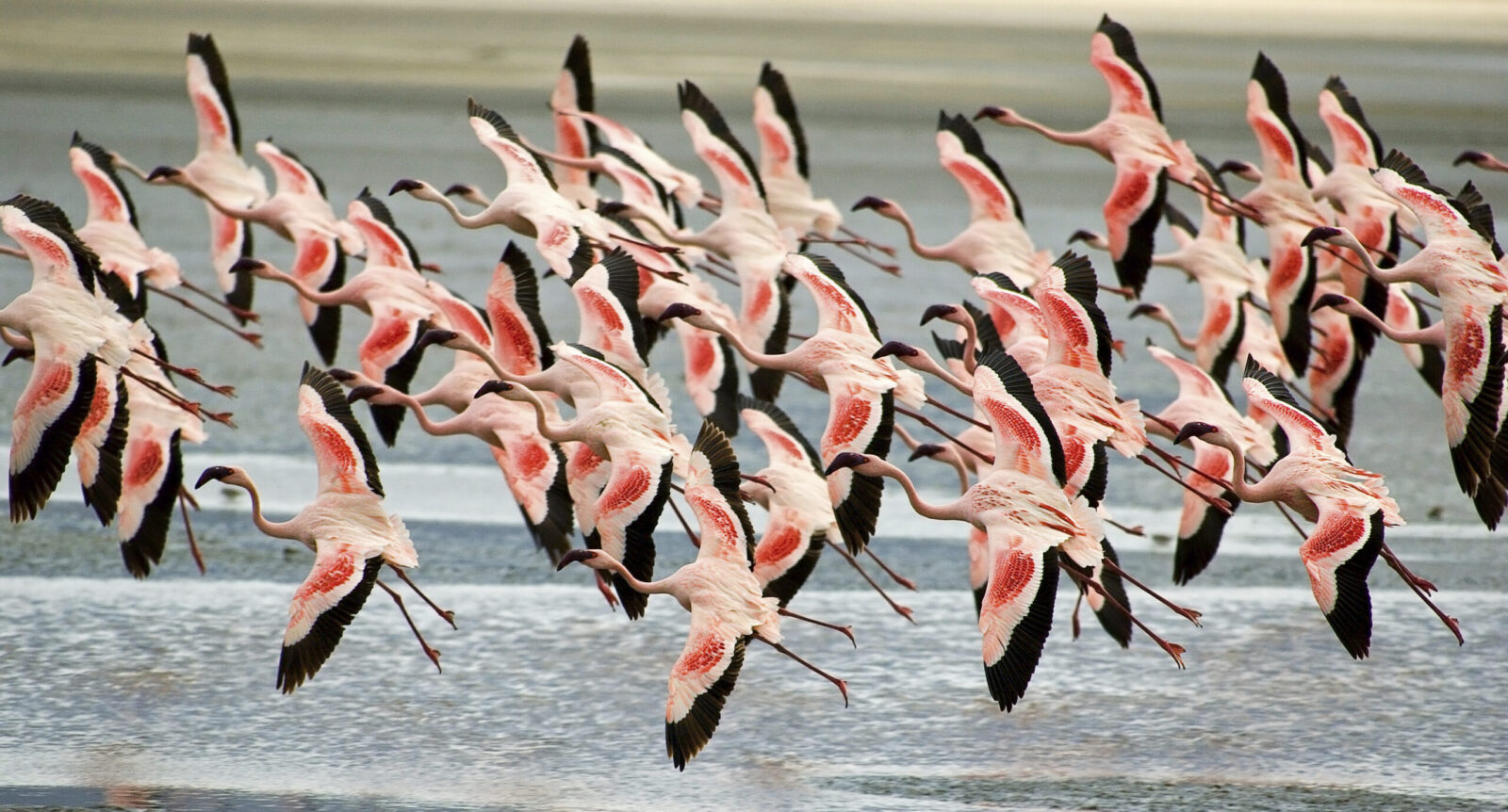
Wetland Hotspots for Migration
Wetlands are among the most important habitats for migratory birds in East Africa.
Areas such as Lake Victoria shores, papyrus swamps, and inland lakes provide ideal conditions for feeding and resting.
In Uganda, wetlands around major lakes and river systems attract large concentrations of both resident and migratory species, especially during peak migration months.
These ecosystems act as critical refueling stations for birds continuing long-distance journeys.
Timing of Migration in East Africa
Migration into East Africa generally occurs in two main phases.
The first wave arrives around September to November as birds leave Europe and Asia ahead of winter. The second period of activity is observed between February and April, when some species begin returning north.
However, timing varies by species, weather conditions, and ecological factors along migration routes.
Unlike terrestrial migrations such as wildebeest movements, bird migration is less visually synchronized and more diffuse across species groups.
How Weather and Climate Affect Migration
Weather plays a major role in determining migration timing and intensity.
Strong winds, storms, and temperature changes can accelerate or delay movement patterns.
Rainfall in East Africa also influences local food availability, which in turn affects how long migratory birds remain in the region.
Wet years often support higher insect populations, attracting more insectivorous migrants.
Interaction with Resident Birds
East Africa is home to a large number of resident bird species that remain in the region year-round.
During migration seasons, these resident populations share habitats with incoming species, leading to temporary increases in competition and diversity.
In many cases, migrants and residents occupy slightly different ecological niches to reduce direct competition.
Birdwatching Value of Migration Periods
For birdwatchers, migration seasons represent one of the most productive times of year.
Species diversity increases significantly, and unusual or rare species may appear in accessible locations.
In places like Queen Elizabeth National Park, wetlands and savannah edges become especially rich birding zones during these periods.
The combination of resident biodiversity and seasonal migrants makes East Africa one of the most important birding regions in the world.
Challenges in Tracking Migration
Despite its scale, bird migration is not always easy to track in detail.
Many species migrate at night, follow different routes depending on weather, and disperse widely once they arrive in Africa.
This makes precise population counts and movement mapping complex and constantly evolving.
Modern tracking technologies such as GPS tagging are improving understanding, but much of migration behavior is still inferred from field observation.
Conservation Importance
Migratory birds depend on a chain of habitats across continents. Loss of wetlands, deforestation, and climate change in any part of the route can impact populations.
East African habitats play a crucial role as stopover and wintering grounds, making their protection essential for global bird conservation.
Wetland degradation or habitat conversion in key areas can disrupt entire migration cycles.
A Moving Layer of Biodiversity
Bird migration in East Africa is not a single event but a continuous flow of species moving across continents in response to seasonal ecological changes.
In ecosystems such as Bwindi Impenetrable National Park and Queen Elizabeth National Park, this movement adds a dynamic layer to already rich biodiversity.
The region functions as both destination and corridor, where global avian populations intersect with resident species, creating one of the most complex and diverse bird systems on Earth.