
Uganda vs Rwanda for Gorilla Trekking: The Honest Comparison (In-Depth Guide)
Introduction: Two Countries, One Extraordinary Wildlife Encounter
Gorilla trekking is widely regarded as one of the most profound wildlife experiences on Earth. It is not simply a safari activity—it is a deeply immersive encounter with one of humanity’s closest relatives in their natural, protected rainforest habitat. In East Africa, only two countries offer this experience: Uganda and Rwanda.
Uganda and Rwanda both protect mountain gorillas within the Virunga ecosystem and the Bwindi forest system, but the experience of trekking differs significantly in terrain, cost, accessibility, and overall safari structure. Understanding these differences is essential for any traveler planning a gorilla trekking adventure.
This comprehensive comparison focuses on the two primary destinations: Bwindi Impenetrable National Park and Volcanoes National Park, while also considering the broader safari context in each country.
The goal is not to declare a universal winner, but to clarify which destination suits which type of traveler.
Geographic and Ecological Context
Both Uganda and Rwanda sit within the Albertine Rift region, one of the most biodiverse zones in Africa. This region is characterized by volcanic mountains, dense montane forests, and high-altitude ecosystems that support mountain gorillas.
In Uganda, gorilla trekking takes place primarily in Bwindi Impenetrable National Park and also in Mgahinga Gorilla National Park (less frequently visited). Bwindi is a vast, ancient rainforest with extremely dense vegetation, steep ridges, and deep valleys. It is one of the most biologically rich forests in Africa, hosting hundreds of tree species, birds, primates, and butterflies.
In Rwanda, gorilla trekking occurs in Volcanoes National Park, part of the Virunga volcanic chain. The terrain here is dominated by volcanic slopes, bamboo forests, and open undergrowth in some areas. Compared to Bwindi, it is generally more open and easier to traverse.
This ecological difference is one of the most important factors shaping the trekking experience.
Trekking Experience: Terrain and Physical Demand
Uganda: Challenging but Wild and Immersive
Trekking in Bwindi Impenetrable National Park is often described as physically demanding. The word “impenetrable” is not symbolic—it reflects the reality of dense vegetation, steep inclines, and unpredictable terrain.
Treks can last anywhere from 2 to 8 hours depending on the location of the gorilla family. Hikers may encounter thick vines, muddy trails, steep ascents, and narrow forest paths. The difficulty level varies depending on the sector of Bwindi assigned (Buhoma, Ruhija, Rushaga, or Nkuringo).
However, this difficulty contributes to the sense of achievement. Many travelers describe the experience as more “raw,” “authentic,” and “wilderness-like.”
The moment of finally encountering a gorilla family in the dense forest feels earned, almost like a discovery.
Rwanda: More Accessible and Predictable
In contrast, trekking in Volcanoes National Park is generally easier. The forest is less dense, and the terrain is more open due to bamboo vegetation and volcanic soil structure.
Trek durations are often shorter, sometimes as little as 1–3 hours, although longer hikes are still possible depending on gorilla movement.
This makes Rwanda more suitable for travelers who prefer less physically intense activities or those with limited time.
In summary:
- Uganda = physically demanding, unpredictable, adventurous
- Rwanda = more accessible, structured, and manageable
Cost Comparison: A Major Decision Factor
One of the most significant differences between the two destinations is cost.
Gorilla trekking permits in Rwanda are among the most expensive in the world. The pricing reflects the country’s premium tourism strategy, which focuses on high-end, low-volume tourism.
Uganda offers more affordable permits for trekking in Bwindi Impenetrable National Park, making it more accessible to mid-range travelers and longer safari itineraries.
This difference has a major impact on overall trip planning:
- Uganda allows combination safaris (gorillas + savannah + chimps) at a lower total cost
- Rwanda often focuses on shorter, luxury gorilla-focused itineraries
Accessibility and Travel Logistics
Rwanda: Fast and Convenient
One of Rwanda’s strongest advantages is accessibility. From Kigali, travelers can reach Volcanoes National Park in approximately 2–3 hours by road.
This makes Rwanda ideal for short trips, weekend safaris, or business travelers adding a wildlife extension.
Infrastructure is highly developed, roads are well maintained, and logistics are streamlined.
Uganda: Longer but More Diverse Journeys
In Uganda, reaching Bwindi Impenetrable National Park from Kampala or Entebbe typically requires a full day’s drive or a combination of domestic flights and road transfers.
While this increases travel time, it also allows Uganda to integrate gorilla trekking into longer safari circuits, including destinations such as Queen Elizabeth National Park and Kibale Forest National Park.
Uganda is therefore more suitable for multi-destination safari itineraries.
Safari Diversity Beyond Gorillas
Uganda: A Full Safari Ecosystem
Uganda is not just about gorillas. One of its greatest strengths is safari diversity. A typical itinerary may include:
- Chimpanzee tracking in Kibale Forest National Park
- Big game drives in Queen Elizabeth National Park
- Boat safaris on the Kazinga Channel
- Nile River experiences in Murchison Falls
This makes Uganda ideal for travelers seeking a complete East African safari experience.
Rwanda: Focused and Specialized
Rwanda’s wildlife tourism is more concentrated. While Volcanoes National Park is the main highlight, the country also offers Nyungwe Forest for chimpanzees and Akagera National Park for savannah wildlife.
However, the overall safari circuit is smaller and more specialized compared to Uganda.
Gorilla Viewing Experience
In both countries, gorilla viewing is strictly regulated. Once a gorilla family is located, visitors are allowed one hour in their presence.
Uganda Experience
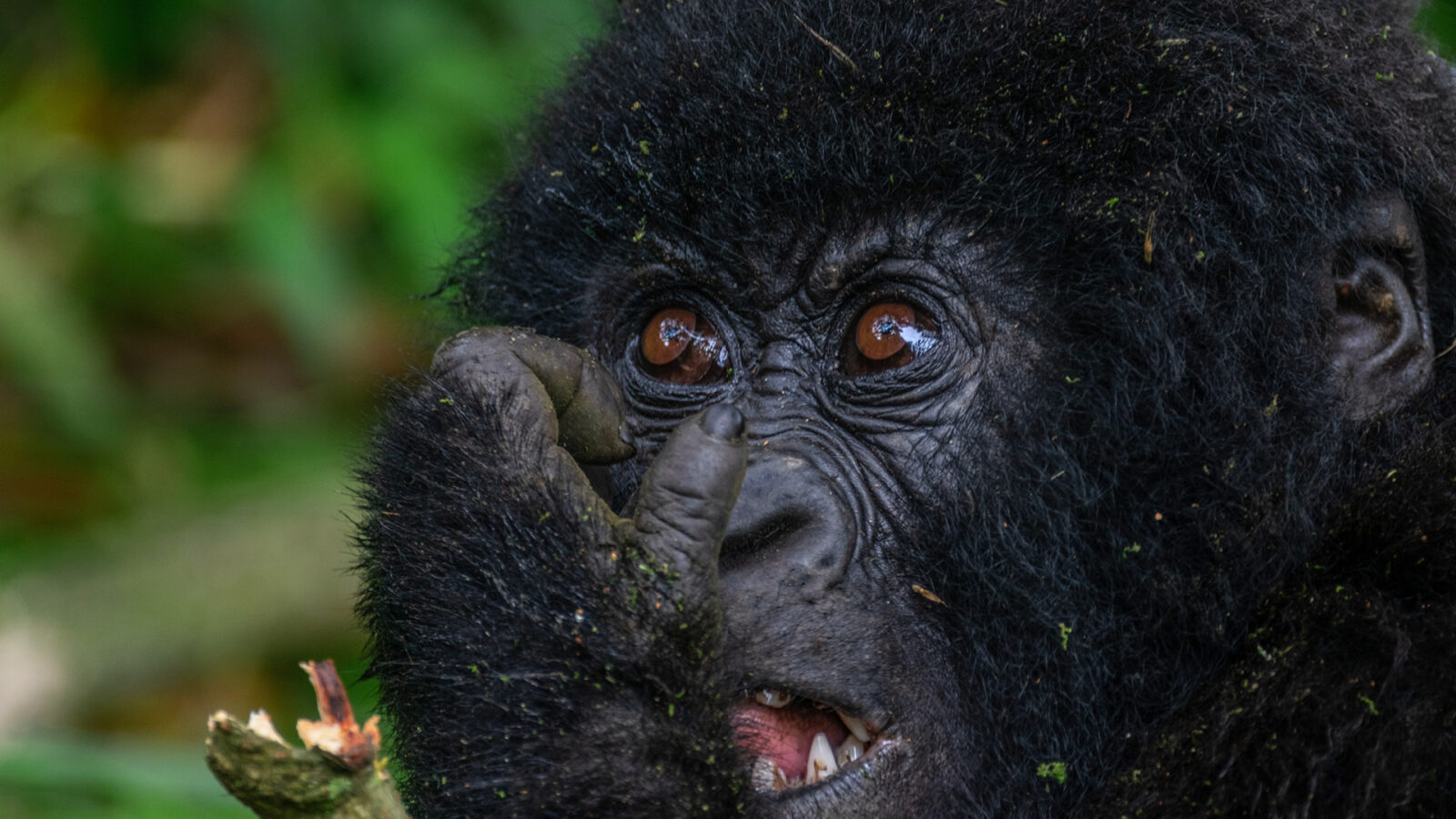
In Bwindi Impenetrable National Park, gorilla families often move through dense vegetation, sometimes requiring trekkers to clear paths through thick jungle. The experience feels immersive and intimate, with a strong sense of being inside a true wilderness environment.
Rwanda Experience
In Volcanoes National Park, visibility is often better due to more open terrain. Photography conditions may be easier, and the experience is often described as more structured and less physically taxing.
Both experiences are equally rewarding in emotional impact, but different in atmosphere.
Accommodation and Tourism Style
Rwanda has positioned itself as a premium destination. Lodges near Volcanoes National Park often feature luxury architecture, high-end service, and curated experiences.
Uganda offers a wider spectrum of accommodation around Bwindi Impenetrable National Park, ranging from budget lodges to mid-range and luxury options. This makes Uganda more flexible for different travel budgets.
Cultural and Scenic Differences
Uganda’s landscapes are highly varied. From the lush forests of Bwindi to the savannahs of Queen Elizabeth, travelers experience dramatic shifts in scenery.
Rwanda, often called the “Land of a Thousand Hills,” is visually stunning, with well-maintained terraced hills, clean towns, and scenic volcanic landscapes.
Both countries are culturally rich, but Rwanda tends to feel more polished, while Uganda feels more diverse and rugged.
Who Should Choose Uganda?
Uganda is ideal for travelers who want:
- A more adventurous trekking experience
- Lower permit costs
- Combined safari itineraries (gorillas + wildlife + chimps)
- A longer, more varied journey
Uganda is particularly strong for multi-park itineraries including Bwindi Impenetrable National Park and Queen Elizabeth National Park.
Who Should Choose Rwanda?
Rwanda is ideal for travelers who want:
- Short, efficient itineraries
- Easier trekking conditions
- High-end luxury experiences
- Quick access from capital city Kigali
Rwanda is perfect for premium gorilla-focused trips in Volcanoes National Park.
Final Verdict: No Winner, Only Preference
The truth is that both Uganda and Rwanda offer world-class gorilla trekking experiences. The differences lie in style, cost, and travel structure rather than quality.
Uganda offers depth, adventure, and diversity. Rwanda offers convenience, luxury, and efficiency.
The gorillas themselves do not change—but the journey to reach them defines the experience.
Two Paths to One Extraordinary Encounter
Whether you choose the dense rainforest of Bwindi Impenetrable National Park or the volcanic slopes of Volcanoes National Park, the moment you sit quietly before a mountain gorilla family is unforgettable.
It is a rare wildlife experience that transcends borders, budgets, and travel styles.
In the end, Uganda and Rwanda are not competing destinations—they are two different gateways to one of the most extraordinary encounters in the natural world.