
Nocturnal Animals in Uganda: What Comes Out at Night.
When the sun sets over Uganda’s savannahs, forests, and wetlands, the landscape does not become empty—it changes shift. The daytime “Big Game” scene gives way to a quieter, more secretive ecosystem dominated by nocturnal wildlife. These are species adapted to darkness, cooler temperatures, and reduced competition, and they play a critical ecological role across ecosystems such as Murchison Falls National Park, Queen Elizabeth National Park, and the dense rainforest of Bwindi Impenetrable National Park.
Night in Uganda is not absence—it is revelation. What follows is a detailed breakdown of what actually comes out after dark, how these animals behave, and what safari travelers should realistically expect if they experience Uganda beyond daylight hours.
The Night Shift: Why Nocturnal Wildlife Exists
Nocturnal behavior in Uganda is primarily driven by survival strategy. Animals become active at night for three main reasons: avoiding predators, reducing heat stress, and exploiting food resources with less competition.
In savannah ecosystems, daytime temperatures can be intense, making nighttime movement more energy-efficient. For prey species, darkness also provides concealment from visually hunting predators. For predators, night offers stealth advantages.
This shift creates a completely different ecological system once darkness falls.
Lions After Dark: The Apex Night Hunters
Among Uganda’s most iconic nocturnal predators are lions, especially in savannah parks like Queen Elizabeth National Park.
Lions are most active during the night and early morning hours. Their hunting strategy relies heavily on coordinated group movement, silent stalking, and ambush attacks. Darkness gives them a tactical advantage, especially when targeting nocturnal herbivores or weakened individuals within herds.
At night, lion prides may split into hunting units, using terrain features such as grasslands, thickets, and water channels to approach prey undetected. Their vocalizations—roars and grunts—also increase during nighttime, serving both territorial and social coordination purposes.
Leopards: The Masters of Stealth
Leopards are among the most strictly nocturnal big cats in Uganda. They are elusive during the day and become significantly more active after dusk.
Unlike lions, leopards are solitary hunters. They rely on stealth, patience, and explosive bursts of speed. Nighttime gives them an advantage in ambushing prey such as antelope, monkeys, and smaller mammals.
In forested environments like Bwindi Impenetrable National Park, leopards are extremely difficult to observe, but camera trap data confirms their presence and activity patterns.
They often drag kills into trees at night to avoid scavengers, a behavior that further reduces human visibility of their feeding activity.
Hyenas: The Night Scavengers and Hunters
Spotted hyenas are among the most active nocturnal animals across Uganda’s savannah ecosystems.
They are highly intelligent and socially complex, operating in clans with strict hierarchies. At night, hyenas shift between scavenging and hunting depending on opportunity.
Their vocalizations—whoops, laughs, and calls—are especially prominent after dark and serve as long-distance communication tools within clans.
In places like Murchison Falls National Park, hyenas often compete directly with lions for carcasses, making nighttime a period of intense predator interaction.
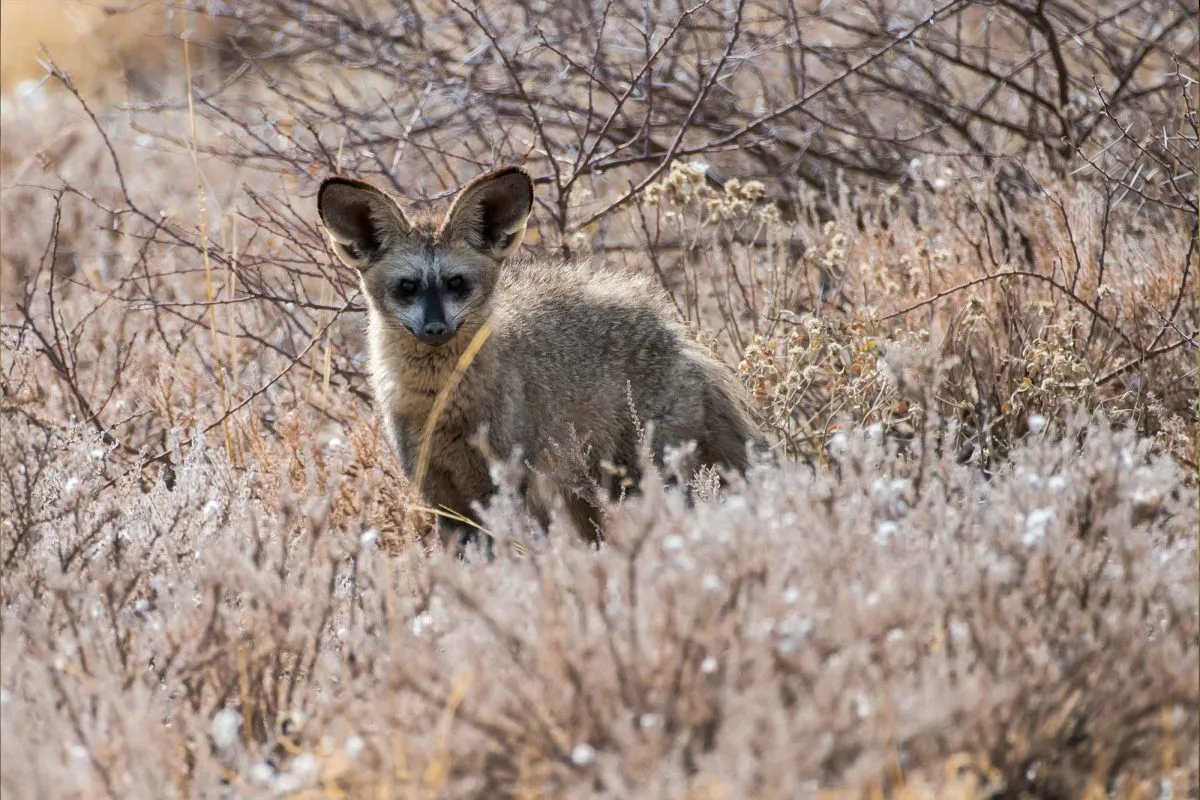
Genets, Civets, and Small Carnivores
Beyond the large predators, Uganda hosts a range of smaller nocturnal carnivores that are rarely seen during daylight.
Genets are slender, cat-like animals that move quietly through trees and ground cover, hunting insects, rodents, and small birds. Civets are more robust and often forage on the forest floor, feeding on fruit, insects, and small vertebrates.
These animals are highly adapted to stealth and are most commonly observed on night drives or through camera trap footage rather than direct encounters.
Nocturnal Primates: Bushbabies and Galagos
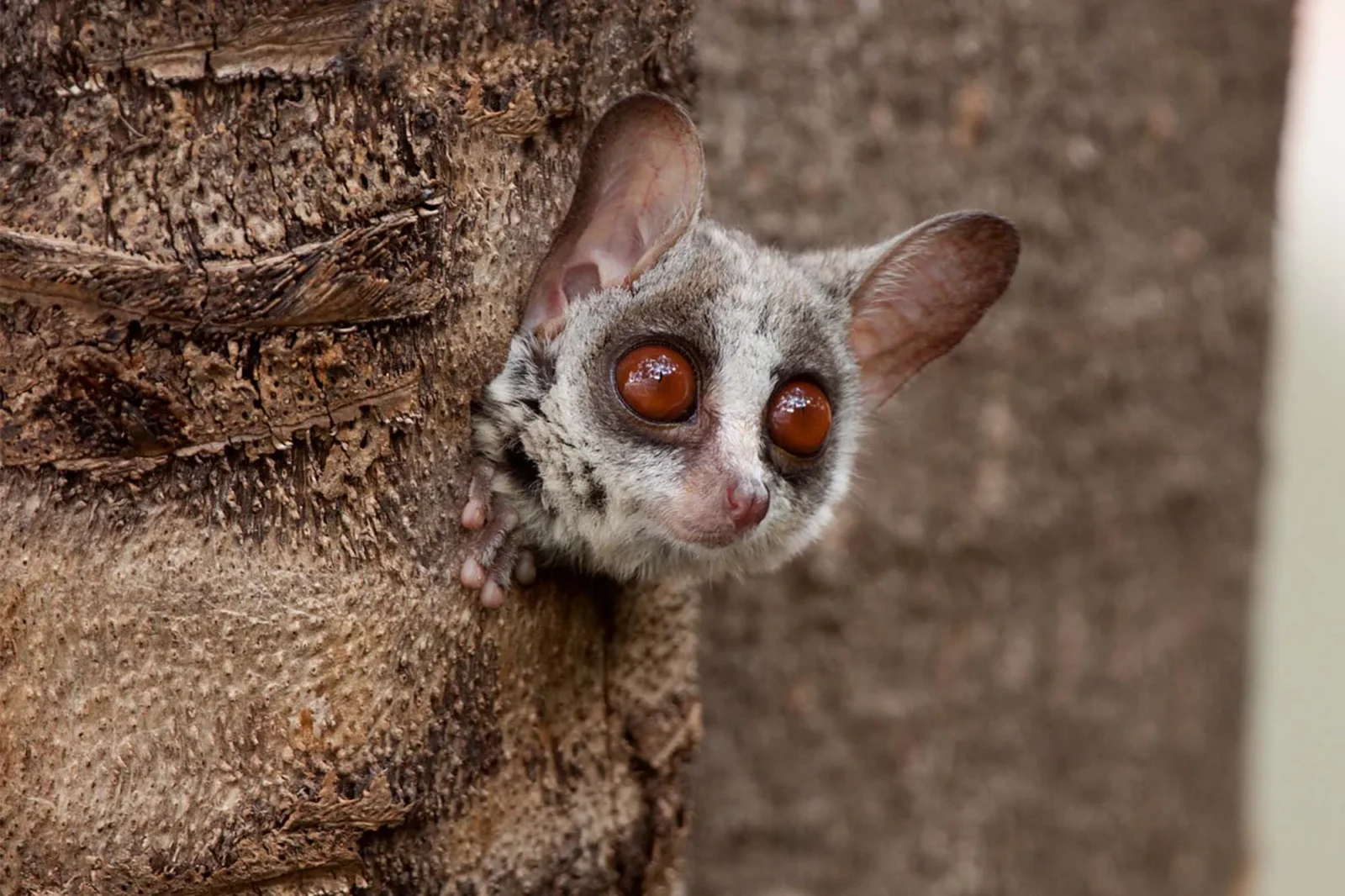
Uganda is home to several nocturnal primates, most notably bushbabies, also known as galagos.
These small primates are highly agile and use their strong hind limbs to leap between trees. Their large eyes are adapted for night vision, allowing them to locate insects and navigate dense forest canopies in complete darkness.
In forested regions such as Bwindi, bushbabies are present but rarely seen unless specifically searched for during guided night walks in permitted areas.
Nighttime Herbivores: Feeding Under Cover
Not all nocturnal animals are predators. Many herbivores shift activity to nighttime to avoid daytime heat and reduce exposure to predators.
In savannah ecosystems, species such as buffalo, hippos, and various antelope may graze or move between feeding areas at night.
Hippos, in particular, are highly active after dark, leaving water bodies to graze on land. Their movement patterns are one of the most significant nocturnal ecological processes in wetland areas.
Hippos: The Most Dangerous Night Wanderers
Although often seen as aquatic animals, hippos are most active on land at night.
They leave rivers and lakes after sunset to feed on grass, sometimes traveling several kilometers inland. This movement is essential for their energy requirements.
Despite their bulk, hippos are surprisingly fast and territorial. Nighttime increases the likelihood of human-wildlife encounters, especially near water sources, making awareness critical for lodges located near rivers or lakes.
Insects and Amphibians: The Soundscape of Night
One of the most noticeable aspects of Ugandan nights is the soundscape created by insects and amphibians.
Crickets, cicadas, frogs, and night insects dominate the auditory environment, particularly in wetland and forest ecosystems.
After rainfall, frog activity increases significantly, creating dense choruses that define the nighttime atmosphere in places like Queen Elizabeth National Park.
This acoustic environment is a key indicator of ecosystem health and biodiversity.
Owls and Night Birds
Uganda’s nocturnal birdlife includes several owl species and nightjars.
Owls are silent hunters, relying on exceptional hearing and silent flight to capture rodents and small reptiles. Their presence is often detected through calls rather than visual sightings.
Nightjars are more cryptic, often blending into ground cover during the day and becoming active at dusk and night to feed on flying insects.
Nocturnal Reptiles and Amphibians
Certain reptiles, including geckos and some snake species, are also active at night. They take advantage of cooler temperatures and increased prey availability.
Amphibians, especially frogs and toads, become highly active after rainfall, contributing significantly to nighttime biodiversity.
Night Drives vs Day Safaris: A Different World
Night safaris, where permitted, reveal an entirely different ecological system compared to daytime game drives.
Predator-prey interactions shift, visibility decreases, and behavior becomes more secretive and dynamic.
However, night drives are only allowed in specific parks and under strict regulation. In many forested areas, including Bwindi, nighttime wildlife viewing is generally restricted to protect ecosystems and ensure safety.
Human Presence and Night Safety
In areas where tourism accommodation is located near wildlife zones, nocturnal animals often pass close to lodges or roads.
While this creates exciting wildlife opportunities, it also requires caution. Animals like hippos, elephants, and buffalo can be dangerous at night if encountered unexpectedly.
Lodges typically enforce movement guidelines after dark to ensure guest safety.
The Hidden Half of Uganda’s Wildlife
Night in Uganda represents a second ecosystem operating alongside the visible daytime safari world. In places like Murchison Falls National Park, Queen Elizabeth National Park, and Bwindi Impenetrable National Park, darkness reveals a parallel network of predators, prey, and ecological interactions that rarely overlap with daytime observation.
Understanding nocturnal wildlife changes the perception of safari from a daytime activity into a 24-hour ecological system where behavior, movement, and survival strategies continuously shift with light and darkness.