
How Smart Are Chimpanzees? What Research Tells Us
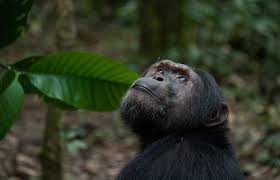
Chimpanzees are widely regarded as the most intelligent non-human animals on Earth. Their cognitive abilities, emotional depth, and social complexity place them closer to humans than any other species except bonobos. Studying the intelligence of Chimpanzee has transformed our understanding of animal minds and offered profound insights into the origins of human behavior.
From laboratory experiments to long-term field research in places like Kibale National Park, scientists have uncovered a remarkable picture of chimpanzee intelligence—one that spans memory, problem-solving, communication, and culture.
Defining Intelligence in Animals
Before examining chimpanzees specifically, it is important to understand what scientists mean by “intelligence.” In animal cognition, intelligence is not measured by a single factor like IQ, but rather by a combination of abilities. These include memory, learning capacity, adaptability, problem-solving, communication, and social awareness.
Chimpanzees score highly across all these domains. Their intelligence is particularly evident in how they interact with their environment and with each other, often demonstrating flexible thinking and intentional behavior.
Memory and Cognitive Performance
One of the most striking findings in chimpanzee research is their exceptional memory. In controlled experiments, chimpanzees have demonstrated the ability to remember sequences of numbers after only brief exposure.
In some cases, young chimpanzees outperform adult humans in short-term memory tasks. This suggests that their brains are highly optimized for certain types of rapid information processing, likely an adaptation to survival in complex forest environments.
Their memory is not limited to numbers. In the wild, chimpanzees remember the locations of fruiting trees, seasonal patterns, and social relationships within their group. This spatial and social memory is critical for navigating both their environment and their communities.
Tool Use and Problem-Solving
Chimpanzees are one of the few animal species known to use tools regularly. This behavior is not random—it involves planning, modification, and learning.
In the forests of Budongo Forest Reserve, chimpanzees have been observed using sticks to extract termites, leaves as sponges to collect water, and stones to crack nuts. These tools are often selected and shaped for specific tasks, demonstrating foresight and understanding of cause and effect.
Problem-solving experiments in captivity further highlight their intelligence. Chimpanzees can solve puzzles, navigate mazes, and even stack objects to reach food. These actions require planning and an ability to visualize outcomes before acting.
Social Intelligence and Strategy
Chimpanzee intelligence is deeply tied to their social lives. Living in complex communities, they must constantly interpret social cues, build alliances, and manage conflicts.
Dominance hierarchies among males, for example, are not maintained solely through strength. Strategic thinking, cooperation, and timing play a major role. A lower-ranking male may form alliances with others to challenge a dominant individual, showing an understanding of group dynamics.
They also engage in deception. In some cases, chimpanzees have been observed hiding food from others or misleading group members to gain an advantage. This suggests an awareness of what others know or perceive—a concept known as “theory of mind.”
Communication and Symbolic Understanding
Chimpanzees communicate using a combination of vocalizations, gestures, and facial expressions. Their communication system is rich and context-dependent, allowing them to convey a wide range of information.
Research has shown that chimpanzees can learn elements of human symbolic systems. Some individuals have been trained to use sign language or lexigrams (symbol boards) to communicate with humans.
While they do not develop full human language, they can understand symbols, follow instructions, and even combine signs to express basic ideas. This ability demonstrates a level of abstract thinking that was once believed to be uniquely human.
Emotional Intelligence and Empathy
Chimpanzees display a high degree of emotional intelligence. They form strong social bonds, show empathy, and respond to the emotions of others.
They comfort distressed group members, share food in certain situations, and maintain long-term relationships. Mothers show deep care for their infants, while alliances between adults can last for years.
There is also evidence of grief. Chimpanzees have been observed reacting to the death of a group member with behaviors that suggest mourning, such as remaining near the body or showing signs of distress.
These emotional capacities are closely linked to their cognitive abilities, reinforcing the idea that intelligence is not purely analytical but also social and emotional.
Culture and Learned Behaviour
One of the most groundbreaking discoveries in chimpanzee research is the existence of culture. Different chimpanzee communities exhibit distinct behaviors that are learned and passed down through generations.
For example, one group may use a specific technique for termite fishing, while another group uses a different method. These differences are not due to genetics or environment alone—they are the result of social learning.
Young chimpanzees learn by observing adults, particularly their mothers. This transmission of knowledge creates traditions within groups, much like human cultures.
Research Contributions and Key Scientists
Much of what we know about chimpanzee intelligence comes from decades of research by scientists such as Jane Goodall. Her long-term study of chimpanzees in Tanzania revolutionized our understanding of animal behavior, particularly in the areas of tool use and social dynamics.
Institutions like the Jane Goodall Institute continue to support research and conservation efforts, ensuring that chimpanzees remain both protected and studied.
Field research in Uganda, especially in Kibale and Budongo, has also contributed significantly to global knowledge about chimpanzee cognition and behavior.
Limitations of Chimpanzee Intelligence
Despite their remarkable abilities, chimpanzees do have cognitive limits. They do not develop complex language systems like humans, nor do they build advanced technologies.
Their intelligence is highly adapted to their environment, focusing on survival, social interaction, and resource acquisition rather than abstract or symbolic reasoning at a human level.
Understanding these limitations is important, as it highlights both the similarities and differences between humans and chimpanzees.
Final Thoughts: What Chimpanzees Teach Us About Intelligence
Chimpanzees challenge traditional definitions of intelligence. They demonstrate that complex thinking, emotional depth, and cultural behavior are not exclusive to humans.
Their abilities reveal that intelligence exists on a spectrum, shaped by environment, evolution, and social needs. By studying chimpanzees, we gain insight not only into their world but also into our own origins.
Encounters with chimpanzees in places like Kibale National Park are more than just wildlife experiences—they are a window into the evolutionary roots of intelligence itself.
Ultimately, chimpanzees remind us that we are part of a broader continuum of life, connected by shared traits that continue to fascinate scientists and travelers alike.