
Africa’s Most Endangered Birds: A Red List Safari Guide
When Safari Is No Longer Just About Sightings
Most safari conversations focus on the “Big Five” or charismatic species like lions, elephants, and gorillas in places such as Bwindi Impenetrable National Park. But beneath that visible layer of wildlife tourism lies another, far more fragile world: Africa’s endangered bird species.
These are birds that are still present in the wild but face steep population declines due to habitat loss, climate change, hunting pressure, and ecological disruption. Many are listed on the IUCN Red List in categories ranging from vulnerable to critically endangered.
A “Red List safari” is not about ticking off species for a checklist. It is about understanding where conservation urgency is highest, which habitats are under pressure, and what travelers might realistically encounter in protected areas such as Queen Elizabeth National Park and other East African ecosystems.
What the Red List Actually Means
The IUCN Red List is a global conservation framework that categorizes species based on extinction risk.
Birds classified as vulnerable face a high risk of endangerment in the medium term. Endangered species face a very high risk of extinction in the wild. Critically endangered species are at immediate risk of disappearing entirely if conditions do not improve.
These classifications are based on population size, rate of decline, geographic range, and habitat quality.
For safari travelers, the Red List is not just scientific data—it is a guide to ecological urgency.
Why Africa Has So Many Endangered Birds
Africa’s bird diversity is extremely high, but so is ecological pressure.
The main threats include deforestation, wetland drainage, agricultural expansion, climate variability, and urbanization. In many regions, forests and wetlands that once supported stable bird populations are now fragmented or degraded.
Migratory species are also affected because they depend on multiple habitats across continents. A disruption in one region can affect survival thousands of kilometers away.
This makes conservation complex and interconnected.
The Shoebill: Africa’s Most Iconic Threatened Bird
One of the most famous endangered birds in Africa is the shoebill, a large, prehistoric-looking species found in papyrus swamps and wetland systems.
It is most commonly associated with regions around the Nile basin and wetlands within Uganda, including areas near Murchison Falls National Park.
The shoebill is classified as vulnerable due to habitat loss and disturbance. It relies on intact swamp ecosystems for feeding and nesting, particularly areas with dense papyrus vegetation.
Its slow breeding rate makes population recovery difficult, even in protected areas.
Grey Crowned Crane: Uganda’s National Bird Under Pressure
The grey crowned crane is one of Africa’s most recognizable birds and also one of its most threatened.
Once widespread across East Africa, its population has declined due to wetland drainage, agricultural expansion, and illegal capture for the pet trade.
It is closely associated with wetlands and grassland mosaics, including habitats around Queen Elizabeth National Park.
Although still present in several countries, its numbers are significantly lower than historical levels, making conservation efforts critical.
African Penguin: Coastal Decline
While not found in East Africa, the African penguin represents one of the most visible seabird conservation crises on the continent.
Its populations along the southern African coast have declined due to overfishing, oil spills, and habitat disturbance.
It is now classified as endangered, with conservation efforts focused on breeding protection and fisheries management.
White-backed Vulture: The Silent Collapse
Vultures are among the most critically threatened bird groups in Africa, and the white-backed vulture is a key example.
Once abundant across savannah ecosystems, populations have crashed due to poisoning, habitat loss, and food chain disruption.
In places like Queen Elizabeth National Park, vultures still play an essential ecological role by cleaning carcasses and preventing disease spread.
However, their numbers are now a fraction of historical levels.
Rüppell’s Vulture: High-Flying Decline
Rüppell’s vulture holds the record for the highest recorded flight altitude of any bird, but it is now critically endangered.
Its decline is linked to poisoning events, reduced food availability, and habitat changes.
Vultures are particularly sensitive to ecosystem disruptions because they rely on wide-ranging scavenging territories.
Madagascar Pochard: The Rarest Duck
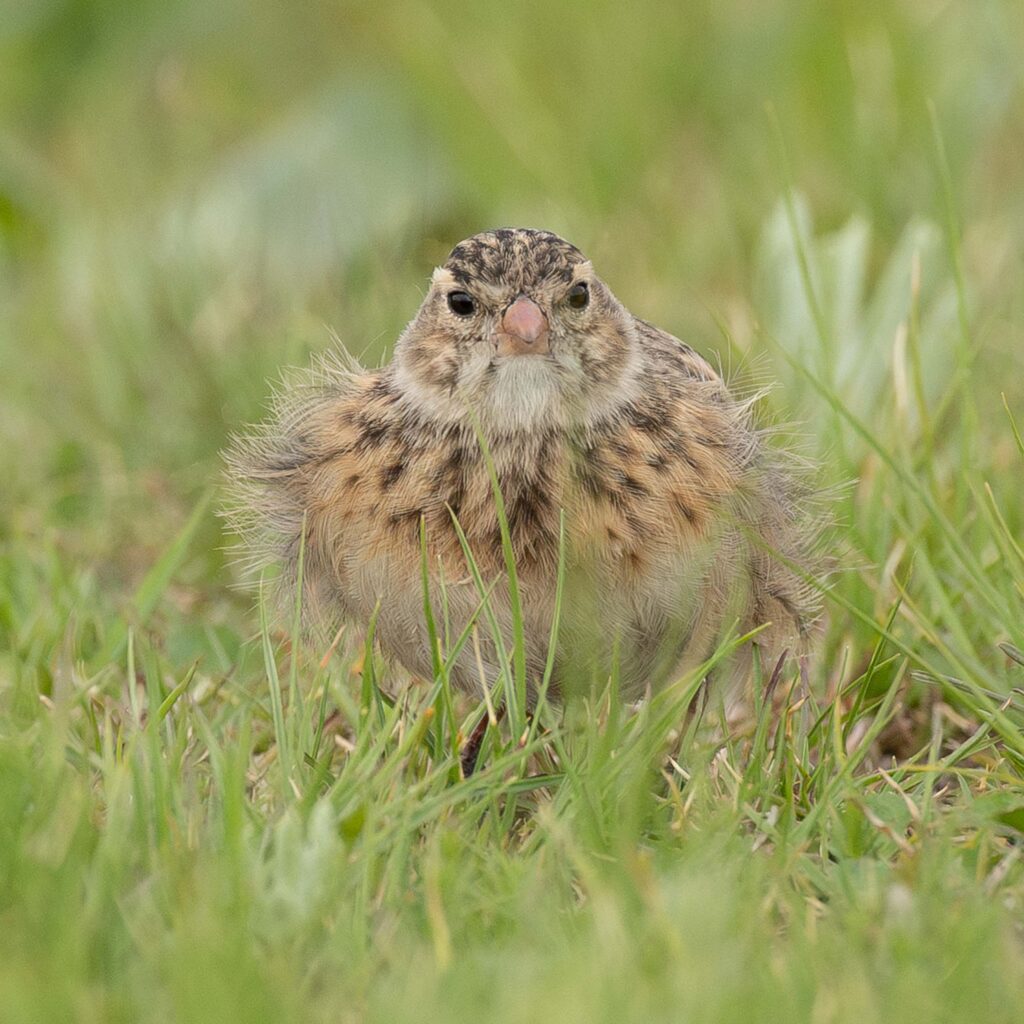
The Madagascar pochard is one of the rarest waterbirds in the world, once thought extinct before a small population was rediscovered.
It inhabits deep freshwater lakes and is critically endangered due to habitat degradation and limited breeding sites.
Although outside mainland Africa’s safari circuits, it represents the extreme end of waterbird conservation challenges.
Sokoke Scops Owl: Forest Specialist Under Threat
The Sokoke scops owl is a small, forest-dependent owl found in coastal East African forests.
Its survival is tightly linked to intact forest ecosystems, which are increasingly fragmented by human activity.
It is a strong indicator species for forest health, meaning its decline reflects broader ecological pressure.
Taita Apalis: Endemic and Extremely Restricted
The Taita apalis is one of Africa’s most geographically restricted birds, found only in small forest patches in Kenya’s Taita Hills.
Its limited range makes it highly vulnerable to habitat loss and fragmentation.
Species like this highlight how small-scale environmental changes can have global conservation implications.
Bird Habitats Under Pressure
Endangered birds in Africa are not distributed randomly. They are concentrated in specific ecosystems: wetlands, forests, coastal zones, and montane regions.
Wetlands are especially important for species like cranes and shoebills. Forests support specialized species like owls and small insectivores. Coastal areas are critical for seabirds.
When these habitats are degraded, entire bird communities collapse rapidly.
Conservation in East African Parks
Protected areas such as Bwindi Impenetrable National Park and Queen Elizabeth National Park play a key role in supporting bird diversity.
These parks protect forest, savannah, and wetland systems that host both resident and migratory species.
However, even within protected areas, external pressures such as climate change and human encroachment can still affect bird populations.
Why Bird Conservation Matters Beyond Birds
Birds are not isolated components of ecosystems. They play critical roles in seed dispersal, pest control, scavenging, and ecological balance.
The decline of bird species often signals broader environmental degradation affecting many other forms of wildlife.
For example, vulture declines can lead to increased disease risk in ecosystems, while wetland bird loss often reflects water system disruption.
The Challenge of Visibility in Conservation
Unlike charismatic mammals, many endangered birds are small, cryptic, or nocturnal, making them less visible to tourists and even researchers.
This creates a visibility gap in conservation funding and public attention.
Species like cranes or vultures receive more attention, while less visible forest birds may decline unnoticed.
A Safari Beyond the Obvious
A Red List safari is not defined by how many species are seen, but by understanding the ecological pressure behind what remains.
In ecosystems such as Bwindi Impenetrable National Park and Queen Elizabeth National Park, endangered birds exist alongside more visible wildlife, forming part of a complex and interconnected system.
Their presence, decline, or disappearance reflects deeper changes in habitat quality, climate stability, and human impact across the continent.