
Samburu Special Five: The Animals Found Only in Northern Kenya
Northern Kenya offers a safari experience unlike anywhere else in East Africa. Far from the rolling plains of the south, the landscape shifts into a semi-arid wilderness of acacia scrub, rocky outcrops, and winding seasonal rivers. At the heart of this rugged region lies Samburu National Reserve, a destination celebrated not only for its raw beauty but for a rare group of animals known as the Samburu Special Five.
These species are uniquely adapted to the dry northern environment and are rarely found in the more popular southern parks. For travelers seeking something different—something more exclusive—Samburu offers a safari defined by rarity, resilience, and discovery.
A Landscape That Shapes Life
The environment of Samburu National Reserve is harsh yet beautiful. Temperatures can soar, vegetation is sparse, and water is often limited to the life-giving Ewaso Nyiro River.
It is within these demanding conditions that the Samburu Special Five have evolved. Each species reflects the landscape—adapted not just to survive, but to thrive where others cannot.
This connection between land and life is what makes Samburu so compelling. The animals here are not just inhabitants; they are specialists, shaped by generations of survival in one of Kenya’s most challenging ecosystems.
Grevy’s Zebra: The Desert Striped Survivor
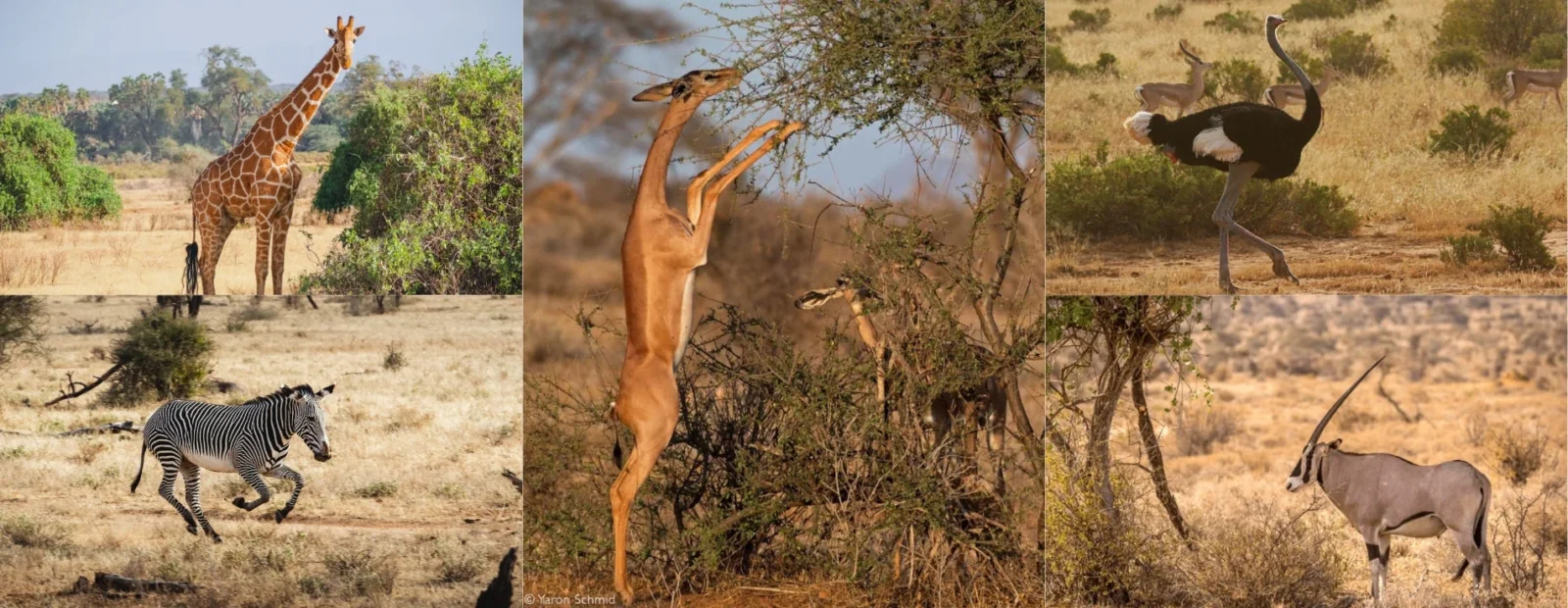
Among the most striking members of the Samburu Special Five is the Grevy’s zebra. Larger and more slender than the common plains zebra, it is easily recognized by its narrow stripes and white belly.
Unlike its southern relatives, the Grevy’s zebra is built for endurance in arid environments. It can travel long distances in search of water and can survive on tougher, less nutritious vegetation.
Seeing these zebras in Samburu National Reserve is a reminder of how wildlife adapts to extreme conditions. Their presence here is both a privilege and a testament to conservation efforts, as they are among the most endangered zebra species in the world.
Reticulated Giraffe: A Living Work of Art
The reticulated giraffe is perhaps the most visually distinctive of all giraffe species. Its coat features bold, geometric patterns separated by bright white lines, creating a striking contrast that stands out against the dry landscape.
In the acacia woodlands of Samburu National Reserve, these giraffes move with quiet elegance, browsing on treetops that few other animals can reach.
Their patterns are more than just beautiful—they may help regulate body temperature and provide camouflage in the dappled light of the bush. Watching them move across the horizon is one of Samburu’s most iconic sights.
Somali Ostrich: The Blue-Necked Giant
While ostriches are found across Africa, the Somali ostrich stands apart. Males display a distinctive blue-grey neck and thighs, especially during the breeding season, giving them a unique appearance compared to the more common pink-necked ostrich.
In the open expanses of Samburu National Reserve, these birds stride confidently across the landscape, perfectly adapted to the heat and dryness.
Their presence adds another layer of diversity to the Samburu ecosystem, highlighting how even familiar species can take on new forms in different environments.
Gerenuk: The Standing Antelope
The gerenuk is one of the most unusual antelopes in Africa. Known for its ability to stand upright on its hind legs, it stretches its long neck to reach leaves that other herbivores cannot access.
This unique feeding behavior allows the gerenuk to thrive in areas where food is scarce. In Samburu National Reserve, it is often seen balancing gracefully against thorny bushes, defying expectations of what an antelope can do.
Its slender body, elongated neck, and delicate features give it an almost surreal appearance—one that perfectly matches the otherworldly feel of the northern Kenyan landscape.
Beisa Oryx: The Desert Specialist
The final member of the Samburu Special Five is the Beisa oryx, a powerful antelope equipped with long, straight horns and a striking black-and-white facial pattern.
Built for survival in dry environments, the oryx can go for long periods without direct water, extracting moisture from the plants it consumes. Its ability to regulate body temperature also allows it to withstand intense heat.
In Samburu National Reserve, herds of oryx move across the plains with quiet determination, embodying the resilience that defines this ecosystem.
Why the Samburu Special Five Matter
The Samburu Special Five are more than just a checklist for safari enthusiasts. They represent a unique ecological niche, a set of adaptations that highlight the diversity of life across Africa.
While the “Big Five” dominate safari marketing, these northern species offer something different—rarity, specialization, and a deeper understanding of how animals interact with their environment.
For travelers who have already experienced the classic savannah safari, encountering these species can feel like discovering a new chapter of Africa’s wildlife story.
A More Exclusive Safari Experience
One of the greatest advantages of visiting Samburu National Reserve is the sense of exclusivity.
The reserve is less visited than southern destinations, meaning fewer vehicles and more intimate wildlife encounters. Game drives here often feel personal and unhurried, allowing you to fully appreciate the details of each sighting.
This quieter atmosphere enhances the experience of tracking the Samburu Special Five, turning each encounter into a meaningful moment rather than a fleeting glimpse.
Beyond the Special Five
While the Samburu Special Five are the main attraction, the reserve offers much more. Lions, leopards, and elephants roam the المنطقة, often seen along the Ewaso Nyiro River.
Birdlife is abundant, and the changing light over the rugged landscape creates endless opportunities for photography. The cultural presence of the Samburu people also adds depth to the experience, offering insight into a traditional way of life closely tied to the land.
Final Thoughts
A safari in Samburu National Reserve is not just about seeing animals—it is about understanding adaptation, resilience, and the beauty of diversity.
The Samburu Special Five embody this spirit. From the elegant reticulated giraffe to the необычный gerenuk, each species tells a story of survival in a challenging environment.
For those willing to venture north, away from the familiar paths, Samburu offers something truly special—a safari that feels rare, authentic, and deeply connected to the wild heart of Kenya.