
Gaddafi National Mosque Kampala: Uganda’s Iconic Landmark on Old Kampala Hill
Introduction
Rising above the bustling streets of Kampala, the Gaddafi National Mosque stands as one of the most striking and culturally significant landmarks in Uganda. Its golden dome glints under the equatorial sun, while its towering minaret offers sweeping views across the city’s famed hills. For many visitors, this mosque is more than just a place of worship—it is a gateway into Uganda’s history, religious diversity, and urban identity.
Often referred to interchangeably as the Uganda National Mosque, this architectural masterpiece blends faith, politics, and tourism into one powerful experience. Whether you are a traveler exploring Kampala for the first time or a local rediscovering your city, the mosque offers a perspective that is both grounding and expansive.
A Vision Rooted in History
The origins of the mosque date back to a time when Uganda was undergoing major political and social transformation. During the 1970s, the idea of building a grand mosque on Old Kampala Hill was first proposed by Idi Amin, who sought to elevate the presence of Islam in a country where Christianity had long dominated the religious landscape.
Construction began but was soon halted due to political instability and economic challenges. For decades, the structure remained incomplete—a silent reminder of an ambitious vision left unrealized. It wasn’t until the early 2000s that progress resumed, thanks to funding from Muammar Gaddafi. His contribution enabled the completion of the mosque, which was officially opened in 2007.
After Gaddafi’s death, the mosque was renamed the Uganda National Mosque. However, the original name remains deeply embedded in public memory, and many still refer to it as the Gaddafi Mosque.
Architectural Grandeur and Design
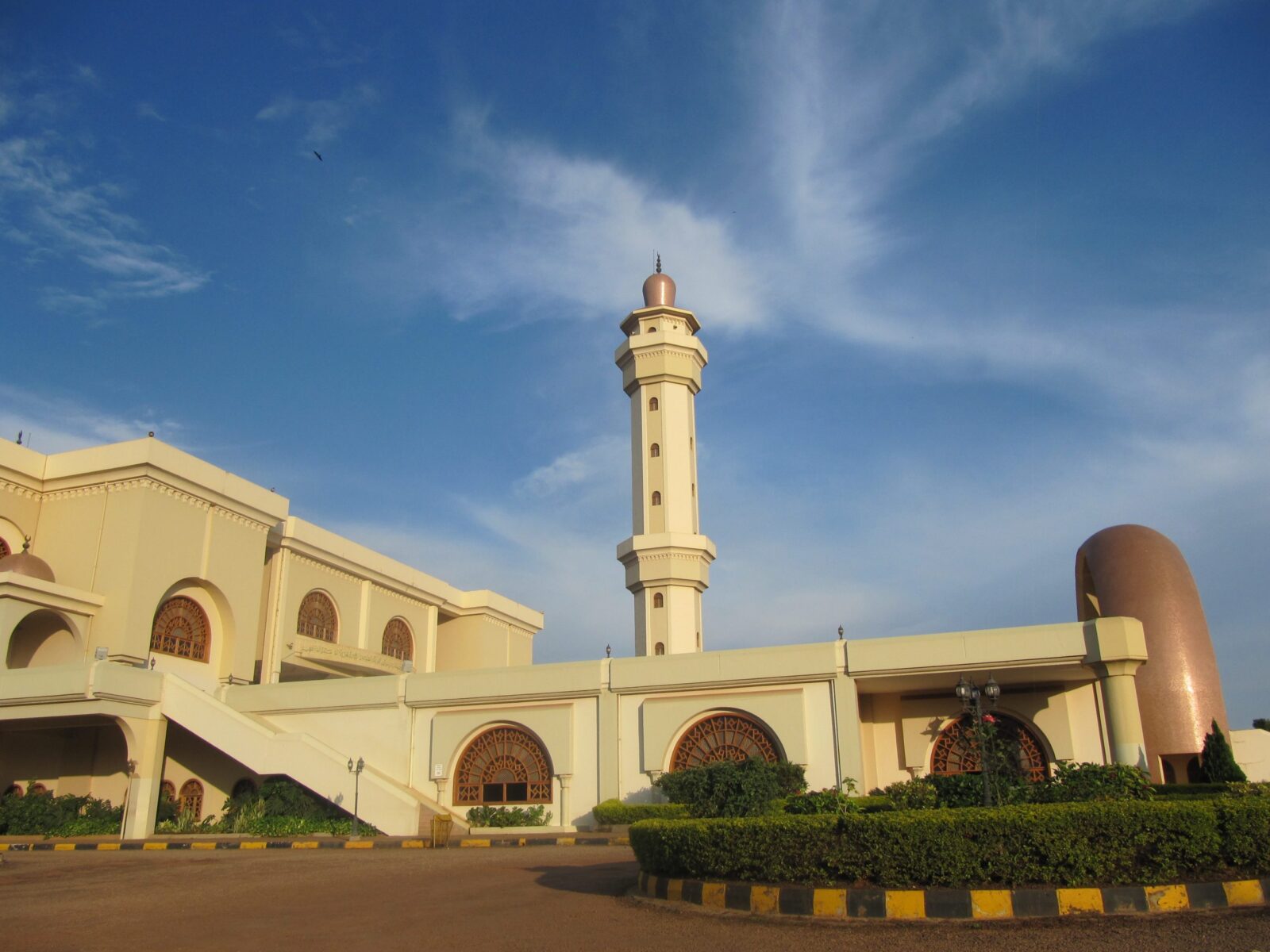
From the moment you approach the mosque, its scale and elegance are unmistakable. The design reflects a harmonious fusion of Arabic, European, and African architectural influences, creating a structure that feels both global and distinctly Ugandan.
The mosque’s central dome is one of its most defining features. Gleaming in gold, it dominates the skyline and can be seen from various parts of Kampala. Beneath it lies the main prayer hall, a vast and serene space capable of accommodating thousands of worshippers. The interior is adorned with intricate patterns, chandeliers, and detailed calligraphy that reflect Islamic artistic traditions.
Equally impressive is the mosque’s minaret, which rises approximately 50 meters above ground level. Climbing it involves ascending a spiral staircase of over 250 steps, but the effort is richly rewarded. At the top, visitors are treated to a breathtaking 360-degree view of Kampala—a panorama that reveals the city’s seven hills, bustling neighborhoods, and distant green landscapes.
The Mosque as a Cultural Landmark
Beyond its architectural beauty, the mosque plays a vital role as a cultural and religious center. It is the largest mosque in East Africa and serves as the headquarters of the Uganda Muslim Supreme Council.
Here, daily prayers, Friday congregations, and major Islamic celebrations bring together thousands of worshippers. The mosque becomes especially vibrant during religious holidays, when the atmosphere is filled with devotion, community spirit, and celebration.
For visitors, the mosque offers an opportunity to learn about Islam in Uganda—a religion that has been part of the country’s fabric for centuries. Guided tours provide insights into Islamic practices, traditions, and the role of the mosque in the lives of Ugandan Muslims.
A Panoramic Window into Kampala
One of the most compelling reasons to visit the mosque is the unparalleled view it offers. From the top of the minaret, Kampala unfolds in all directions, revealing its unique topography and dynamic character.
You can spot major landmarks such as Namirembe Cathedral and Rubaga Cathedral, each perched on its own hill, symbolizing the city’s religious diversity. The contrast between historic buildings and modern developments paints a vivid picture of a city in transition.
The view is particularly magical at sunset, when the sky turns shades of orange and purple, casting a warm glow over the city. It is a moment that captures the essence of Kampala—vibrant, layered, and full of life.
Visiting the Mosque
Visiting the mosque is a straightforward and enriching experience. It is open to both worshippers and tourists, with guided tours available throughout the day. These tours are typically led by knowledgeable guides who share stories about the mosque’s history, architecture, and religious significance.
Visitors are required to dress modestly, in line with Islamic customs. For those who may not have appropriate attire, robes and scarves are usually provided at the entrance. Shoes must be removed before entering the prayer hall, a practice that reflects respect for the sacred space.
The visit often includes a walk through the main prayer area, an explanation of Islamic practices, and the optional climb to the top of the minaret. The entire experience is both educational and visually rewarding.
The Surrounding Neighborhood
The mosque is located on Old Kampala Hill, one of the city’s historic areas. The surrounding neighborhood is lively and full of character, with markets, small shops, and local eateries offering a glimpse into everyday life in Kampala.
Exploring the area before or after your visit adds another layer to the experience. You can interact with locals, sample traditional Ugandan street food, or simply observe the rhythm of the city. The contrast between the tranquility of the mosque and the energy of the surrounding streets is part of what makes the visit so memorable.
Symbolism and Identity
The Gaddafi National Mosque is more than a physical structure—it is a symbol of identity, resilience, and unity. Its history reflects Uganda’s complex past, while its present role highlights the country’s commitment to religious coexistence.
In a city where churches, mosques, and temples share the skyline, the mosque stands as a testament to diversity. It reminds visitors that Kampala is not defined by a single narrative but by the interplay of many cultures and beliefs.
For many Ugandans, the mosque is a source of pride. It represents not only a place of worship but also a landmark that connects the country to a broader global context.
Tips for Travelers
To make the most of your visit, consider arriving in the morning or late afternoon when temperatures are cooler. This is especially important if you plan to climb the minaret, as the ascent can be physically demanding.
Bringing a camera is highly recommended, as the views from the top are some of the best in the city. However, always be respectful when taking photos, particularly inside the prayer areas.
It is also helpful to carry some cash for entrance fees or tips for guides. While the cost is usually modest, it contributes to the maintenance of the mosque and supports the local community.
Why It Should Be on Your Itinerary
Kampala offers many attractions, but few combine history, culture, and panoramic beauty as seamlessly as the Gaddafi National Mosque. It is a place where stories of the past meet the vibrancy of the present, creating an experience that is both meaningful and memorable.
Whether you are interested in architecture, religion, photography, or simply understanding the soul of the city, the mosque delivers on all fronts. It invites you to pause, reflect, and take in the wider perspective—both literally and figuratively.
Final Thoughts
A visit to the Gaddafi National Mosque is not just a stop on a city tour; it is an immersion into the heart of Kampala. From its historical roots and architectural brilliance to its cultural significance and breathtaking views, the mosque offers something for every traveler.
Standing atop Old Kampala Hill, looking out over the city, you gain a deeper appreciation for Uganda’s capital—a place of contrasts, connections, and constant evolution. And in that moment, the mosque becomes more than a landmark; it becomes a lens through which you see Kampala in its fullest, most compelling form.