
Sipi Falls: Uganda’s Most Spectacular Waterfall Chain
Sipi Falls is one of Uganda’s most iconic natural landmarks, a dramatic chain of waterfalls cascading down the foothills of Mount Elgon National Park in the country’s eastern highlands. It is widely regarded as one of the most beautiful waterfall systems in East Africa, not only because of its striking visual appeal but also due to its unique combination of geography, culture, adventure activities, and agricultural landscapes.
Unlike isolated waterfalls that drop from a single point, Sipi Falls is a connected system of three major waterfalls flowing through steep volcanic terrain. Each waterfall differs in height, intensity, and surrounding landscape, creating a layered experience that unfolds gradually as you hike through the area. The destination has evolved into a major hub for hiking, adventure tourism, cultural immersion, and coffee experiences, attracting both independent travelers and safari circuits linking eastern Uganda with national parks and cross-border routes into Kenya.
What makes Sipi Falls especially remarkable is not just the waterfalls themselves, but the environment surrounding them. The region is a high-altitude escarpment overlooking vast plains, with fertile volcanic soils that support lush vegetation and extensive coffee farming. The cool climate, combined with sweeping views and rich cultural heritage, gives Sipi a distinct identity that sets it apart from Uganda’s lowland attractions.
Geographic Setting and Formation
Sipi Falls is located in Kapchorwa District in eastern Uganda, on the north-western slopes of Mount Elgon. The waterfalls are fed by streams originating from the mountain’s upper catchment areas, where rainfall is abundant and vegetation is dense. As water flows downward, it carves through volcanic rock formations, creating steep drops and deep gorges.
The formation of Sipi is directly tied to the geological history of Mount Elgon, an ancient extinct volcano that once stood among the tallest peaks in Africa. Over millions of years, erosion and water movement shaped the mountain into a massive caldera with radial drainage patterns. The Sipi River system is one of the most visible outcomes of this process, with water channels naturally descending along fault lines and softened volcanic rock.
This geological background explains why the waterfalls are arranged in a sequence rather than a single drop. Each fall represents a different stage in the river’s descent from highland catchments to the plains below. The cliffs are composed of volcanic basalt and ash layers, which provide both stability and dramatic vertical faces for the water to cascade over.
The Three Waterfalls in Detail
The Sipi system consists of three main waterfalls, each offering a distinct experience.
The first and largest waterfall is the most powerful and visually dominant. It plunges dramatically over a steep cliff into a deep valley, creating a constant mist that nourishes the surrounding vegetation. This waterfall is often the centerpiece of visitor experiences due to its scale and photographic appeal. The sound of water crashing against rock echoes across the valley, reinforcing the raw energy of the landscape.
The second waterfall is slightly smaller but more intimate in setting. It is surrounded by thick greenery, rock formations, and terraced slopes that make it ideal for close-up viewing. This section of the falls is often included in guided hikes and provides opportunities to observe the water flow at different angles.
The third waterfall is the most remote and least visited, requiring a longer trek through villages, farmland, and forested patches. Its isolation makes it quieter and more reflective, offering visitors a sense of discovery and solitude. Many travelers consider this part of the experience the most rewarding due to the effort required to reach it.
Together, these three waterfalls form a continuous hydrological system that showcases both natural beauty and geological evolution.
Hiking and Exploration Experience
Exploring Sipi Falls is best done on foot through guided hiking trails that connect the three waterfalls. The hikes vary in difficulty, ranging from short scenic walks of one to two hours to full-day trekking routes that cover all major viewpoints.
The trails pass through a variety of landscapes, including cliff edges, river valleys, coffee plantations, small rural settlements, and patches of montane forest. This diversity makes the hiking experience more than just a waterfall tour—it becomes a journey through both natural and human-influenced environments.
Guides play an important role in the experience. Local guides are knowledgeable about the terrain, cultural history, plant species, and farming systems. They also help visitors navigate steep or slippery sections, especially during rainy seasons when paths can become challenging.
One of the most rewarding aspects of hiking in Sipi is the constant change in perspective. At one moment you are standing at a high viewpoint overlooking the plains of Karamoja; at another, you are descending into a valley filled with mist and rushing water.
Adventure Activities in Sipi Falls
Sipi has developed into one of Uganda’s key adventure tourism destinations.
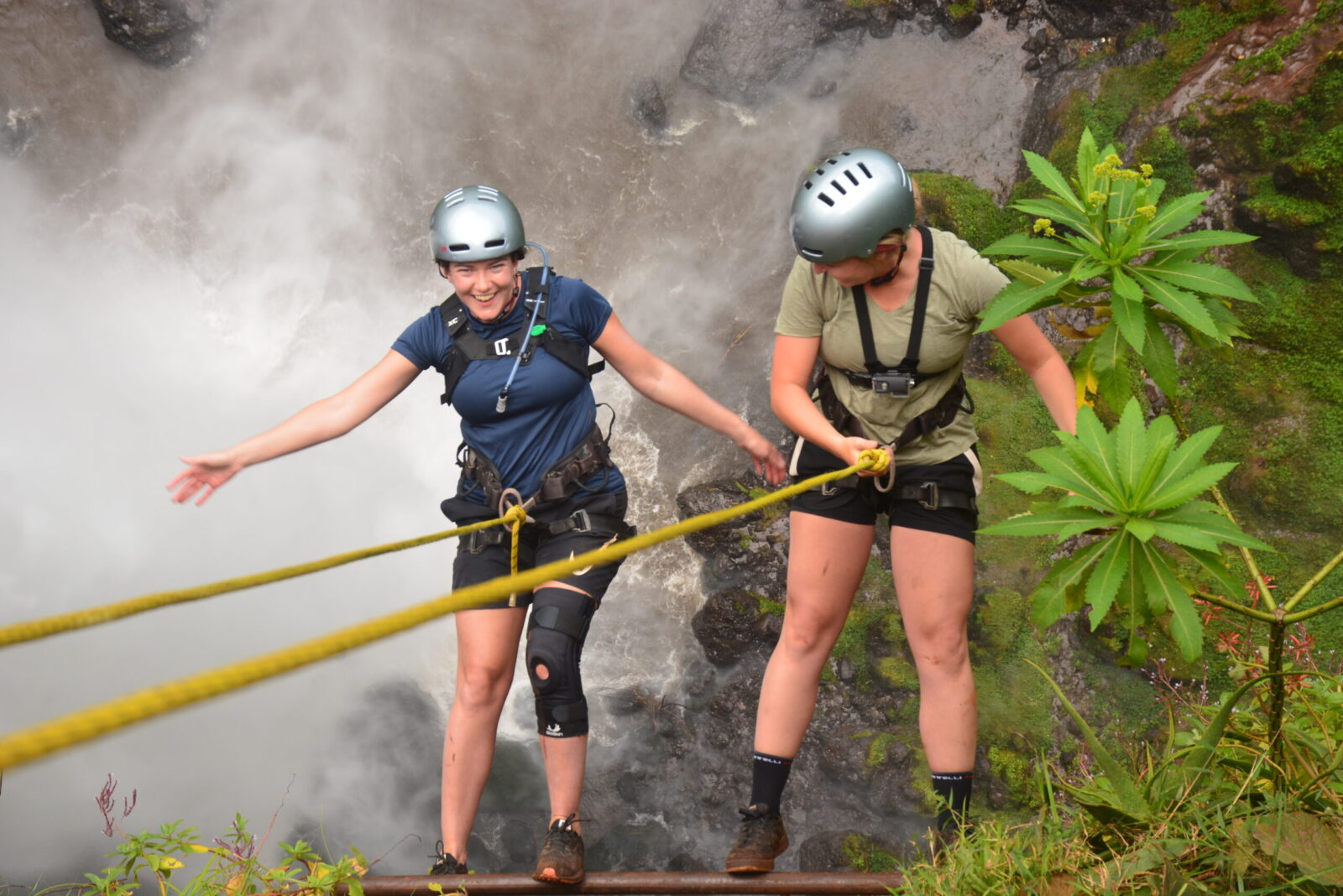
Abseiling is one of the most popular activities, allowing visitors to descend alongside the main waterfall using ropes and safety equipment. This experience provides a unique perspective of the cliff face and the force of the water, combining adrenaline with scenic beauty.
Rock climbing is also available in selected areas, taking advantage of the steep basalt cliffs formed by volcanic activity. These climbs are suitable for both beginners and experienced climbers under guided supervision.
Mountain biking is another growing activity, with trails that pass through villages, farms, and scenic ridges. The terrain is varied, offering both challenging climbs and smooth downhill sections.
For travelers seeking a more relaxed experience, birdwatching and photography are excellent options. The area supports a wide variety of bird species, particularly in forested and riverine zones.
Coffee Culture and Agriculture
One of the defining features of Sipi Falls is its deep connection to coffee production. The region is part of Uganda’s high-altitude Arabica coffee belt, known for producing some of the country’s highest-quality beans.
Coffee farming here is not industrial but small-scale and community-based. Most households grow coffee alongside bananas, beans, and other crops on terraced slopes. The volcanic soils, cool temperatures, and consistent rainfall create ideal conditions for Arabica cultivation.
Visitors can take part in coffee tours that walk through the entire production process. This includes picking ripe coffee cherries, drying them on traditional mats, roasting beans over open fires, and finally grinding and brewing fresh coffee. These experiences are often hosted by local farmers, making them highly authentic and educational.
Coffee is not just an economic activity in Sipi—it is a cultural identity and a major source of livelihood for the surrounding communities.
Cultural Experiences
The communities around Sipi Falls are primarily composed of the Bagisu and Sebei people, each with rich cultural traditions.
The Bagisu are widely known for the Imbalu circumcision ceremony, a traditional rite of passage marking the transition from boyhood to manhood. This ceremony is deeply embedded in cultural identity and is celebrated with music, dance, and community gatherings.
Visitors can engage in village walks that provide insight into daily life, including farming practices, traditional cooking, and local crafts. Cultural performances often include traditional dances and storytelling sessions that explain the history of the region and its connection to Mount Elgon.
These cultural experiences add depth to the natural beauty of Sipi, transforming it from a scenic destination into a holistic cultural landscape.
Climate and Best Time to Visit
Sipi Falls enjoys a cool highland climate throughout the year due to its elevation. Temperatures are generally mild, making it comfortable for hiking and outdoor activities.
The best time to visit is during the dry seasons, typically from June to August and December to February. During these months, trails are more stable, visibility is better, and outdoor activities are easier to manage.
The rainy seasons enhance the power of the waterfalls, making them more dramatic, but also make hiking trails slippery and more physically demanding.
Accommodation and Accessibility
Sipi Falls is accessible from Mbale, which serves as the main gateway to eastern Uganda. From Kampala, the journey involves a road trip of several hours through changing landscapes that include farmlands, small towns, and rolling hills.
Accommodation options range from budget guesthouses to mid-range lodges and eco-lodges located on cliffs overlooking the waterfalls. Many lodges are designed to maximize views of the falls and surrounding valleys, offering a peaceful and immersive stay.
The region is well-developed for tourism, but still retains a rural and authentic atmosphere compared to more commercial safari destinations.
Conservation and Sustainability
Tourism around Sipi Falls plays an important role in supporting local livelihoods and environmental conservation. Entrance fees, guiding services, and community-based tourism initiatives contribute directly to the local economy.
There is also growing awareness of environmental protection, particularly regarding waste management and sustainable farming practices. Because the area is closely tied to agriculture, maintaining soil health and water quality is essential for both tourism and local livelihoods.
Nearby Attractions
Sipi Falls is often combined with other eastern Uganda attractions. These include Mount Elgon National Park for trekking, caves, and wildlife experiences, as well as cultural visits to surrounding communities.
The region also connects well with cross-border travel into western Kenya, making it part of broader East African travel circuits.
Conclusion
Sipi Falls is far more than a scenic waterfall destination. It is a complete travel experience that combines dramatic natural landscapes, adventure activities, cultural depth, and agricultural heritage into one cohesive destination.
Its three-tier waterfall system, combined with the volcanic slopes of Mount Elgon National Park, creates a landscape that is both visually stunning and geologically significant. Add to this the coffee culture, welcoming communities, and range of outdoor activities, and Sipi emerges as one of Uganda’s most well-rounded tourism destinations.
For travelers seeking a destination that blends adventure, relaxation, and cultural engagement without overwhelming crowds, Sipi Falls offers an experience that is both authentic and unforgettable.