
The Rift Valley Lakes of Kenya: A Complete Circuit Guide
There are few landscapes in Africa that feel as ancient, raw, and continuously alive as the Great Rift Valley of Kenya. Cutting through the country like a vast open scar formed over millions of years, this valley is not just a geographical feature—it is a living corridor of wildlife, water, volcanic memory, and shifting ecosystems.
To travel the Rift Valley lakes circuit is to move through a sequence of dramatically different worlds, each lake revealing its own personality, rhythm, and ecological story. From freshwater calm to steaming geothermal shores, from forests echoing with bird calls to pink horizons filled with flamingos, the journey unfolds as a gradual immersion into East Africa’s most dynamic natural systems.
This circuit—stretching from Nairobi northwards through the valley floor—connects some of the most iconic lakes in Africa: Lake Naivasha, Lake Elementaita, Lake Nakuru, Lake Bogoria, and Lake Baringo. Each stop is not just a destination—it is a chapter in a wider narrative shaped by geology, wildlife migration, and time itself.
The Geological Soul of the Rift Valley
Before one even reaches the lakes, the Rift Valley announces itself dramatically. Escarpments rise abruptly from the plains, forming steep walls that define the valley’s edges. These cliffs are the visible evidence of tectonic forces slowly pulling the Earth apart.
Driving down from Nairobi into the valley is often the first moment travelers truly understand the scale of this landscape. The air shifts, the vegetation changes, and the horizon opens wide into a basin dotted with lakes that glint under the African sun.
This is not a static environment. The lakes expand and shrink with rainfall cycles, flamingo populations move unpredictably depending on algae levels, and geothermal activity continues to shape the terrain beneath the surface. To travel here is to move through a landscape that is still evolving.
Lake Naivasha: Where the Water Breathes Life
The journey begins at Lake Naivasha, the most accessible and one of the most beloved lakes in the Rift Valley. Unlike many of its northern counterparts, Naivasha is a freshwater lake, and this single difference transforms everything about its ecosystem.
Here, the shores are green and alive. Fever trees lean gently over the water, their yellow-green bark glowing in the afternoon light. Hippos surface with slow, deliberate movements, their presence felt more than seen, while African fish eagles pierce the silence with their unmistakable cry.
A boat safari on Lake Naivasha feels almost intimate. The water is calm, reflective, and full of life. You drift past pods of hippos, glide near grazing antelope on Crescent Island, and watch pelicans and cormorants drying their wings in the sun. It is one of the few places in East Africa where a safari unfolds at water level, eye-to-eye with the wild.
Nearby, Hell’s Gate National Park offers a completely different experience. Here, the land opens into dramatic gorges, geothermal vents hiss quietly beneath the surface, and travelers can walk or cycle among wildlife—zebra, giraffe, and gazelle moving freely across the plains.
Naivasha is not just a stop; it is a gentle introduction, a place where the journey slows before the landscapes ahead become harsher, more dramatic, and more surreal.
Lake Elementaita: Silence and Subtle Beauty
Continuing north, the environment begins to change. The lush greens soften into dusty tones, and the air feels drier. Lake Elementaita appears almost quietly, without the grandeur of Naivasha, yet it holds a quiet, haunting beauty that lingers.
This is a soda lake, shallow and mineral-rich, its waters often reflecting the sky in pale blues and silvery greys. Along its edges, flamingos gather in delicate clusters, painting the shoreline with faint strokes of pink.
Elementaita does not overwhelm—it invites stillness. It is a place where the rhythm slows, where the absence of crowds allows you to notice the finer details: the ripple of wind across the lake, the distant movement of birds, the soft crunch of volcanic soil underfoot.
For those seeking solitude within the Rift Valley circuit, Elementaita offers a rare kind of peace.
Lake Nakuru: The Pulse of Wildlife
Further north lies one of the most famous lakes in Africa, Lake Nakuru, set within the boundaries of Lake Nakuru National Park.
If Elementaita whispers, Nakuru roars with life. The lake has long been associated with vast flocks of flamingos, though their numbers shift with changing water levels. Even so, the spectacle remains breathtaking—thousands of birds moving in synchronized patterns across the water’s edge.
Yet Nakuru is far more than flamingos. The surrounding park is one of the best places in Kenya to see both black and white rhinos, protected within this sanctuary. Lions rest in acacia woodlands, leopards move silently through the trees, and buffalo roam the grasslands in heavy, deliberate herds.
Driving through the park, one encounters constantly changing scenes: dense forest, open savannah, rocky escarpments, and viewpoints that overlook the entire lake basin. It is here that the Rift Valley reveals its full ecological richness—a convergence of habitats supporting an astonishing diversity of life.
Lake Bogoria: Fire Beneath the Earth
Beyond Nakuru, the landscape becomes increasingly dramatic. The road leads into a harsher, more remote environment where heat shimmers above the ground and the air carries a faint scent of minerals.
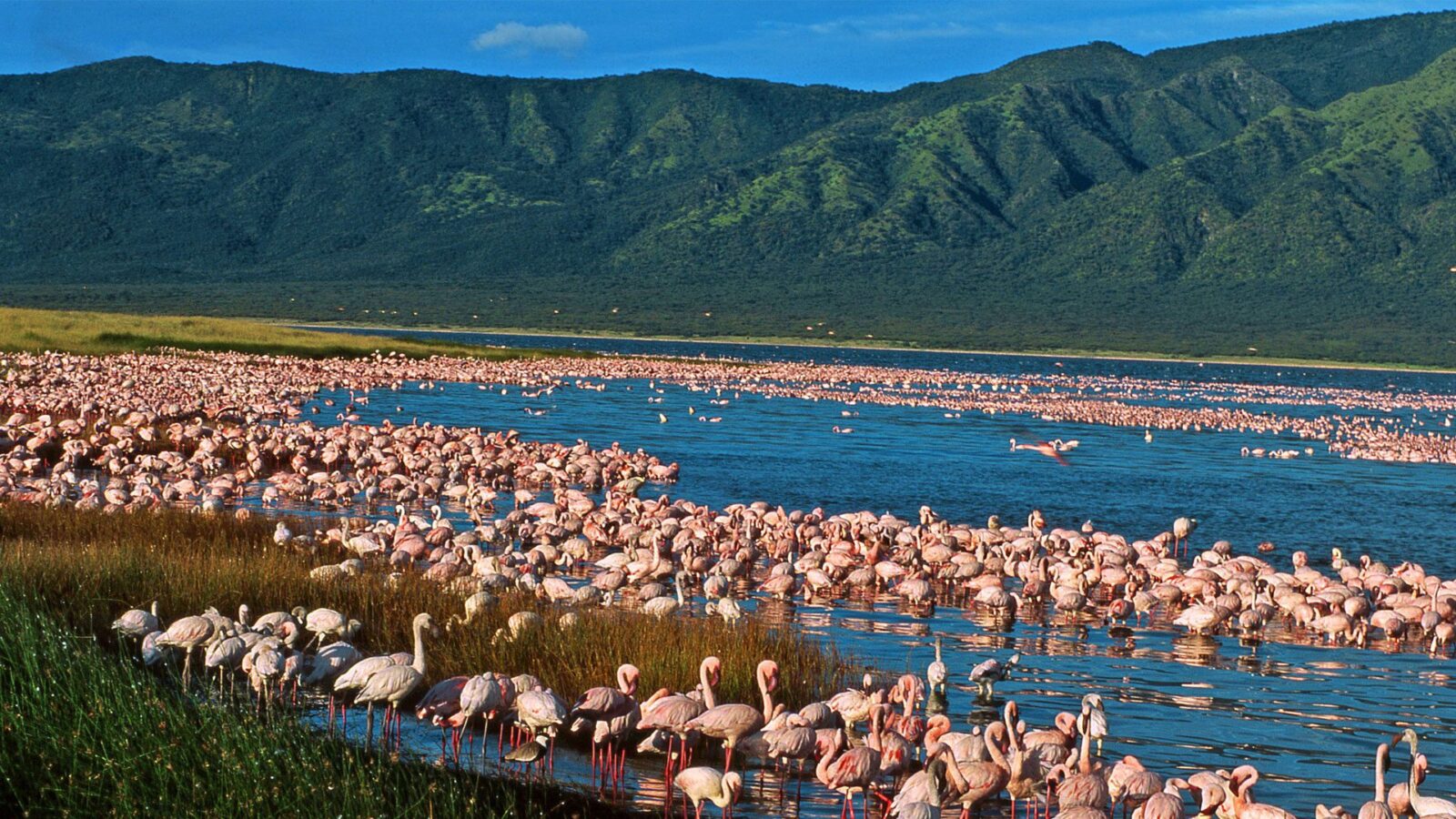
Lake Bogoria is unlike any other lake in the circuit. This is a place where the Earth feels alive beneath your feet. Geysers erupt suddenly, sending jets of boiling water into the air. Hot springs bubble along the shoreline, and steam rises in ghostly wisps against the backdrop of the valley.
The lake itself often hosts one of the largest concentrations of lesser flamingos in the world. Against the stark, almost lunar landscape, their pink forms create a surreal contrast—a burst of color in an otherwise elemental environment of rock, heat, and mineral water.
Bogoria feels untamed, raw, and slightly otherworldly. It is not a place of comfort, but of awe.
Lake Baringo: The Northern Oasis
The final major stop in the circuit is Lake Baringo, a freshwater lake that feels like a reward after the intensity of Bogoria.
Palm trees line parts of the shoreline, and the presence of fresh water once again transforms the environment. Crocodiles bask along the banks, hippos return to the water, and birdlife flourishes in remarkable diversity.
Baringo is particularly famous among birdwatchers, with hundreds of species recorded in the area. Boat trips here are quieter, more reflective, offering a chance to explore small islands and observe local fishing communities who have lived in harmony with the lake for generations.
Culturally, this region introduces travelers to the traditions of the Rift Valley’s northern communities, adding a human dimension to the journey that complements the natural experience.
Designing the Perfect Rift Valley Circuit
The beauty of the Rift Valley lakes lies in how naturally they connect. The journey can be done in a few days, but it rewards those who allow time for each lake to reveal itself fully.
A typical route begins in Nairobi, descends into Naivasha, and then moves steadily north through Elementaita and Nakuru before reaching the remote landscapes of Bogoria and Baringo. Each transition feels like entering a new world, shaped by subtle shifts in altitude, water chemistry, and climate.
The distances are manageable, but the experiences are vast. Every lake adds a new layer to the story—freshwater life, soda lake ecosystems, geothermal activity, and cultural encounters.
Best Time to Explore the Rift Valley Lakes
The Rift Valley lakes can be visited year-round, but the experience changes with the seasons. During the dry months, wildlife viewing is easier, and flamingo concentrations can be more predictable depending on water levels.
In the rainy seasons, the landscapes transform. The valley becomes greener, the air fresher, and the lakes fuller. Birdlife thrives, though access to some remote areas may become more challenging.
Timing, in the Rift Valley, is not about perfection—it is about embracing change.
A Journey of Contrast and Continuity
The Rift Valley lakes circuit is not defined by a single highlight. Its power lies in contrast—the movement from one ecosystem to another, from calm waters to geothermal fury, from dense wildlife populations to quiet, reflective spaces.
To travel this route through Kenya is to witness a landscape in motion, shaped by forces far older than human history yet deeply intertwined with it. It is a journey that does not simply show you Africa—it allows you to feel its depth, its rhythm, and its enduring sense of wonder.