
What Animals Live in the Ngorongoro Crater?
The Ngorongoro Crater is often described as one of the most wildlife-rich places on Earth. This विशाल volcanic caldera acts like a natural enclosure, supporting an extraordinary concentration of animals within a relatively small area. Because water, الغذاء, and shelter are available year-round, many species live here permanently rather than migrating long distances.
The result is a safari environment where wildlife sightings are not just frequent—they are almost guaranteed. From massive herbivores to stealthy predators and vibrant birdlife, the crater functions as a complete ecosystem where nearly every level of the food chain is visible.
The Big Five in the Crater
One of the main reasons travelers visit the Ngorongoro Crater is the opportunity to see the famous Big Five animals in a single location.
Lions are among the most visible predators in the crater. They are often seen resting in the open grasslands or moving in prides across the plains. Because prey is abundant, lion sightings are common and sometimes dramatic, especially during hunts.
Elephants in the crater are typically older bulls rather than large breeding herds. These individuals are known for their impressive tusks and are often found in forested areas near the crater walls.
Buffalo are widespread and form large herds across the grasslands. They are one of the dominant herbivores in the ecosystem and a key prey species for lions.
Leopards are present but rarely seen due to their secretive nature. They prefer forested areas and tend to avoid open spaces during the day.
The black rhino is one of the rarest animals in the crater and a major highlight for visitors. The crater offers one of the best chances in East Africa to see this critically endangered species in the wild.
Grazers and Herd Animals
The crater floor is dominated by grazing animals that thrive on its rich grasslands. These species form the backbone of the ecosystem and support the predator population.
Wildebeest and zebras are among the most numerous animals in the crater. Unlike their counterparts in the Serengeti, many of these populations remain within the crater year-round rather than participating in long migrations.
Gazelles, including both Thomson’s and Grant’s species, are commonly seen in smaller groups. They are fast and alert, constantly scanning for predators.
These grazing animals are essential for maintaining the ecological balance. Their feeding patterns shape the vegetation, while their presence provides a steady food source for carnivores.
Predators and Scavengers
The predator population in the Ngorongoro Crater is both diverse and active due to the high density of prey.
Hyenas are particularly abundant and play a major role as both hunters and scavengers. They often compete with lions for kills and are known for their intelligence and social structure.
Cheetahs are occasionally seen in the crater, though they are less common than in open plains like the Serengeti. The crater’s terrain, with its mix of grassland and vegetation, is not always ideal for their high-speed hunting style.
Jackals and smaller predators are also present, feeding on smaller prey and leftovers from larger kills.
This concentration of predators in a confined area creates frequent opportunities to observe real-time interactions, making the crater one of the most dynamic safari destinations in Africa.
Water-Dependent Animals
The crater contains permanent water sources, including swamps and seasonal lakes, which support a range of water-dependent species.
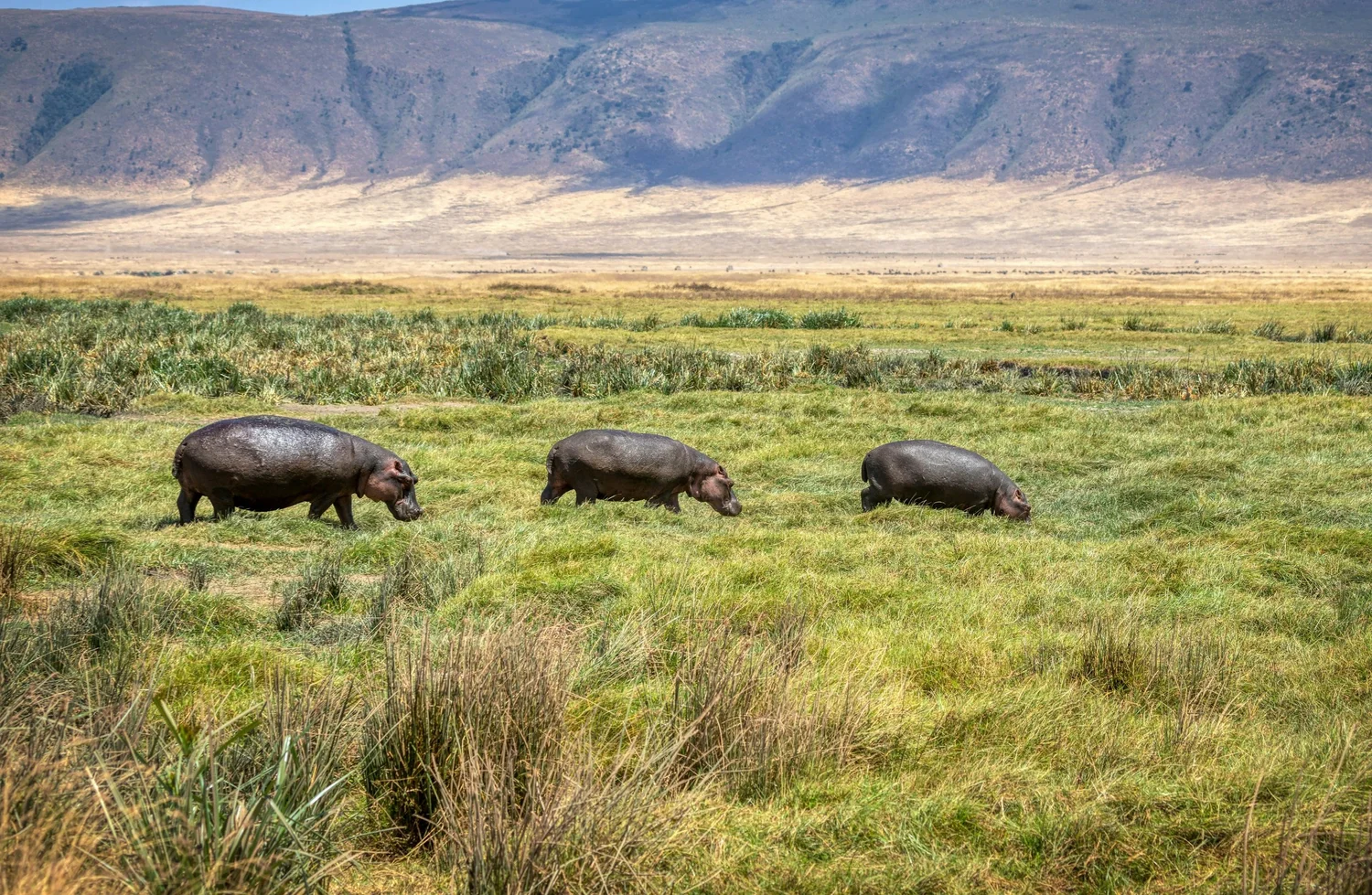
Hippos are commonly found in pools and wetlands, spending most of the day submerged and becoming more active in the evenings.
Waterbirds thrive around these areas, taking advantage of the rich aquatic ecosystem. Flamingos are sometimes seen at Lake Magadi, adding color to the landscape when conditions are right.
These water sources are critical to the stability of the crater’s ecosystem, ensuring that animals do not need to leave in search of المياه even during dry periods.
Forest and Highland Species
Not all animals in the crater live on the open plains. The forests along the crater walls and rim provide habitat for additional species.
Monkeys, including vervet and blue monkeys, are commonly seen in wooded areas. Baboons are also present and often move in large troops near forest edges.
These primates add another layer of biodiversity and are often encountered during drives along the crater rim or near forested sections inside the crater.
Birdlife Diversity
Birdlife in the Ngorongoro Crater is extensive, with hundreds of species recorded in the area.
Large birds such as ostriches roam the open plains, while crowned cranes and secretary birds are often seen hunting in grasslands.
Birds of prey, including eagles and vultures, are common and play an important role in the ecosystem as scavengers and hunters.
The combination of grassland, forest, and wetland habitats makes the crater a prime destination for birdwatchers as well as general safari travelers.
Why So Many Animals Live Here
The reason the Ngorongoro Crater supports such a high density of wildlife comes down to its unique geography.
The crater’s enclosed structure creates a natural barrier that limits large-scale migration. At the same time, its fertile soil supports lush grass growth, and its water sources remain reliable throughout the year.
This combination allows animals to live, feed, and reproduce within the crater without needing to move far. It creates a stable, self-sustaining ecosystem where predator and prey populations remain relatively balanced.
A Living Wildlife Sanctuary
In many ways, the Ngorongoro Crater functions like a natural wildlife sanctuary. It offers a rare opportunity to see a complete ecosystem operating in a confined space.
Visitors can observe the full cycle of life—from grazing herds to predator hunts and scavenger activity—all within a single day. This level of interaction and visibility is what makes the crater one of the most iconic safari destinations in Africa.
Final Thoughts
The Ngorongoro Crater is home to an incredible diversity of animals, from the Big Five to countless smaller species that together create a balanced and thriving ecosystem.
Its unique geography, тұрақты water supply, and fertile أرض make it one of the most reliable places in Africa for wildlife viewing. Whether you are a first-time safari traveler or an experienced wildlife enthusiast, the crater offers a level of biodiversity and accessibility that is difficult to match anywhere else on the continent.