
Tanzania Self-Drive Safari: Is It Possible and Is It Safe?
The dream of a self-drive safari in Tanzania is easy to understand. Endless savannahs, iconic wildlife, and the freedom to explore at your own pace create a powerful sense of adventure. For some travelers, the idea of being behind the wheel — stopping for elephants, waiting out a lion sighting, or choosing your own route — feels like the ultimate safari experience.
But Tanzania is not a typical road-trip destination. It is vast, wild, and at times unpredictable. So while a self-drive safari is certainly possible, whether it is safe and worth it depends on preparation, expectations, and experience.
Is It Possible to Do a Self-Drive Safari in Tanzania?
Yes — self-drive safaris are possible, especially in the northern safari circuit. You can rent a 4×4 vehicle in Arusha or Dar es Salaam, arrange park entry permits, and drive into several national parks on your own.
Popular parks such as Tarangire National Park, Lake Manyara National Park, and even the vast Serengeti National Park allow self-drive access. The roads, while rough, are manageable during the dry season, and campsites and lodges are available within or near park boundaries.
However, Tanzania is designed primarily for guided safaris, which means independent travel comes with added complexity.
The Reality of Driving Conditions
Driving in Tanzania quickly shifts from smooth highways to rugged, off-road terrain. Inside national parks, you’ll encounter dirt tracks, sand, rocks, and sometimes no clear road at all. Navigation is not always straightforward, and signage can be minimal.
Distances can also be misleading. A route that looks short on a map may take several hours due to terrain or wildlife along the الطريق. During the rainy season, conditions become even more challenging, with mud and flooding making some routes impassable.
This is not casual driving — it requires focus, patience, and confidence in off-road conditions.
Is It Safe? The Honest Answer
A self-drive safari in Tanzania can be safe, but only if approached seriously. The biggest risks are not crime-related, but practical and environmental.
Mechanical problems are one of the most common challenges. A puncture, breakdown, or getting stuck in sand can quickly turn into a major issue, especially in remote areas where help is not immediately available.
Wildlife encounters also require awareness. Animals such as elephants or buffalo can be unpredictable if approached incorrectly. Knowing how to behave — when to stop, when to reverse, and when to keep distance — is essential.
Communication is another factor. Mobile networks are limited in many parks, meaning you may not be able to call for help easily if something goes wrong.
Where Self-Drive Works Best
If you are considering self-drive, the northern circuit is your best option. Parks like Tarangire National Park and Lake Manyara National Park are relatively compact and easier to navigate, making them suitable for beginners.
The Serengeti National Park is possible but far more demanding due to its size and remoteness. First-time self-drivers may find it overwhelming without prior experience.
Remote parks in southern or western Tanzania are generally not recommended for self-drive unless you are highly experienced and well-equipped.
What You Absolutely Need
A proper safari vehicle is essential. A 4×4 with high ground clearance — typically a Land Cruiser — is the standard choice. Anything less is risky.
You should also carry: extra fuel, spare tires, recovery gear, offline maps or GPS, drinking water, and a basic repair kit. Without these, even a minor issue can become serious.
Preparation is not optional — it is the foundation of a safe trip.
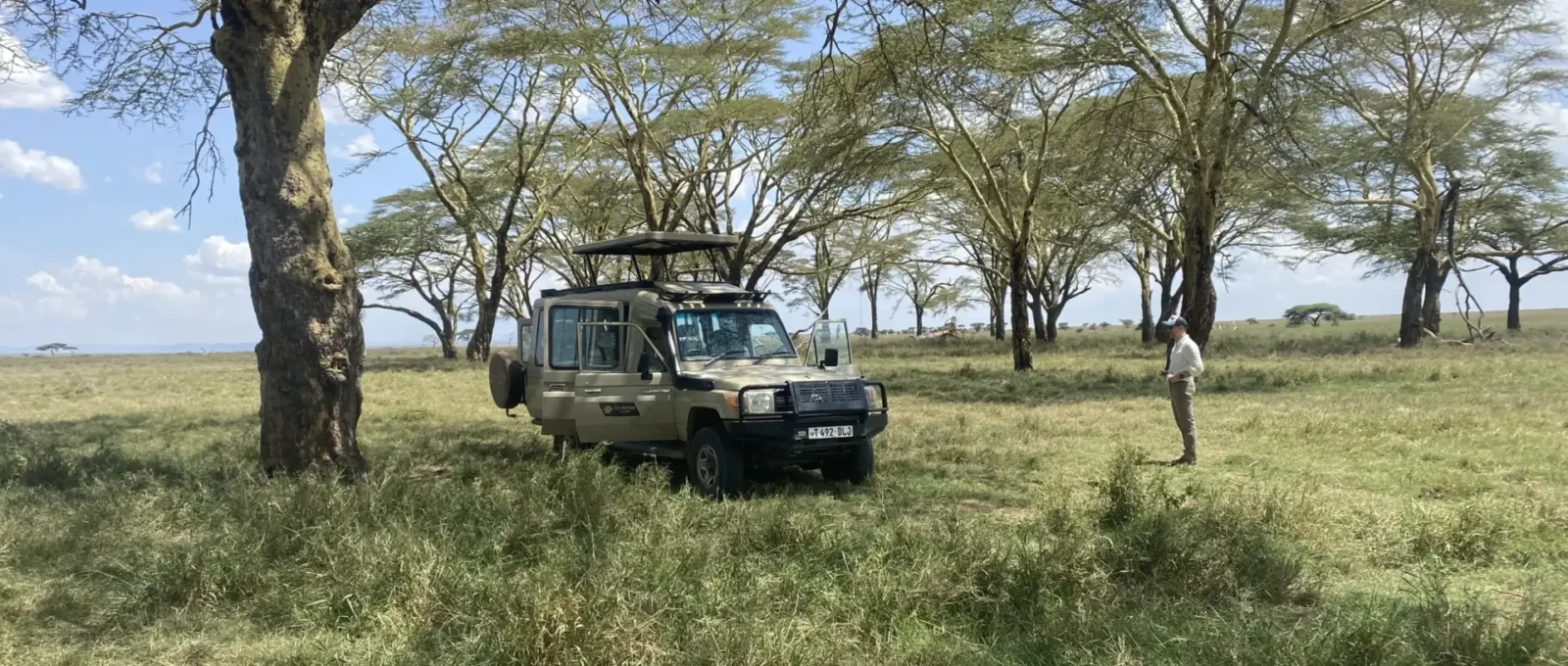
Guided vs Self-Drive: What You Gain and Lose
A self-drive safari gives you freedom, but it also means you miss out on one key element — expertise.
Professional guides are not just drivers; they are trained wildlife trackers. In places like the Serengeti, guides communicate via radio, sharing real-time sightings of lions, leopards, and other animals. This dramatically increases what you see.
Without that network and knowledge, self-drivers often miss key wildlife moments.
Guided safaris also remove stress. You don’t have to worry about navigation, vehicle issues, or park logistics — you simply experience the safari.
A Smarter Alternative: Hybrid Safaris
For many travelers, the best option is a hybrid approach. You can self-drive between destinations for flexibility, then join guided game drives inside major parks.
This allows you to enjoy independence while still benefiting from expert knowledge where it matters most.
Final Verdict: Is It Worth It?
A self-drive safari in Tanzania is absolutely possible — and for the right traveler, it can be incredibly rewarding. But it is not for everyone.
If you are experienced in off-road driving, well-prepared, and comfortable handling challenges independently, it can be a unique and adventurous way to explore Tanzania.
If you are visiting for the first time, want maximum wildlife sightings, or prefer a stress-free experience, a guided safari is the better choice.
Final Thoughts
Tanzania is one of Africa’s greatest safari destinations, whether you explore it behind the wheel or from the passenger seat of a guided vehicle. The key is choosing the approach that matches your experience, expectations, and travel style.
In the end, the magic of the safari is not just about how you get there — it’s about the moments you experience along the way.