
Olduvai Gorge on Safari: Walking Through the Origins of Humanity
There are few places on Earth where the past feels as immediate and tangible as it does at Olduvai Gorge. Set within the sweeping plains of the Ngorongoro Conservation Area, this quiet, wind-shaped ravine carries a story far older than any safari narrative. While most travelers come to northern Tanzania for wildlife, Olduvai introduces a different dimension—one that stretches back nearly two million years into the earliest chapters of human existence.
A visit here changes the rhythm of a safari. It replaces the urgency of tracking animals with a slower, more reflective experience. Instead of scanning the horizon for movement, you find yourself looking down into the earth, reading the layers of time that have preserved the story of where we come from.
A Landscape That Holds Human History
At first glance, Olduvai Gorge appears stark and understated compared to the dramatic beauty of nearby crater highlands. The terrain is dry, open, and cut deeply by erosion, forming a long, narrow gorge that stretches across the landscape. But this simplicity is deceptive. Beneath the surface lies one of the most important archaeological records in the world.
The gorge exposes a sequence of sedimentary layers, each representing a different era. These layers contain fossils, ancient tools, and environmental evidence that allow scientists to reconstruct how early humans lived, moved, and adapted. It is this continuity of preserved history that gives Olduvai its global significance.
Standing at the edge of the gorge, you are not just observing a geological formation. You are looking into a timeline that captures the gradual evolution of our species, step by step.
The Work That Put Olduvai on the Map
The global recognition of Olduvai Gorge is closely tied to the groundbreaking research of Louis Leakey and Mary Leakey. Their excavations in the mid-20th century revealed fossil remains and stone tools that transformed our understanding of early human evolution.
Among their most important discoveries were remains of early hominids such as Homo habilis, believed to be one of the first tool-using human ancestors. The Leakeys also uncovered evidence of early tool-making culture, showing that these early humans were not only surviving but actively shaping their environment.
These findings helped establish East Africa as a central region in the story of human origins. Before Olduvai’s discoveries, the timeline of human evolution was fragmented and uncertain. The gorge provided clarity, offering physical evidence that connected different stages of development into a coherent narrative.
A Safari Stop That Changes Perspective
Most travelers encounter Olduvai Gorge while moving between iconic wildlife destinations such as Serengeti National Park and the Ngorongoro Crater. On a map, it may look like a brief stop along the way. In reality, it often becomes one of the most memorable parts of the journey.
After days of watching predators hunt and herds move across the plains, Olduvai introduces a deeper narrative. It connects the wildlife experience to a much longer timeline, reminding you that the landscapes you are exploring have supported life for millions of years.
This shift in perspective is subtle but powerful. It turns a safari from a series of wildlife sightings into a broader exploration of life’s history on Earth.
The Museum and Guided Experience
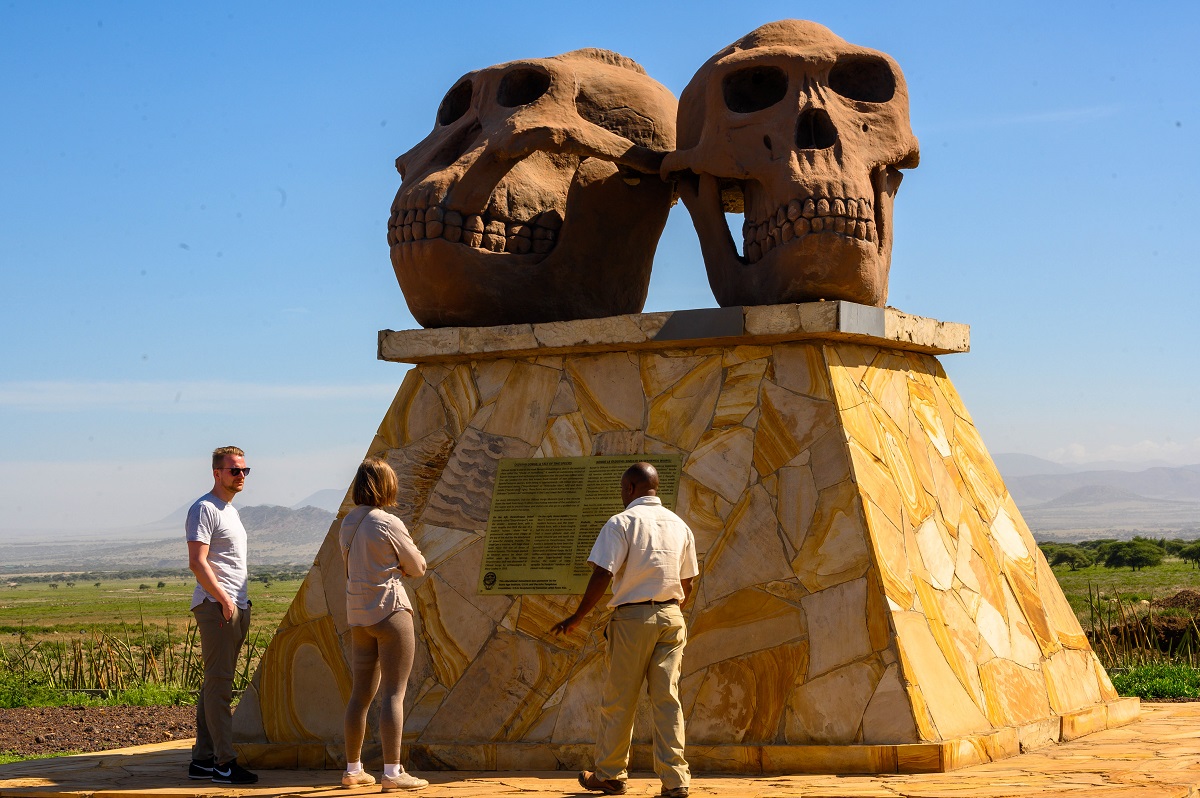
A visit to Olduvai Gorge typically begins at the small but informative museum located near the site. Here, visitors are introduced to the scientific discoveries that define the area.
Exhibits include fossil replicas, ancient stone tools, and detailed explanations of the excavation process. The museum provides essential context, helping visitors understand how each discovery fits into the larger story of human evolution.
Guides play a crucial role in bringing this history to life. They explain how early humans lived, how tools were made, and how environmental changes influenced survival. What might otherwise feel abstract becomes vivid and accessible through storytelling.
From the museum, visitors can walk to viewpoints overlooking the gorge. Seeing the exposed layers of earth in person reinforces the idea that this is not just theory—it is physical evidence embedded in the landscape.
The Connection Between Past and Present
One of the most striking aspects of Olduvai Gorge is how closely the surrounding environment mirrors what early humans would have experienced.
The nearby plains are still home to wildlife that resembles the animals early humans would have encountered. Grazing herbivores, predators, and seasonal changes continue to shape the ecosystem in ways that are surprisingly familiar.
This continuity creates a sense of connection across time. It suggests that while technology and society have changed dramatically, the fundamental relationship between humans and nature remains deeply rooted in these ancient landscapes.
Why Olduvai Still Matters Today
In an age of modern travel and rapid change, Olduvai Gorge offers something rare: perspective. It reminds us that human history is not measured in centuries, but in millennia.
The discoveries made here continue to influence scientific research, shaping our understanding of evolution, adaptation, and survival. They also challenge us to think about our place in the natural world and the long journey that brought us here.
For travelers, this adds a reflective dimension to the safari experience. It encourages you to look beyond the immediate beauty of wildlife and landscapes and consider the deeper story they represent.
Integrating Olduvai Into Your Journey
Including Olduvai Gorge in a safari itinerary is relatively straightforward. Its location within the Ngorongoro Conservation Area makes it easily accessible during transfers between major parks.
Visits are typically short, lasting one to two hours, but their impact is lasting. The experience does not require physical exertion, making it accessible to most travelers regardless of fitness level.
Because it is not dependent on wildlife movement, Olduvai can be visited at any time of year. This flexibility makes it a reliable addition to any northern Tanzania safari.
A Different Kind of Highlight
While many safari highlights involve dramatic wildlife encounters, Olduvai Gorge offers something quieter but equally powerful.
It does not rely on movement or action. Instead, its impact comes from stillness and understanding. It invites you to pause, reflect, and consider the immense timeline of human existence.
For many travelers, this becomes one of the most meaningful moments of the journey—not because of what they see, but because of what they realize.
Final Thoughts
A safari through northern Tanzania is often defined by its wildlife, but Olduvai Gorge adds depth that transforms the entire experience.
It connects the present to the distant past, linking the animals roaming the plains today with the early humans who once shared the same environment. It turns a journey through landscapes into a journey through time.
By the time you leave, the memory of Olduvai is not just about a place. It is about perspective—a reminder that every step you take on safari is part of a story that began millions of years ago.