
Hadzabe Bushmen: Tanzania’s Last Hunter-Gatherer Tribe
The Hadzabe are among the last remaining hunter-gatherer societies in Africa, preserving a way of life that has existed for tens of thousands of years. Living near Lake Eyasi in northern Tanzania, the Hadzabe (also spelled Hadza) have resisted the shift toward agriculture and pastoralism, maintaining a deep connection to the land through hunting, foraging, and traditional knowledge.
Unlike many indigenous communities that have transitioned into modern lifestyles, the Hadzabe continue to rely almost entirely on natural resources, making them one of the most fascinating cultural groups for travelers interested in authentic human history.
Where the Hadzabe Live
The Hadzabe inhabit the dry woodland and savannah landscapes surrounding Lake Eyasi. This region lies within the Great Rift Valley and is characterized by baobab trees, rocky outcrops, and seasonal water sources.
Their camps are temporary and mobile, shifting depending on food availability and environmental conditions. This nomadic lifestyle allows them to sustainably use resources without overexploiting the land.
The area is often included in cultural extensions of safaris to Ngorongoro Conservation Area and Serengeti National Park, making it accessible for visitors exploring northern Tanzania.
Language and Communication
The Hadzabe language is unique and includes click sounds similar to those found in some southern African languages. It is not closely related to other languages in Tanzania, making it of great interest to linguists.
Communication within the community is deeply tied to storytelling, oral traditions, and environmental knowledge, all passed down through generations without written records.
Daily Life and Survival
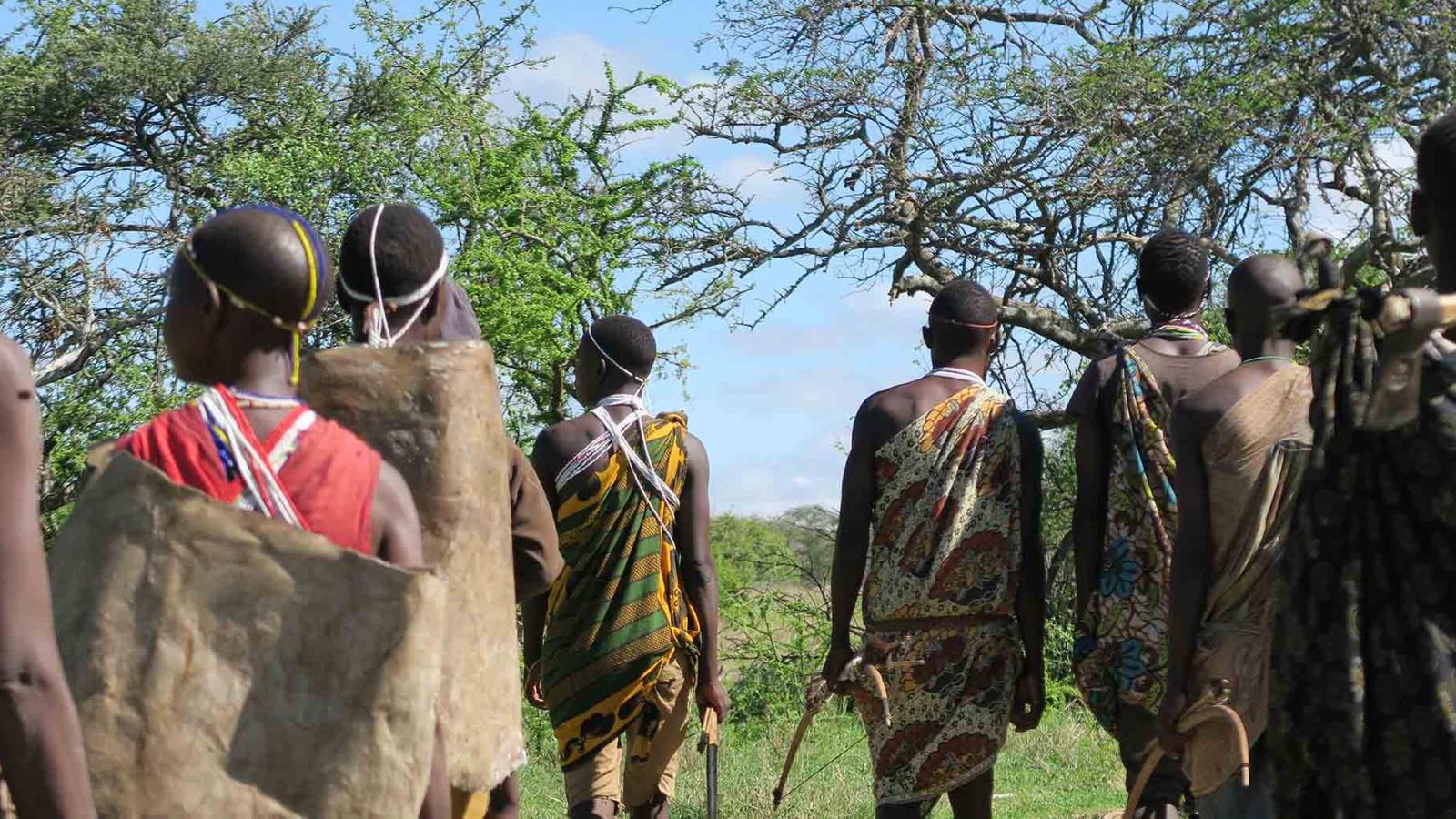
The Hadzabe lifestyle revolves around hunting and gathering, with clearly defined roles within the community. Men typically hunt using handmade bows and poison-tipped arrows, targeting animals such as antelope, baboons, and birds.
Women gather fruits, tubers, berries, and baobab, which form a significant part of the diet. Honey is highly valued and often collected using traditional methods that involve tracking honeyguide birds.
Food is shared within the group, reinforcing strong social bonds and a sense of equality that defines Hadzabe society.
Hunting Techniques and Skills
Hunting among the Hadzabe is a highly skilled practice that requires deep knowledge of animal behavior and the environment. Hunters move silently through the bush, reading tracks and signs with remarkable accuracy.
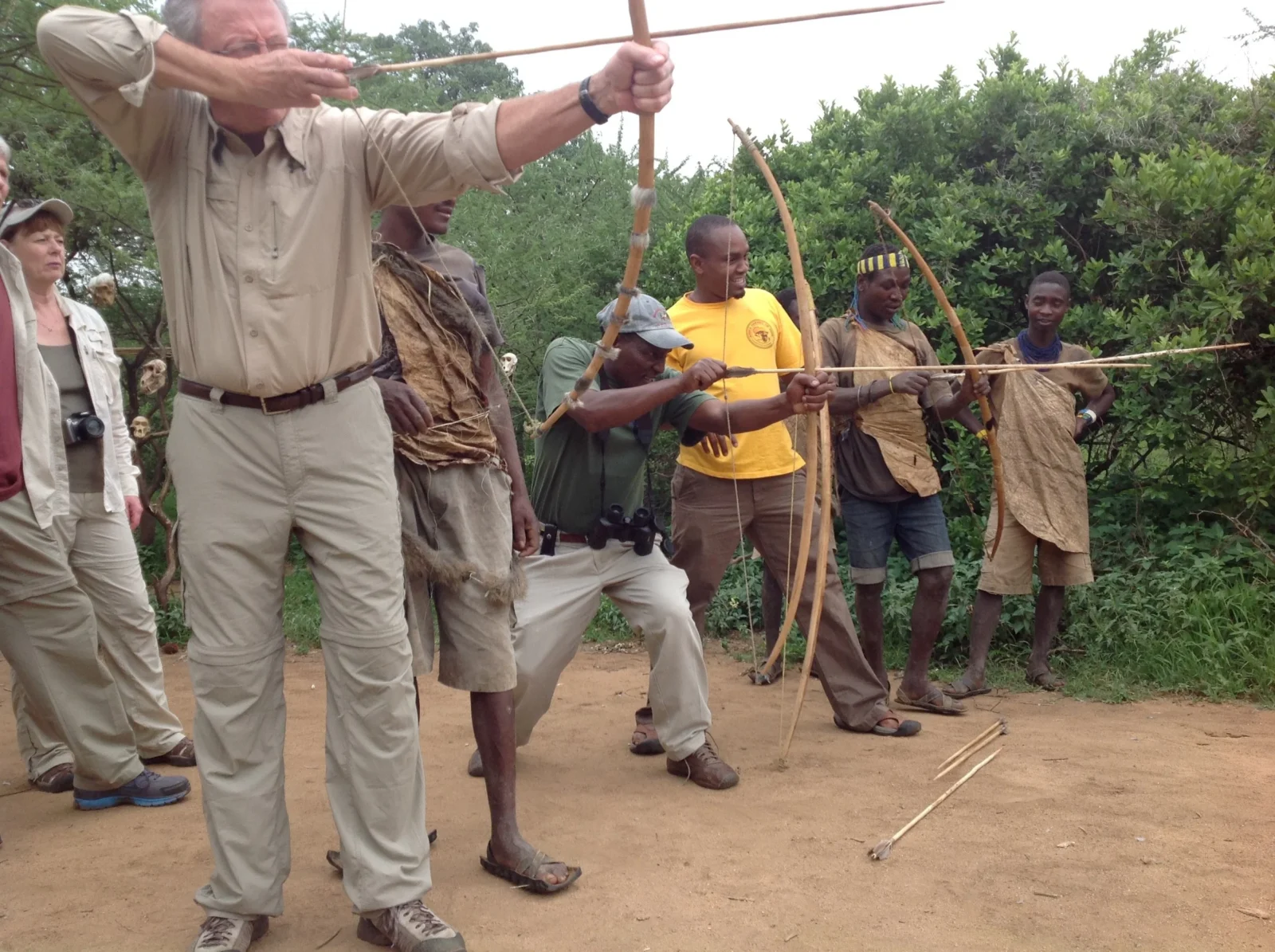
Their bows are simple but effective, and the use of natural poisons increases hunting success. These techniques have remained largely unchanged for generations, reflecting a deep understanding of survival in a challenging environment.
Social Structure and Culture
The Hadzabe have a highly egalitarian social structure, with minimal hierarchy or formal leadership. Decisions are made collectively, and resources are shared among members of the camp.
Marriage is flexible, and individuals have a high degree of personal freedom compared to many other societies. This independence is a defining feature of Hadzabe culture.
Music, dance, and storytelling play important roles in daily life, often performed around evening fires where experiences and knowledge are shared.
Relationship with Nature
The Hadzabe maintain a profound relationship with their natural environment. Every aspect of their life—from food and shelter to medicine and tools—comes directly from the land.
They possess extensive knowledge of plants, animals, and seasonal patterns, allowing them to live sustainably in harmony with nature. This relationship is not just practical but also cultural and spiritual.
Visiting the Hadzabe: What to Expect
Visiting the Hadzabe offers a rare opportunity to witness a traditional way of life that has remained largely unchanged. Tours typically involve early morning visits where travelers can:
- Join hunters on a short hunting excursion
- Learn about traditional tools and techniques
- Participate in foraging activities
- Observe daily camp life
These experiences are usually guided and conducted with respect for the community’s privacy and traditions.
Ethical Considerations When Visiting
Responsible tourism is essential when visiting the Hadzabe. Travelers should approach the experience with respect, understanding that this is not a performance but a real way of life.
Guidelines include:
- Always visit with a reputable guide
- Ask permission before taking photographs
- Avoid intrusive behavior
- Support community-based tourism initiatives
Ethical visits help ensure that tourism benefits the Hadzabe while preserving their culture.
Challenges Facing the Hadzabe
Despite their resilience, the Hadzabe face increasing pressure from modern development. Land encroachment, agriculture, and tourism expansion threaten their traditional lifestyle and access to natural resources.
Efforts by governments and NGOs aim to protect their land rights and cultural heritage, but challenges remain.
Why the Hadzabe Matter
The Hadzabe are not just a cultural attraction—they are a living link to humanity’s past. Their lifestyle provides insight into how early humans lived, survived, and interacted with the environment.
In a rapidly modernizing world, the Hadzabe remind us of alternative ways of living—ones based on balance, community, and respect for nature.
Final Thoughts on the Hadzabe Bushmen
The Hadzabe offer one of the most authentic and thought-provoking cultural experiences in Africa. Visiting them is not just about observation—it is about learning, reflecting, and appreciating a way of life that has endured for millennia.
For travelers exploring northern Tanzania, a visit to the Hadzabe near Lake Eyasi adds a powerful human dimension to a wildlife safari, making the journey both enriching and unforgettable.