
Aberdare National Park: Kenya’s Misty Mountain Safari Experience
Aberdare National Park is one of Kenya’s most atmospheric and least conventional safari destinations. Unlike the open savannah landscapes of the Maasai Mara or Amboseli, Aberdare presents a completely different ecosystem: a high-altitude world of dense rainforest, bamboo thickets, deep ravines, waterfalls, and rolling moorlands often wrapped in mist. This is a park where visibility can be limited, weather can change within minutes, and wildlife encounters feel intimate, secretive, and unpredictable.
Located in central Kenya within the Aberdare Mountain Range, the park rises from roughly 2,000 meters to over 4,000 meters above sea level. This elevation creates a cool, wet climate that sustains thick vegetation and a rich diversity of wildlife. It is a destination designed less for mass game viewing and more for immersion, patience, and atmosphere.
Aberdare National Park is particularly famous for its forest-adapted species, rare antelopes, dramatic scenery, and historic significance, including its connection to the British royal family during the colonial era. Today, it remains one of Kenya’s most rewarding parks for travelers seeking something different from the classic safari circuit.
The Landscape: A World of Mist, Forest, and Highlands
The defining feature of Aberdare National Park is its dramatic landscape. The park is part of an ancient volcanic mountain range deeply eroded into ridges and valleys. This creates a complex terrain of steep slopes, river-cut gorges, and high ridgelines.
The lower zones are dominated by dense tropical montane forest. Here, giant trees form a thick canopy that blocks much of the sunlight, creating a dim, almost mysterious environment on the forest floor. Ferns, mosses, and vines cover every surface, and the air remains cool and damp for most of the year.
As you ascend in altitude, the forest gradually transitions into bamboo zones. These bamboo belts are among the most important habitats for wildlife such as elephants and the elusive bongo antelope. Above the bamboo, the landscape opens into moorlands filled with giant heathers, tussock grasses, and surreal vegetation that resembles an alpine ecosystem more than typical African terrain.
One of the most striking features of Aberdare is its waterfalls. Some of Kenya’s most beautiful falls are found here, cascading down cliffs into forested valleys. The combination of mist, elevation, and dense vegetation gives these waterfalls a dramatic, almost cinematic quality, especially during rainy seasons when water volume increases significantly.
The weather is equally defining. Mist and cloud often settle over the mountains, reducing visibility and adding to the park’s mystical atmosphere. Rain is frequent, which is why the ecosystem is so lush and green throughout the year.
Wildlife: Forest Giants and Rare Highland Species
Aberdare National Park offers a very different wildlife experience compared to Kenya’s open plains parks. Animals here are more elusive, more spread out, and often adapted to forest life. Sightings can require patience, but they are often more rewarding due to their rarity and setting.
The park is home to a variety of large mammals, including elephants, buffaloes, and several predator species. Elephants in Aberdare are known for moving through dense forest corridors and bamboo zones rather than open grasslands. Buffaloes are frequently seen grazing in clearings or moving silently through thick vegetation.
Predators are present but harder to spot. Leopards are the most commonly encountered large cats, often using the dense forest cover for stealth. Lions are also present but rarely seen due to the thick vegetation and limited open hunting grounds. Hyenas and jackals operate mainly at night or in transitional zones between forest and moorland.
One of the most iconic and rare species in Aberdare is the eastern bongo antelope. This striking forest antelope, with its reddish coat and white vertical stripes, is extremely elusive and considered one of Africa’s most beautiful and endangered antelopes. The bamboo and dense forest areas of Aberdare provide one of its last strongholds in the wild.
Primates are abundant and often more visible than larger mammals. Black-and-white colobus monkeys are commonly seen leaping between trees with their long white tails streaming behind them. Olive baboons are also widespread and often encountered along roads and forest edges.
Aberdare is also known for its nocturnal wildlife activity. Species such as bush pigs, serval cats, and various small carnivores become active after sunset. This makes night game drives especially valuable for visitors staying within the park’s lodges.
Birdlife: A Highland Birdwatcher’s Paradise
Aberdare National Park is one of Kenya’s important birding destinations, particularly for forest and highland species. With hundreds of recorded bird species, the park offers a rich experience for both casual bird enthusiasts and serious ornithologists.
The forest canopy supports species such as turacos, hornbills, and various forest flycatchers. Sunbirds are common, especially in flowering zones within the moorland and forest edges. Raptors such as crowned eagles and mountain buzzards can be seen soaring above the valleys.
One of the key attractions for birdwatchers is the diversity of habitat within a relatively compact area. From dense rainforest to open moorland, each ecological zone supports a different set of species. This makes birding in Aberdare highly dynamic and rewarding.
Safari Experience: Game Drives in a Different World
Game drives in Aberdare National Park are unlike those in typical savannah parks. Instead of scanning endless plains for distant wildlife, visitors navigate winding forest roads, cross misty valleys, and explore hidden clearings where animals appear unexpectedly.
The experience is slower, more atmospheric, and more focused on discovery. Wildlife sightings are often brief but memorable, emerging suddenly from dense vegetation or appearing along riverbanks.
Night game drives are one of the most exciting activities in the park. The forest comes alive after dark, revealing nocturnal species that are rarely seen during the day. With the help of spotlights, visitors may encounter bush babies, genets, porcupines, and sometimes even predators on the move.
Because of the dense vegetation and unpredictable weather, guides play a crucial role in interpreting animal behavior and tracking movement patterns. Their expertise is essential for maximizing wildlife encounters in this challenging environment.
Walking, Hiking, and Nature Immersion
Although most safaris in Aberdare are conducted by vehicle, guided nature walks are available in designated areas. These walks offer a more intimate connection with the forest ecosystem.
Walking through the bamboo forests or along moorland trails allows visitors to appreciate smaller details often missed during game drives: plant life, insects, bird calls, and the subtle signs of wildlife movement such as tracks and droppings.
The hiking opportunities in the higher altitudes are particularly rewarding. The open moorlands offer panoramic views over the mountain range, with rolling hills fading into mist in the distance. On clear days, it is possible to see vast stretches of central Kenya from elevated viewpoints.
Historical Significance and Cultural Context
Aberdare National Park also holds historical significance. During the 1950s, it became internationally known when members of the British royal family stayed in the famous Treetops Lodge, located within the park. It was here that Princess Elizabeth learned of her ascension to the throne while on safari in Kenya, marking a unique moment in both British and Kenyan history.
Beyond colonial history, the surrounding regions are home to communities such as the Kikuyu, who have long interacted with the mountain ecosystem for cultural, spiritual, and agricultural purposes. The mountains are traditionally considered sacred and are associated with water sources, fertility, and ancestral heritage.
Accommodation: Staying Inside the Misty Wilderness
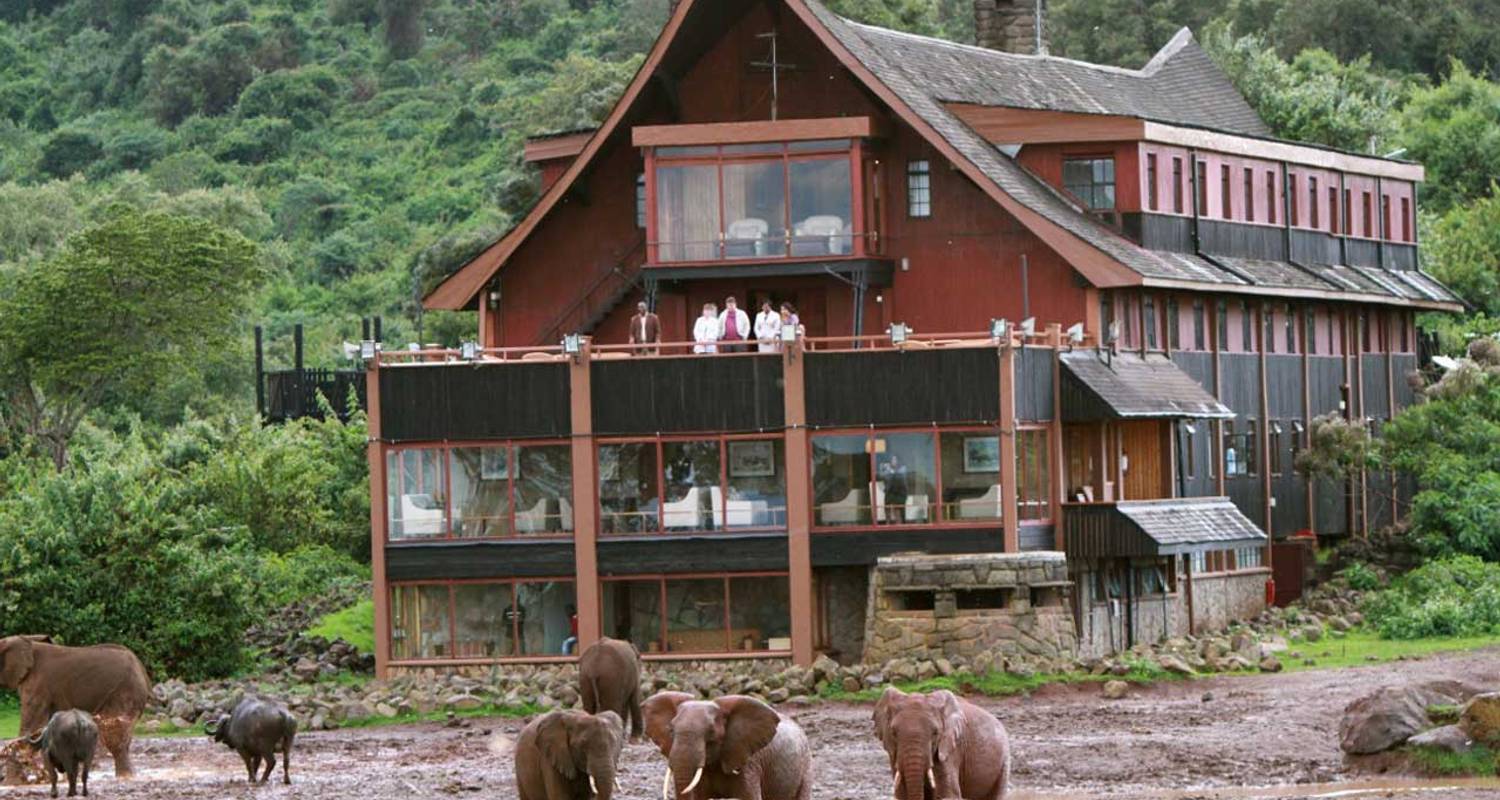
Accommodation in and around Aberdare National Park is unique due to the forest environment. Unlike savannah parks where lodges overlook open plains, Aberdare lodges are often positioned near waterholes or forest clearings.
Some lodges are designed specifically for wildlife viewing from within the property. Guests may spend evenings watching animals arrive at illuminated waterholes directly from the lodge, creating a lodge-based safari experience that complements daytime game drives.
Other accommodations are located on the forest edge or in nearby towns such as Nyeri, offering easier access to the park while still maintaining proximity to its wilderness areas.
Best Time to Visit Aberdare National Park
Aberdare is a year-round destination, but conditions vary significantly by season.
The dry seasons, typically from June to September and January to February, offer better road conditions and improved visibility for game drives. Wildlife is also easier to track during these months.
The wet seasons, from March to May and October to December, bring heavier rainfall, lush vegetation, and more dramatic waterfalls. However, roads can become more challenging, and mist may limit visibility. Despite this, the wet season enhances the park’s mystical atmosphere and is excellent for photography and birding.
Why Aberdare Stands Out in Kenya’s Safari Circuit
Aberdare National Park is not a conventional safari destination. It does not offer the guaranteed large wildlife concentrations of the Maasai Mara or the iconic elephant herds of Amboseli. Instead, it offers something more subtle and immersive: atmosphere, mystery, and ecological diversity.
It is a place for travelers who appreciate forest ecosystems, highland scenery, and less predictable wildlife encounters. It rewards patience rather than speed and observation rather than spectacle.
For many visitors, Aberdare becomes a highlight not because of what they see in large numbers, but because of how the environment makes them feel. The mist, the silence of the forest, the sudden appearance of wildlife, and the dramatic landscapes combine to create one of Kenya’s most unique safari experiences.
Aberdare National Park ultimately represents a different side of Africa—one defined not by open plains, but by depth, elevation, and hidden life within the mountains.