
David Sheldrick Wildlife Trust: Nairobi’s Baby Elephant Nursery
A Sanctuary Hidden on the Edge of the City
Just outside the rhythm and noise of Nairobi lies one of the most emotionally powerful wildlife conservation centres in Africa—David Sheldrick Wildlife Trust. For many visitors, this is not just another stop on a safari itinerary; it is often the moment where conservation becomes personal.
The experience feels intimate and human in a way that large national parks sometimes cannot offer. Instead of scanning vast landscapes for distant wildlife, you find yourself standing just a few feet away from baby elephants—some barely able to stand steadily—each with a story of survival, rescue, and recovery.
It is not a zoo. It is a rehabilitation centre built around a single mission: to rescue orphaned elephants, nurse them back to health, and eventually return them to the wild.
The Story Behind the Trust
The David Sheldrick Wildlife Trust was established in memory of David Sheldrick, a pioneering naturalist and anti-poaching warden who worked extensively in Kenya’s national parks. His legacy lives on through his wife, Dr. Dame Daphne Sheldrick, who developed the groundbreaking methods used to hand-raise orphaned elephants.
What makes this work remarkable is not just the rescue effort itself, but the science behind it. Raising a baby elephant is complex—they depend heavily on maternal bonds, emotional stability, and specific nutritional care. Without intervention, orphaned calves rarely survive in the wild.
The Trust developed specialized milk formulas, round-the-clock feeding schedules, and social rehabilitation systems that allow elephants to form surrogate family structures. Over time, these elephants are gradually reintroduced into semi-wild environments before full release into protected parks.
The Arrival of Orphaned Elephants
Each elephant at the sanctuary arrives under tragic circumstances. Many are victims of poaching, where mothers are lost to ivory hunting. Others are separated during human-wildlife conflict, drought conditions, or accidents in the wild.
When a rescue call comes in, the response is immediate. Rangers and veterinarians often travel long distances to retrieve injured or orphaned calves. The emotional weight of these rescues is significant, as many elephants are found distressed, exhausted, and struggling to survive.
Once brought to the nursery, the calves begin a carefully structured recovery process. The first priority is stabilization—hydration, warmth, and emotional reassurance. Elephants are deeply social animals, and isolation is one of the hardest challenges they face.
Life Inside the Nursery
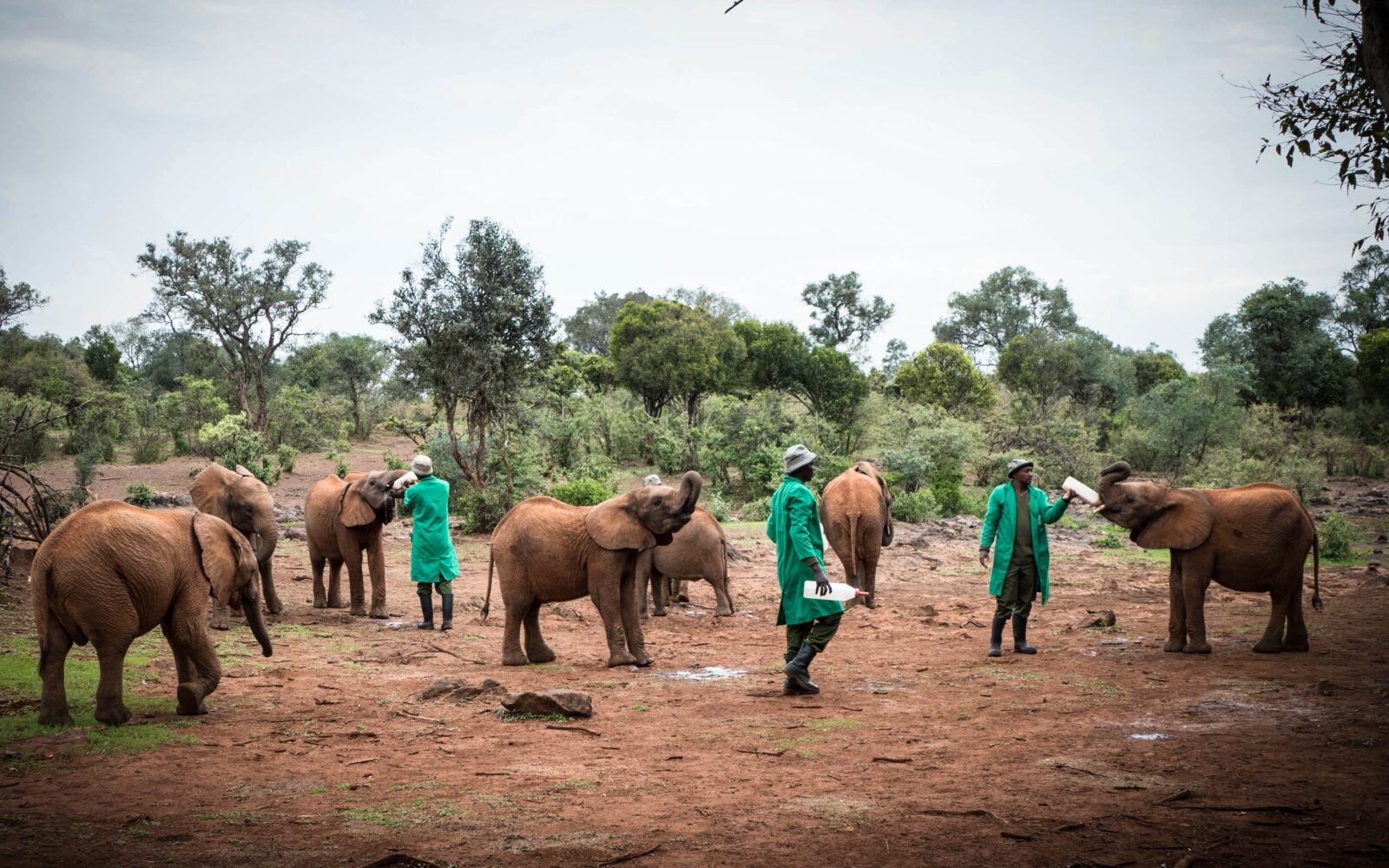
Daily life at the nursery follows a strict but nurturing routine. Early in the morning, keepers arrive to feed the calves specialized milk formula every few hours. Each elephant is assigned a dedicated keeper who becomes a constant companion and caregiver.
These bonds are essential. Elephants form deep emotional attachments, and the keeper acts as a surrogate mother figure. This relationship builds trust, reduces stress, and helps the calves recover psychologically as well as physically.
During the day, the elephants are taken to a large open area where visitors can observe them during their playtime. This is one of the most memorable parts of the experience. The calves run, push each other gently, roll in the soil, and spray dust over their bodies—a natural behavior that helps protect their skin from the sun and insects.
Despite their playful energy, there is a clear sense of structure and social order within the group. Older calves often guide younger ones, and strong social bonds form quickly.
Understanding Elephant Behavior Up Close
One of the most fascinating aspects of visiting the sanctuary is observing elephant behavior at close range. Elephants are highly intelligent, emotionally complex animals with strong memory and social structures.
Even at a young age, they display behaviors that mirror adult herds—comforting each other when distressed, forming friendships, and expressing curiosity toward humans and their surroundings.
The keepers often explain how elephants communicate using low-frequency rumbles that are too deep for human hearing. These vocalizations help maintain group cohesion and emotional connection, especially important for orphaned calves adjusting to life without their mothers.
Watching them interact gives visitors a deeper appreciation of how advanced their social systems are.
The Rehabilitation Journey
The goal of the nursery is not long-term captivity but successful reintegration into the wild. After spending several years under care, elephants are gradually transferred to rehabilitation units in protected reserves such as Tsavo.
This transition is carefully managed. The elephants begin to spend more time in semi-wild environments, learning to forage, interact with wild herds, and reduce dependency on human caretakers.
Eventually, many are fully absorbed into wild elephant populations, where they continue their lives independently. Remarkably, some of these rehabilitated elephants are later seen returning to visit their former keepers, a powerful reminder of their emotional intelligence and memory.
Conservation Challenges Behind the Scenes
While the nursery offers hope, it also reflects the ongoing challenges facing elephant populations across Africa. Poaching remains a significant threat in some regions, driven by illegal ivory trade. Habitat loss and human expansion also increase the risk of conflict between elephants and local communities.
The Trust is involved not only in rescue and rehabilitation but also in broader conservation efforts. These include anti-poaching patrol support, aerial surveillance in wildlife areas, and community outreach programs aimed at reducing conflict and promoting coexistence.
Education plays a major role. By allowing visitors to witness the reality of orphaned elephants, the sanctuary helps build global awareness and support for conservation initiatives.
Visitor Experience: Emotional and Educational
A visit to the David Sheldrick Wildlife Trust is carefully structured and time-limited to ensure minimal stress on the animals. Visitors are usually allowed during a specific public viewing hour when the elephants are brought out for feeding and play.
What surprises many people is how emotional the experience can be. Seeing a young elephant struggling to adapt after loss, or watching them respond affectionately to their keepers, creates a strong emotional connection.
At the same time, the visit is highly educational. Guides and keepers share detailed insights into elephant biology, behavior, and conservation challenges, helping visitors understand the broader ecological context.
Why This Place Matters
The David Sheldrick Wildlife Trust is more than a sanctuary. It represents a model of active conservation—one that does not simply protect animals in the abstract but intervenes directly in their lives when they are most vulnerable.
It shows that conservation is not only about preserving landscapes, but also about individual lives. Each elephant rescued represents a second chance, and each successful rehabilitation adds strength to wild populations.
In a city like Nairobi, where modern life and wildlife exist so close together, this sanctuary serves as a powerful reminder of what is at stake—and what can still be saved with dedication, science, and compassion.