
Lake Bogoria: Where Flamingos Turn the Lake Pink
Lake Bogoria is one of East Africa’s most visually dramatic saline lakes, famous for its large flocks of flamingos and geothermal hot springs that create a surreal, almost otherworldly landscape. Located in Kenya’s Great Rift Valley, Lake Bogoria is a protected reserve that delivers one of the most iconic bird spectacles in Africa.
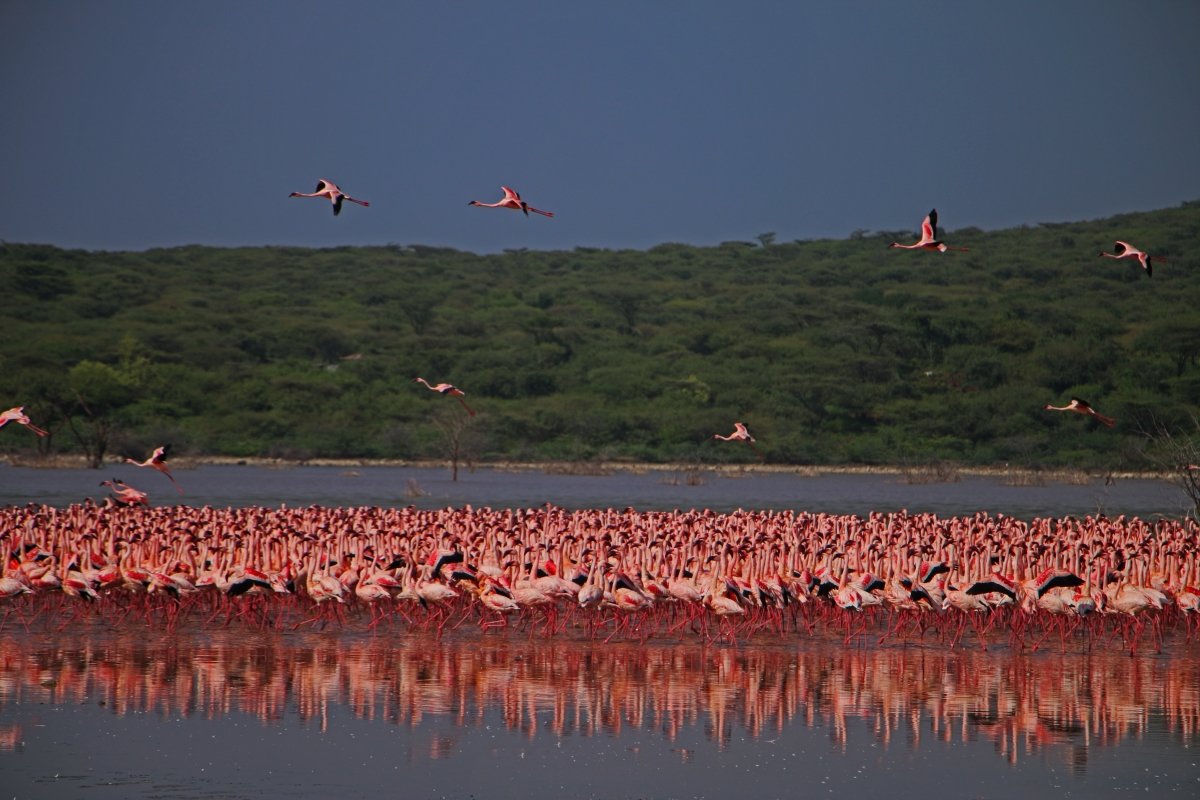
Unlike freshwater lakes such as Lake Naivasha, Bogoria is highly alkaline, meaning it supports a unique ecosystem dominated by algae and microorganisms that attract massive populations of lesser flamingos. When conditions are right, the shoreline appears tinted pink due to thousands—sometimes millions—of birds feeding in shallow waters.
Beyond flamingos, Lake Bogoria is also a geothermal hotspot, featuring geysers, steaming vents, and hot springs that bubble from the earth, adding a powerful geological dimension to the experience.
Geography and Landscape: A Volcanic Wonderland
The setting of Lake Bogoria is defined by tectonic activity and volcanic forces. The lake sits in a narrow basin within the Great Rift Valley, surrounded by escarpments, rocky hills, and semi-arid vegetation.
The lake itself is shallow and highly alkaline, which limits fish life but creates ideal conditions for blue-green algae—the primary food source for flamingos. This ecological chain is what drives the famous pink coloration of the lake.
One of the most striking features of the landscape is the presence of geothermal activity. Steam rises from fissures in the earth, and hot springs line parts of the shoreline, some reaching near-boiling temperatures. These natural features create an atmosphere that feels almost prehistoric.
Flamingo Phenomenon: Nature’s Pink Spectacle
Lake Bogoria is one of the most reliable places in the world to see large concentrations of lesser flamingos. These birds are drawn to the lake due to its abundance of cyanobacteria (blue-green algae), which thrive in alkaline conditions.
When thousands of flamingos gather along the shoreline, their pink feathers reflect in the shallow waters, creating a surreal visual effect that often makes the entire lake appear pink from a distance.
However, flamingo populations are dynamic. Their presence can fluctuate depending on water levels, food availability, and conditions at other Rift Valley lakes such as Lake Nakuru or Lake Elementaita. When Bogoria becomes the preferred feeding ground, the spectacle can be truly overwhelming.
The synchronized movement of flamingos, combined with their feeding behavior and vocalizations, creates a sensory experience that is both peaceful and hypnotic.
Geysers and Hot Springs: The Geological Drama
One of the defining features of Lake Bogoria is its geothermal activity. The lake is surrounded by numerous hot springs and geysers that release steam and boiling water into the air.
Some geysers erupt periodically, sending jets of hot water several meters into the air, while others continuously bubble at the surface. The mineral-rich waters often leave colorful deposits around the vents, adding to the visual complexity of the landscape.
Visitors are cautioned to stay within designated safe areas, as the ground around hot springs can be unstable and extremely hot. Despite these hazards, the geothermal features are one of the main attractions of the reserve.
Wildlife Beyond Flamingos
Although flamingos dominate the visual identity of Lake Bogoria, the surrounding reserve supports a variety of terrestrial wildlife. The semi-arid environment is home to species adapted to dry conditions, including:
- Greater kudu
- Olive baboons
- Zebras
- Impalas
- Gazelles
- Warthogs
Predators such as leopards are present but rarely seen due to the dense bush and rocky terrain.
Birdlife extends beyond flamingos, with species such as pelicans, cormorants, herons, and various raptors frequently observed around the lake.
Cultural Dimension: The Endorois Community
The human landscape around Lake Bogoria is equally significant. The area is home to the Endorois community, a pastoralist group with deep cultural ties to the land.
Historically, the Endorois have faced challenges related to land access and conservation policies, making Bogoria not only an ecological site but also a place of cultural and legal importance in Kenya’s conservation history.
Visitors may have opportunities to learn about local traditions, pastoral lifestyles, and the relationship between communities and protected areas.
Best Time to Visit Lake Bogoria
Lake Bogoria can be visited year-round, but flamingo concentrations vary seasonally.
- Dry seasons (June to October, December to March): Best chance of large flamingo gatherings and clear viewing conditions
- Wet seasons (April to May, November): Higher water levels may disperse birds, but landscapes become greener
Because flamingos migrate between Rift Valley lakes, timing your visit requires flexibility if the primary goal is photography or large-scale sightings.
Accessibility and Travel Experience
Reaching Lake Bogoria typically involves a road journey through the Rift Valley region. It is located near the town of Marigat and can be accessed from Nairobi in approximately 4–5 hours by road.
The journey passes through changing landscapes, from highland farms to arid lowlands, offering a scenic transition into the Rift Valley ecosystem.
While less developed than some major safari destinations, this remoteness enhances the sense of discovery.
Accommodation Options
Accommodation around Lake Bogoria is limited compared to major safari parks, but options exist in nearby towns and lodges. Most visitors stay in Nakuru or Elementaita and take day trips to the lake.
This helps preserve the natural environment and reduces human impact on the fragile ecosystem.
Why Lake Bogoria Is Unique
Lake Bogoria stands out because it combines three rare elements in one location: flamingos, geothermal activity, and dramatic Rift Valley scenery. Few places in Africa offer such a concentrated mix of natural phenomena.
Key highlights include:
- Large flamingo flocks with pink lake effects
- Active geysers and hot springs
- Unique alkaline lake ecosystem
- Scenic Rift Valley backdrop
- Relatively low tourist density
Conservation and Environmental Sensitivity
Lake Bogoria is a fragile ecosystem that requires careful conservation management. Changes in water levels, climate variation, and human activity in surrounding areas can significantly impact flamingo populations and overall ecological balance.
As a protected reserve, efforts are made to preserve its geothermal features and bird habitats while balancing tourism access.
Final Thoughts on Lake Bogoria
Lake Bogoria is not just a destination—it is a natural phenomenon. The combination of flamingos, geothermal energy, and Rift Valley geology creates one of the most visually striking environments in Africa.
For travelers seeking something beyond traditional safari game drives, Bogoria offers a completely different kind of experience—one focused on landscapes, birdlife, and earth’s raw geological power.
In the broader context of Kenya’s safari circuit, Lake Bogoria is a specialist destination. It may not have big game density like the Maasai Mara, but its uniqueness makes it unforgettable.
In essence, it is one of those rare places where nature feels both delicate and powerful at the same time.