
Maasai Mara vs Serengeti: Which Safari Destination Wins?
Few comparisons in African travel carry as much weight as the choice between Maasai Mara National Reserve and Serengeti National Park. These two iconic destinations form a single ecological system divided by a political border, yet the experiences they deliver can differ significantly depending on timing, expectations, and travel style.
For many travelers, this decision shapes the entire safari. It determines the pace of the journey, the type of wildlife encounters, the logistical complexity, and even the emotional tone of the trip. While both destinations are world-class, understanding their differences in detail is essential for making an informed, strategic choice.
This is not a superficial comparison. It is a deep evaluation of ecology, logistics, cost structures, seasonal dynamics, and experiential quality—designed to help you identify not just where to go, but why.
Geography and Scale: The Foundation of the Experience
The first and most defining difference between the Maasai Mara and the Serengeti is scale—and scale influences everything.
The Serengeti ecosystem spans roughly 14,750 square kilometers within Tanzania, making it one of the largest protected wildlife areas in Africa. Its sheer size creates a sense of boundless wilderness. The horizon often appears infinite, and the landscape changes gradually across vast distances—from open plains to wooded savannahs, river systems, and rocky kopjes.
In contrast, the Maasai Mara covers approximately 1,500 square kilometers. While still substantial, it is far more compact. This concentration of space results in a higher density of wildlife within a smaller area, which directly affects how game drives unfold.
In the Serengeti, you are often exploring—navigating a vast ecosystem where wildlife is abundant but dispersed. In the Maasai Mara, you are encountering—animals are closer together, and sightings are more frequent within shorter timeframes.
From a strategic standpoint, this distinction matters. Travelers with limited time may find the Mara more efficient. Those seeking depth, exploration, and a sense of scale will find the Serengeti unmatched.
Wildlife Density vs Wildlife Diversity
Both destinations deliver exceptional wildlife viewing, but the structure of those experiences differs in important ways.
The Maasai Mara is renowned for its high density of animals, particularly large predators. Lions are frequently observed, often in multiple prides within a single day. Cheetahs are relatively easy to spot due to the open terrain, and hyenas are abundant. The Mara’s ecosystem supports a consistent concentration of prey species, which in turn sustains predator populations.
This density creates a high-intensity safari experience. Game drives are often action-packed, with minimal time spent searching for wildlife. For first-time visitors or those seeking dramatic encounters, this can be incredibly rewarding.
The Serengeti, by contrast, offers greater ecological diversity. Its different regions each provide unique wildlife dynamics. The southern plains are known for calving season, where thousands of wildebeest give birth within a short period. The central Serengeti (Seronera) is a predator hotspot, while the western corridor and northern regions offer river crossings and varied habitats.
Rather than concentrated intensity, the Serengeti offers layered experiences. Wildlife is abundant, but spread across a larger landscape, requiring more strategic planning and longer drives. The reward is a broader understanding of the ecosystem and its seasonal rhythms.
The Great Migration: A Moving Target
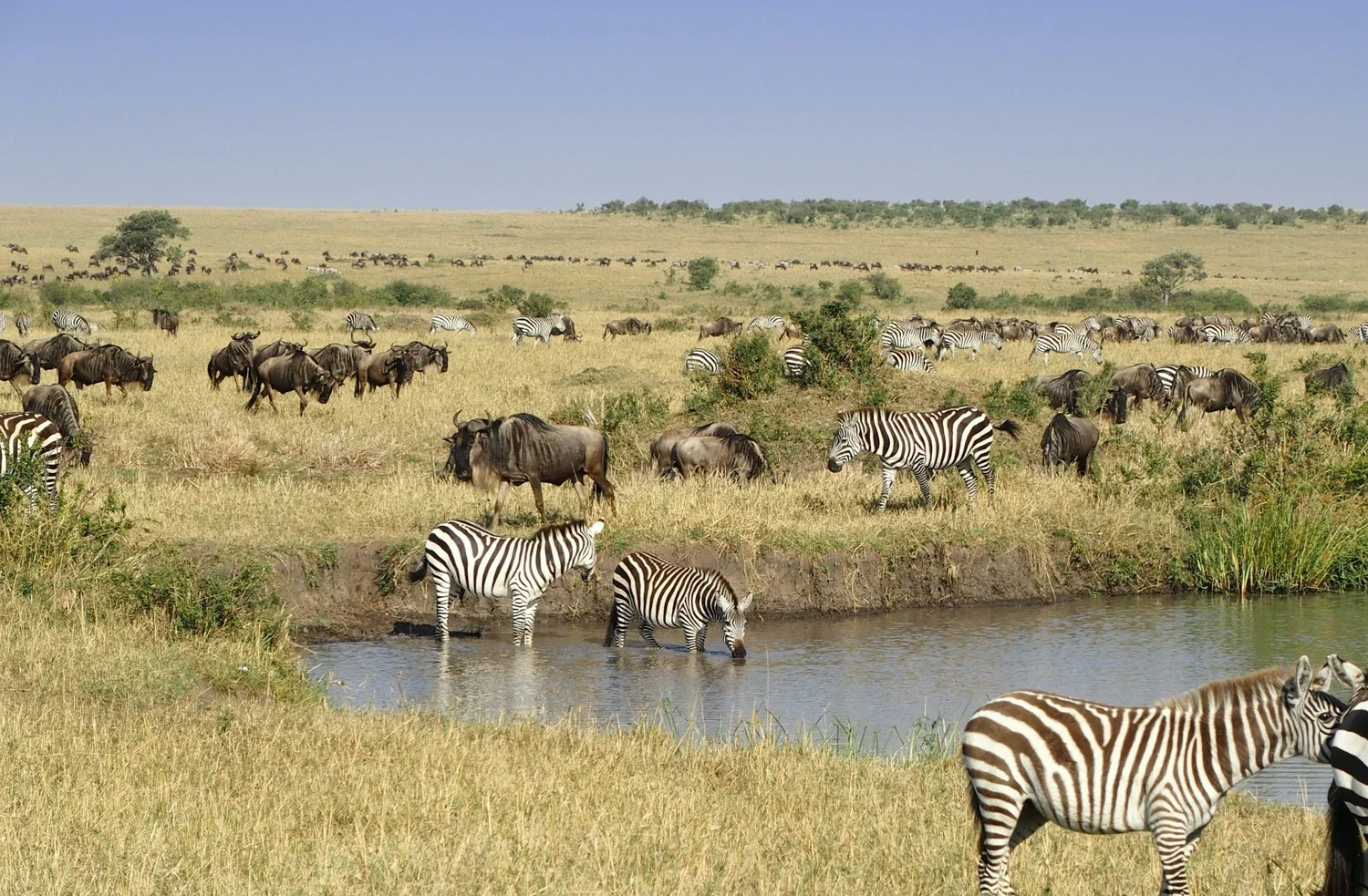
The Great Migration is the defining feature of this ecosystem, but it does not belong exclusively to either destination. It is a continuous, circular movement of over 1.5 million wildebeest, accompanied by hundreds of thousands of zebras and gazelles.
Understanding the migration requires understanding time, not just place.
From December to March, the herds are typically in the southern Serengeti, where calving season takes place. This is one of the most biologically intense periods, with thousands of births attracting predators and creating constant interaction.
From April to June, the migration moves through central and western Serengeti. This period is less dramatic visually but critical in terms of movement and survival.
From July to October, the herds reach the northern Serengeti and cross into the Maasai Mara. This is when the famous river crossings occur—chaotic, dangerous, and visually spectacular.
By November, the cycle begins again as the herds move south.
The Maasai Mara is most closely associated with river crossings, particularly along the Mara River. However, the northern Serengeti offers similar crossings, often with fewer vehicles and less congestion.
Strategically, the Serengeti provides a longer window to follow the migration across multiple phases. The Mara offers a shorter but more concentrated period of high drama.
Landscape and Visual Identity
The visual character of each destination plays a significant role in shaping the safari experience.
The Serengeti is defined by its vastness. The open plains create a sense of scale that is difficult to replicate anywhere else. The landscape feels ancient and unbroken, with minimal human presence. Kopjes—rocky outcrops scattered across the plains—add texture and serve as vantage points for predators.
The Maasai Mara, while still expansive, feels more intimate. Rolling hills, scattered acacia trees, and river systems create a varied and visually rich environment. The Mara River itself adds a dynamic element, particularly during migration season.
For photographers, the Serengeti offers grand, sweeping compositions, while the Mara provides opportunities for more intimate framing. Neither is objectively superior; they simply cater to different artistic preferences.
Accessibility and Logistics
Logistics are often underestimated but can significantly impact the overall safari experience.
The Maasai Mara is relatively easy to access. Most travelers fly into Nairobi, followed by a short domestic flight or a drive to the reserve. This simplicity makes it ideal for shorter trips and reduces travel fatigue.
The Serengeti, particularly its remote regions, requires more effort to reach. Access typically involves multiple flights or long drives, depending on the chosen entry point. While this adds complexity, it also enhances the sense of exclusivity.
From a planning perspective, the Mara is efficient and convenient. The Serengeti requires more coordination but rewards that effort with a deeper sense of immersion.
Accommodation Strategy and Cost Dynamics
Accommodation options in both destinations range from budget camps to ultra-luxury lodges, but cost structures differ.
The Maasai Mara often provides better value, particularly for shorter stays. Its accessibility reduces transport costs, and the competitive market keeps pricing relatively balanced.
The Serengeti, especially in remote areas, tends to be more expensive. Logistics, including charter flights and supply chains, increase operational costs. However, it also offers unique experiences such as mobile camps that follow the migration.
For travelers prioritizing budget efficiency, the Mara is often the better choice. For those seeking exclusivity and specialized experiences, the Serengeti offers greater depth.
Crowd Dynamics and Exclusivity
Crowd levels can significantly influence the quality of a safari.
The Maasai Mara, due to its size and accessibility, can become crowded during peak migration season. River crossings, in particular, may attract multiple vehicles, sometimes affecting the viewing experience.
The Serengeti’s scale allows for better distribution of visitors. Even during peak periods, it is possible to find quieter areas, especially outside the most popular zones.
For travelers seeking solitude and minimal disturbance, the Serengeti has a clear advantage.
Cultural Integration
Cultural experiences are more prominent in the Maasai Mara. The region is closely associated with the Maasai people, and visits to local communities are often integrated into safari itineraries.
While cultural experiences are available in Tanzania, they are less central to the Serengeti experience. The focus there remains primarily on wildlife and landscape.
Seasonal Strategy: Choosing the Right Time
Timing is the single most important factor in determining which destination to choose.
If your travel dates align with the migration in the Maasai Mara (July to October), it becomes a compelling option for dramatic wildlife encounters.
If you are traveling outside that window, the Serengeti offers more flexibility. Its size and diversity allow for year-round safari experiences, each with its own unique characteristics.
Psychological Experience: Intensity vs Immersion
Beyond logistics and wildlife, there is a psychological dimension to consider.
The Maasai Mara delivers intensity—frequent sightings, fast-paced game drives, and immediate rewards. It is exciting, dynamic, and highly engaging.
The Serengeti offers immersion—long drives, changing landscapes, and a gradual unfolding of experiences. It is contemplative, expansive, and deeply absorbing.
Neither is better; they simply appeal to different travel philosophies.
Final Verdict: Which Safari Destination Wins?
If forced to declare a winner, the Serengeti edges ahead due to its scale, diversity, and year-round flexibility. It offers a more comprehensive safari experience, with multiple ecosystems and a broader range of wildlife dynamics.
However, this does not diminish the Maasai Mara. For many travelers—particularly those with limited time or a focus on high-density wildlife viewing—the Mara may be the better choice.
The Strategic Conclusion
The real answer lies not in choosing one over the other, but in understanding how to use both effectively. The most experienced safari planners often combine the two, following the migration across borders and leveraging the strengths of each destination.
In practical terms:
- Choose the Maasai Mara for efficiency, density, and peak migration drama
- Choose the Serengeti for scale, diversity, and deeper immersion
Closing Perspective
The comparison between Maasai Mara National Reserve and Serengeti National Park is not about superiority—it is about alignment.
The best safari is not defined by the destination alone, but by how well that destination matches your expectations, timing, and travel style. Both parks are extraordinary. Both offer life-changing experiences. The difference lies in how you choose to experience them.
In the end, the real winner is the traveler who understands the ecosystem, plans strategically, and embraces the journey with clarity and intention.