
What Is the Great Migration and Why Does It Happen?
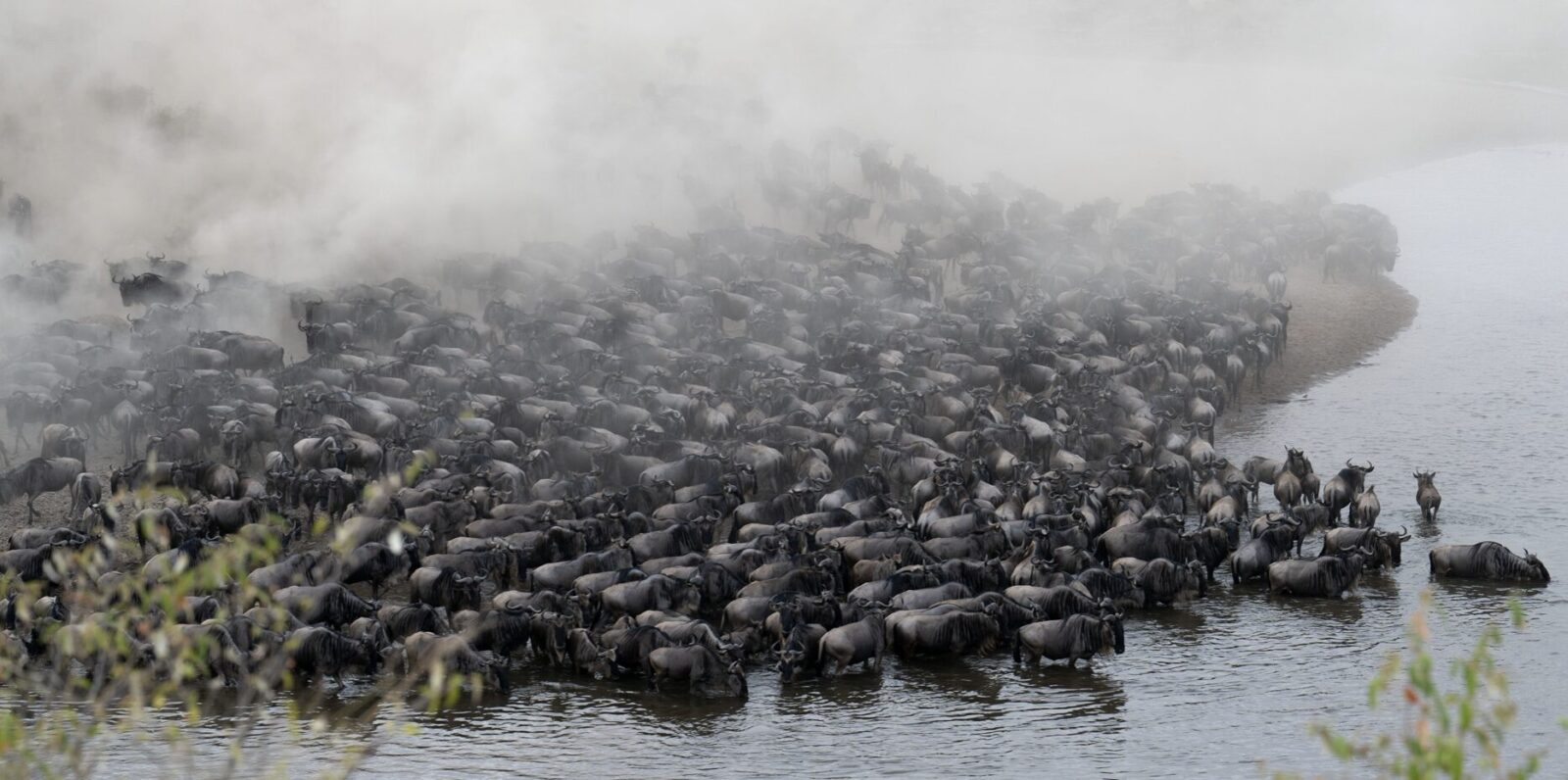
The Great Migration is one of the most extraordinary natural events on Earth, involving the continuous movement of over a million wildebeest, accompanied by hundreds of thousands of zebras and gazelles, across the ecosystems of northern Tanzania and southwestern Kenya. It unfolds primarily within Serengeti National Park and extends into Kenya’s Maasai Mara, forming a vast circular route that repeats every year.
Unlike seasonal migrations in many parts of the world, the Great Migration is not a simple one-way journey. It is a constantly shifting cycle driven by rainfall, grass growth, and survival pressure. There is no single starting point and no fixed destination in the traditional sense. Instead, the herds move in response to changing environmental conditions, following the availability of fresh grazing and water.
Understanding what the migration is requires looking at both its structure and its underlying causes. At its core, it is a survival strategy shaped by evolution, ecology, and the unpredictability of East African weather systems.
What the Great Migration Actually Is
The Great Migration is best understood as a continuous ecological loop. It involves large herbivore populations moving in response to seasonal rainfall patterns across the Serengeti-Mara ecosystem. The main species involved are wildebeest, but zebras and gazelles play an important supporting role.
Wildebeest dominate the movement because they are highly dependent on short, nutritious grasses that appear after rainfall. Zebras often move slightly ahead of wildebeest because they can feed on taller, tougher grasses, effectively “preparing” the landscape for wildebeest that follow. Gazelles tend to move more flexibly, taking advantage of scattered grazing opportunities.
Together, these species form a massive mobile grazing system that reshapes the landscape as it moves. Their movement also supports predators such as lions, cheetahs, hyenas, and crocodiles, making the migration a key driver of the entire ecosystem’s food chain dynamics.
The Role of Rainfall in Driving Movement
The primary reason the Great Migration happens is rainfall. Unlike temperate ecosystems with predictable seasons, East Africa experiences highly variable rainfall patterns that shift across regions and months.
When rain falls in one part of the ecosystem, it triggers rapid grass growth. Wildebeest are highly sensitive to this change and quickly move toward fresh grazing areas. Once the grass is consumed or dries out, the herds move again, following new rainfall zones.
This creates a continuous cycle of movement that is not dictated by a calendar but by ecological signals. In essence, the migration is a response to a moving food source rather than a fixed seasonal destination.
The system is so responsive that even small changes in rainfall distribution can alter movement routes from year to year, although the overall circular pattern remains consistent.
Why the Migration Forms a Circular Route
The circular nature of the migration is one of its most important features. The herds do not move randomly; they follow a broad clockwise loop through the Serengeti ecosystem.
This circular movement is shaped by the geography of the region and the distribution of rainfall over time. As the southern plains of the Serengeti receive rains, herds gather there to graze and give birth. When those grasses are exhausted and rainfall shifts northward, the herds follow.
As they move north, they eventually reach the river systems near the Kenya border, including the Mara River, where they face additional survival challenges such as river crossings and predators. After spending time in the northern grazing areas, they gradually return south when rains resume there.
This cycle repeats annually, although exact timing varies depending on weather conditions.
The Calving Season: A Key Driver of Population Growth
One of the most critical phases of the migration is the calving season, which typically occurs in the southern Serengeti and the Ngorongoro Conservation Area plains.
During this period, hundreds of thousands of wildebeest calves are born within a short timeframe. This synchronized birth strategy is an evolutionary adaptation designed to overwhelm predators. When so many calves are born at once, predators cannot target them all effectively, increasing overall survival rates.
The abundance of fresh grass after seasonal rains in these southern plains provides ideal conditions for nursing mothers and newborn calves. Once grazing pressure increases and conditions change, the herds begin to move again, continuing the migration cycle.
Predator Pressure and Survival Dynamics
Predators play a major role in shaping migration behavior. Lions, hyenas, leopards, and cheetahs follow the herds closely, while crocodiles dominate river crossing points.
This constant predation pressure influences not only survival rates but also movement timing and grouping behavior. Wildebeest often travel in massive herds for protection, using collective movement to reduce individual risk.
River crossings are particularly dangerous because they expose animals to ambush predators in a confined space. The presence of predators does not stop the migration but increases the urgency and unpredictability of movement patterns.
The Importance of the Serengeti Ecosystem
The Great Migration is sustained by the structure of the Serengeti ecosystem, which includes vast grasslands, seasonal wetlands, and interconnected protected areas. Without this large, uninterrupted landscape, the migration would not be possible.
Serengeti National Park serves as the central stage of this system, while surrounding conservation areas and reserves provide additional grazing and movement corridors. The ecological integrity of this system is what allows millions of animals to move freely without human-made barriers.
Why the Migration Is Not Predictable
Although the migration follows a general annual pattern, it is not precisely predictable. Rainfall variability means that timing can shift by weeks or even months in different years.
For example, river crossings may occur earlier or later depending on water levels and grazing conditions. Similarly, the exact location of herds in a given month can vary across different seasons.
This unpredictability is one of the reasons the Great Migration remains so compelling. It is not staged or controlled; it is a fully natural system responding in real time to environmental change.
Ecological Importance of the Migration
The Great Migration is not just a wildlife spectacle; it is a critical ecological process. It distributes nutrients across the landscape, supports predator populations, and maintains grassland health.
As herds move and graze, they prevent overgrowth in certain areas and stimulate new plant growth in others. Their movement also supports scavengers, birds, and smaller mammals, creating a fully interconnected ecosystem.
Without the migration, the balance of the Serengeti ecosystem would shift dramatically.
Final Thoughts
The Great Migration is best understood as a living system rather than a single event. It exists because of rainfall patterns, ecological adaptation, predator-prey relationships, and the vast open landscape of the Serengeti-Mara ecosystem.
It happens because survival depends on movement. Grass grows where rain falls, and the herds follow. This simple principle, repeated over thousands of years, creates one of the most spectacular natural phenomena on Earth.
For travelers, understanding why it happens is just as important as knowing when to see it, because it transforms the experience from a wildlife sighting into a deeper appreciation of how entire ecosystems function.